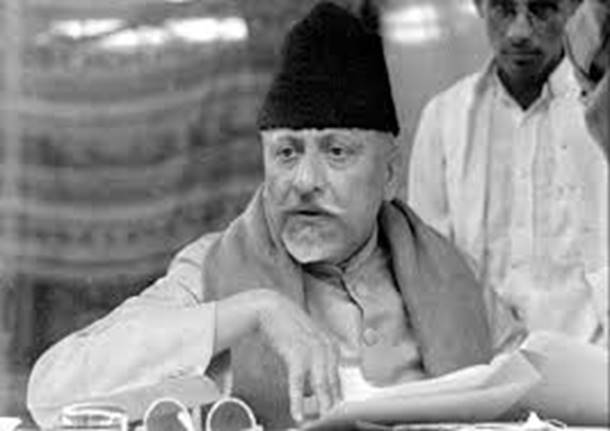
Maulana Azadblamed Sardar Patel of accepting the partition too quickly, and held him most responsible for the Partition of India. He called Nehru’s rejection of the Cabinet Mission on July 10, 1946 as his greatest blunder. According to him, Nehru’s impulsive action directly provoked Jinnah to demand Pakistan. He called Nehru brilliant but impatient. He blamed the Congress Working Committee (CWC) for surrendering to the idea of Partition without fully exploring alternative options; and its failure to defuse communal tension. He said that Lord Mountbatten rushed the transfer of power irresponsibly without considering other choices. He criticized Jinnah as being inflexible but also wrote that Congress’ errors strengthened his demand for Pakistan although he was not committed to Partition until 1946. He called Partition as India’s “greatest tragedy”; and felt that the future generations would blame both communities and their leaders. He feared that the creation of Pakistan would lead to long-term hostility which, he felt, was avoidable. He was critical of Gandhi for losing hope of undivided India very early, and accepting Partition partly out of despair. He felt that Gandhi sided with Patel on Partition rather than with him - Photo Heritage Times
What Was in the 30 Pages that Azad withheld from the Public for 30 Years?
By Dr Khalid Siddiqui
Ohio

A video highlighting the life of Maulana Abul Kalam Azad (d https://youtu.be/r5yiiWxPc-A?si=cdU7SnZGyq-z1i5u ) was produced by GeoTV. The excellent narration was done by Aleena Farooq Sheikh, the anchor person of ‘Report Card,’ a GeoTV program. Here is some more information on Maulana Azad.
Shorish Kashmiri, Editor of Chattan magazine, interviewed Azad in 1946. The Maulana wanted him to publish the interview only his death. Azad died in 1958. Shorish published the interview in 1976 in the book Maulana Abul Kalam Azad: Ahrar aur Doosri Tehreek-e-Azadi. As no notes were taken or recordings made at the time of the interview, Shorish wrote everything from his memory. It adversely affects the credibility of the contents of the interview. Anyway, Shorish attributed two statements to Azad: “A nation built on the cry of religion cannot live long without justice and reason” and “I stood between two storms — the distrust of Muslims and the suspicion of Hindus.”
I will write about three people who were associated with the works of Azad during his lifetime as well as after his death.
1. Malik Ram Baveja (1906-1993)
In the first half of the twentieth century there were three authentic scholars on Ghalib: Ghulam Rasool Mehr (1895-1971); Malik Ram Baveja (1906-1993); and Kalidas Gupta Riza (1925-2001). Malik Ram was a renowned scholar of Urdu, Persian, and Arabic. He spent two decades in the Middle East as a government servant where he mastered the Arabic language. He was a Qur’anic scholar. His knowledge of the Qur’an and Hadith was enviable. The major part of Azad’s Tarjuman-ul-Qur’an (translation of Holy Qur’an) was edited by Malik Ram. Muslim scholars used to approach him to find references on different Islamic issues. He wrote Hayat-e-Abul Kalam Azad in addition to books on Ghalib. He also wrote a book called Islamiat. He edited all the books written by Azad, including Khutbat-e-Azad, that contained his letters and khutbat. Azad was a good orator but he made mistakes during his speeches regarding dates, places, and references. It was Malik Ram who would make the necessary corrections before the khutba/speeches were published. Here are some examples of Malik Ram’s correction of Azad’s speeches:
a) During the convocation address at the Aligarh Muslim University on February 20, 1949, Azad said, “Rasulullah (Sallallahu Alaihi Wasallam) ne farmaya, ‘Talabul ‘ilmi farīzatun ‘alā kulli Muslimin wa Muslimatin.’” Translation: Ilm hasil karna har Musalman, mard aur aurat par farz hai.
Malik Ram edited it as “The Prophet — peace be upon him — has said: ‘Seeking knowledge is an obligation upon every Muslim.’” Malik Ram deleted the word ‘woman’ based on the Hadith of ibn Majah, Kitab al-Sunan.
b) During the convocation speech at Delhi University in 1948, Azad said, “Qur’an kehta hai: Hal yastawī alladhīna ya‘lamūna walladhīna lā ya‘lamūn.” Translation: The Qur’an declares: Are those who know equal to those who do not know?
Malik Ram added the reference: Qur’an Surah az-Zumar 39:9
c) At the Independence Day address at Red Fort on August 15, 1947, Azad said, “The Qur’an says: Do not speak of what the wrongdoers do as if it were right; judge with justice and fairness.” This is the English translation of the original Arabic text that Azad quoted. Malik Ram later added the reference from Qur’an – Al-An’am 6:152.
He wrote several books on Ghalib also. Malik Ram died on August 17, 1993. There were rumors that he had converted to Islam and, therefore, should be buried. That was not correct. His dead body was cremated. After Malik Ram’s death, Ariel (pen name of Dr Muhammad Ali Siddiqui) wrote a nice article on the life of Malik Ram in the Dawn newspaper.
2. Humayun Kabir (1906-1969)
Humayun Kabir was an educationist, scholar and a politician from Bengal. He also wrote poems, essays, and novels in the Bengali language. He was a member of the All India Congress. Although he was the personal secretary of Azad, he was more like his literary and administrative aide. He helped Azad in drafting speeches and reports. He pushed Azad into writing his biography.
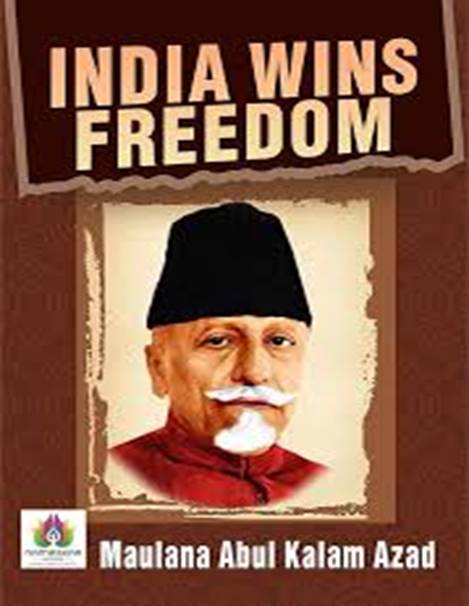
Azad wanted it to be written in English but he was not that expressive in the English language. So, a strange arrangement was made between Azad and Humayun Kabir. Azad would dictate him in Urdu and Kabir would record it in English. Kabir would organize the material chronologically. Azad would check and make necessary corrections. Because of this tedious arrangement the process continued for eleven years – from 1946 to 1957. In 1957, Kabir had finalized the manuscript. On Azad’s instructions certain passages aggregating 30 pages were deleted from different parts of the book. A sealed envelope containing the suppressed portions of the book was deposited in the National Archives of India, with instructions that it should not be opened or published until 30 years after Azad’s death. The reason for this was given by Azad: In the national interest. Azad died on Feb 22, 1958. In 1959, the first version of the book India Wins Freedom was published. I bought it in the 1980s, read it, and then anxiously waited for the release of the missing pages. The missing pages were, as planned, released and published in 1988, exactly thirty years later. Humayun Kabir died in 1969.
3. HM Seervai (1906-1996)
He was India’s highly respected constitutional lawyer and scholar, an authority on the Constitution of India. He was very respectful to and great defender of Maulana Azad. He was very much familiar with the 1959 edition of Azad’s India Wins Freedom. When the 30 sealed pages of Azad’s book were opened and released on September 30, 1988, at the National Library, Calcutta, Seervai was able to obtain a copy of them. By November 7, 1988, the complete edition including those 30 pages, published by Orient Longman, was available to the public. Those additional passages in the 1988 edition were reported to be marked by an asterisk at the beginning and at the end. The new edition was not available in Pakistan for a long time. When Seervai compared the 1959 version, the added material, and the 1988 version side by side, he found many irregularities. In the 1988 edition, some original passages from the 1959 version were removed; and many added passages were not marked with asterisks. The editors of the 1988 version removed some logistical details, as well as sentences too critical of Congress leaders, from the original 1959 version. Seervai wrote a book in 1989 called Partition of India – Legend and Reality. I was able to get Seervai’s book. It is printed on cheap-quality paper. The last two chapters deal with those missing (and now reproduced) pages. Later, I was able to find Azad’s 1988 edition also.
So, what was in those 30 pages that Azad withheld from the public for 30 years? Here is the summary:
He blamed Sardar Patel of accepting partition too quickly, and held him most responsible for the Partition of India. He called Nehru’s rejection of the Cabinet Mission on July 10, 1946 as his greatest blunder.
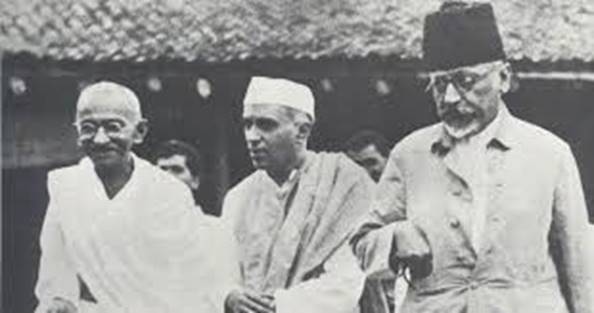
Gandhi, Nehru and Azad
According to him, Nehru’s impulsive action directly provoked Jinnah to demand Pakistan. He called Nehru brilliant but impatient. He blamed the Congress Working Committee (CWC) for surrendering to the idea of Partition without fully exploring alternative options; and its failure to defuse communal tension. He said that Lord Mountbatten rushed the transfer of power irresponsibly without considering other choices. He criticized Jinnah as being inflexible but also wrote that Congress’ errors strengthened his demand for Pakistan although he was not committed to Partition until 1946. He described Partition as India’s “greatest tragedy”; and felt that future generations would blame both communities and their leaders. He feared that the creation of Pakistan would lead to long-term hostility which, he felt, was avoidable. He was critical of Gandhi for losing hope of undivided India very early, and accepting Partition partly out of despair. He felt that Gandhi sided with Patel on Partition rather than with him.
After reading all three books it is very clear that Azad didn’t want Partition at any cost. He felt that the Congress had abandoned the Nationalist (pro-Congress) Muslims after using them. He also felt that the Congress leaders as well as Mountbatten accepted Partition in a hurry without exploring other options. He, however, never left the Congress. He sort of exonerated Mr Jinnah for Partition at the expense of the Congress leadership.