Jama Taqseem Is a Masterpiece in Storytelling
By Sana Hussain
Karachi
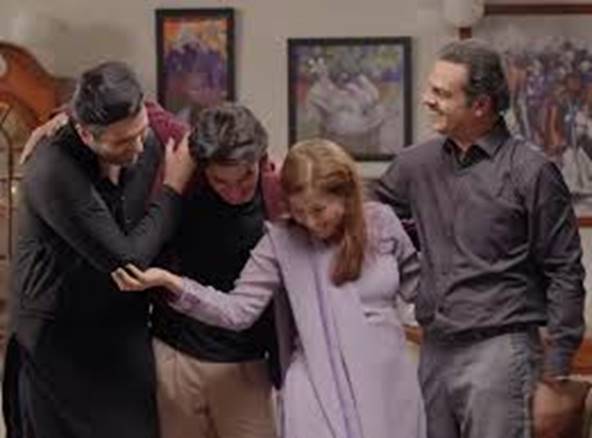
Jama Taqseem has been saying all the right things from the very beginning. It tells the story of almost every desi Pakistani household and gives voice to countless women trapped within the much-revered joint family system. Written with precision by Sarwat Nazir and brought to life skillfully by director Ali Hassan, the drama stands as a sharp and honest reflection of reality.
Right from the outset, the show delved straight into its main theme, devoting minimal screen time to the wedding of Qais and Laila, portrayed by Talha Chahour and Mawra Hocane. The show began with Qais and Laila showing interest in marrying each other and convincing their families. The resistance from both sides felt strikingly authentic.
Laila’s mother, played with grace and conviction by Tazeen Hussain, opposed the match out of concern for her only daughter, fearing the emotional cost of adjusting to a large joint family and the inevitable compromise of her career.
On the other hand, Qais’ family dismissed the idea of him marrying a woman of his own choosing, believing that ‘modern’ girls are incapable of shouldering the responsibilities of marriage and household life.
The narrative unfolded at a measured and effective pace. Once the essential conversations were established, the marriage took place and the story immediately settled into its true premise. The director made exemplary use of screen time, holding the audience’s attention — an unfortunate rarity in today’s shows. Staying true to its theme, the show remained relevant, devoid of filler scenes, excessive slow motion, repetitive flashbacks, or a close up of an aesthetic heroine weeping to a background score.
Beyond issues of privacy and autonomy, Jama Taqseem also addressed the often hushed up subject of sexual harassment. This particular arc — from Laila’s initial doubt to her confiding in her husband, his instinctive dismissal rooted in loyalty to his family and men’s habitual disregard of their wives’ opinions, and finally his realization upon witnessing it himself — was handled with exceptional sensitivity.
The entire scene was remarkable — the performances of each actor, the manner in which it unfolded, and the way it was dealt with. It is a scene that ought to be treated as a teaching aid for actors, directors and writers. It wasn’t high on drama or theatrics but was nevertheless powerful.
As the story progressed, the three brothers’ families moved out, and the narrative shifted to their individual struggles with independence. For the average Pakistani man, living away from his parents can be deeply unsettling, having grown up surrounded by constant care, protection, and dependence. Hameed, the older brother always in the shadow of the patriarch played by the evergreen Jawed Sheikh, found it hard to make business decisions and spiraled into his bad habits the minute he got a whiff of freedom. The middle brother, often overlooked and underestimated, fared relatively better once given space to prove himself. Qais, meanwhile, found it hardest to cope with the silence and emotional void of a home stripped of constant company.
The show also thoughtfully explored the evolution of both sets of parents — Qais’ and Laila’s — as they gradually learned to respect each other’s experiences and perspectives. More importantly, they began to understand the importance of not centering their entire existence around their children’s lives, instead finding purpose beyond constant involvement, a very important lesson for the older generation who more often than not, tend to make it their life’s purpose to meddle in their children’s married lives.
That said, the show did falter slightly toward the end. Zeeshan’s return to Sidra, where he attempted to justify his harassment in the guise of love, undid the writer’s earlier, more responsible handling of the issue. Similarly, Qais’ extramarital involvement felt unnecessary. However, the writer did use it to raise some very valid questions and the double standards for how acceptable it is for a man to freely engage with his female colleagues versus how a woman is always faced with more scrutiny the minute she is seen interacting with the opposite gender.
Overall, Jama Taqseem succeeded in asking the right questions, challenging deeply ingrained stereotypes, and initiating much-needed conversations. It was a thoughtful, socially relevant drama that resonated precisely because it dared to remain honest. - Images