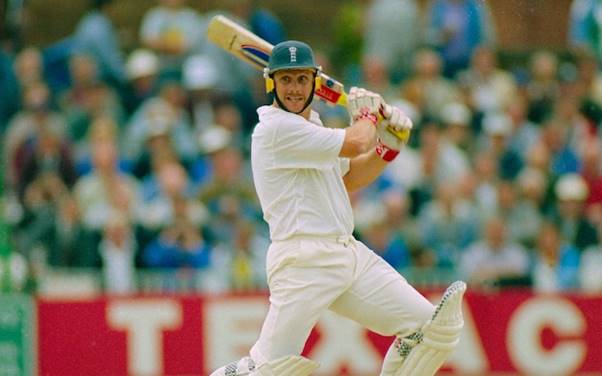
England batsman Robin Smith, pictured in 1992, died last week – Photo Credit Bob Thomas/Getty
For Too Many Cricketers, Depression Is a Real and Tragic Threat
By Jim White
UK

One year, after he had played his final game of the season, former England cricketer Graeme Fowler decided to sit in the conservatory of his house in Lancashire and think about what he had just done, trying to put his performances that summer into perspective.
After what he thought were a couple of days embracing a routine of quiet and seclusion, his wife interrupted him. Did he realize, she asked, that he had been sitting there for nearly a month? That he had not uttered a single word to her in that time? And that he had been thumbing through the same copy of a magazine over and over again?
“It was at that point,” says Andrew Murtagh, the former Hampshire all-rounder who interviewed Fowler for his new book, Cricket’s Black Dog, “Graeme realized he needed to get some medical help.”
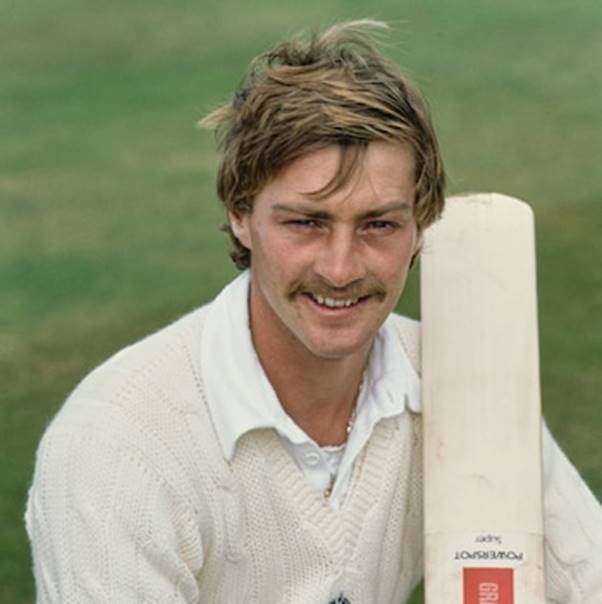
England batsman Graeme Fowler in 1982 - Credit Adrian Murrell/Getty
The death of Robin Smith earlier this month has once again reminded people that cricket is a sport stalked by the deep, dark depression with which Fowler was subsequently diagnosed. Just a couple of days before he died, Smith was at the opening Ashes test match in Perth. He was chatting to corporate guests, catching up with old cricketing colleagues, conducting some interviews. It had been a while since the former England batting hero had been out and about in public.
Smith, who was once defined by the word “swashbuckling” as he smashed the fastest bowlers in the world to the boundary with a pugilist’s intent, had spent much of last year in hospital, recovering from cirrhosis of the liver. Such had been the severity of his illness that he joked that those lining up to speak to him at the Optus Stadium in Perth were only doing so because “they wanted to meet Lazarus”. He seemed on fine form – as friendly, warm and kind as everyone who encountered him in his playing prime remembered him to be.
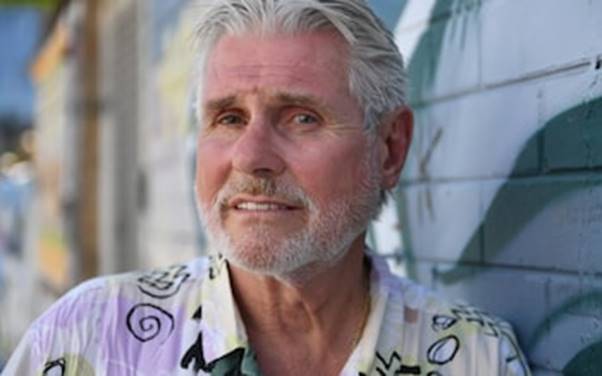
Former England cricketer Robin Smith in Perth last month, shortly before his death - Credit Philip Brown/Getty
There was, however, a line in one of the interviews he gave that day in which he admitted the convivial image was largely superficial. It is a quote that, in light of what happened subsequently, is charged with poignancy. He told Simon Wilde, cricket writer for The Sunday Times: “Behind my eyes is a deep and sorry story.”
We may not yet know the cause of his death, but we do know one thing about Smith: he was afflicted for much of his later life with depression . What’s more, he was not alone in the game. Many cricketers have been brought low by the “black dog” that forms the title of Murtagh’s investigative book. Excellence provides no immunity from the pervasive reach of mental-health issues. Some of the finest players of all time have been affected. Andrew Flintoff, Marcus Trescothick, Steve Harmison, Jonathan Trott – international titans all – have spoken of their fight with the condition. Last year, the wonderful England batsman Graham Thorpe thought the only escape from the darkness in his mind was to take his own life. The sad fact is, over the years, 151 other first-class cricketers have died by suicide.
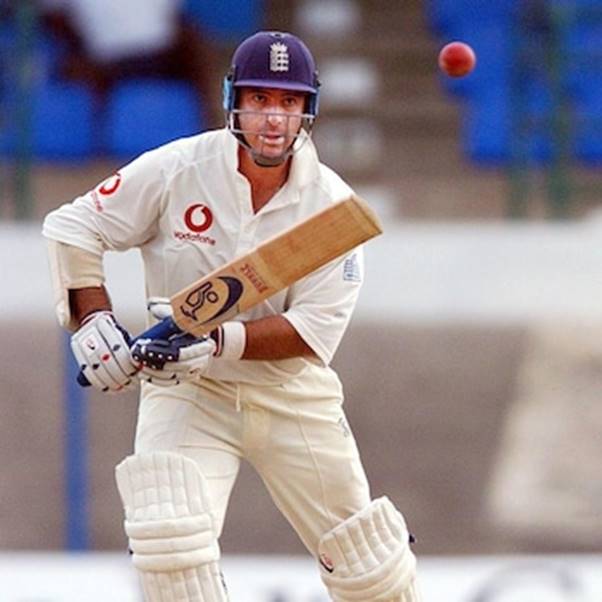
England’s Graham Thorpe took his own life last year - Credit Rebecca Naden/PA
“I am a depressive, I’ve been hospitalized three times,” says Murtagh, who retired from the game in 1978 before becoming a teacher. “My depression happened sometime after I stopped playing. I always used to say I can’t blame cricket. But then I became aware of the statistics surrounding the game. And they are terrible: the suicide rate among former professional players is more than twice the national average for men of comparable age. The more research I did, the more I started to ask myself why.”
What perplexed Murtagh as he talked to former cricketers was this: is the all-enveloping depression from which too many of its practitioners suffer the fault of the game? Are its very rhythms and processes culpable? Or is it that cricket somehow attracts those who are introspective and self-critical with a depressive edge? Or could it just all be a woeful coincidence?
There have been academic papers written on the phenomenon. One, published by Loughborough University in 2023, found that issues like short term contracts and job insecurity in the game played into professionals’ insecurities. But it also found that the adrenaline rush of coming out on top in an individual dual with a bowler or batsman gave a mental stimulation of some significance. Or as Trott put it so succinctly in documentary The Edge: “Playing for England is like a drug. The highs are great, but the downs deep. And you find yourself desperately searching for those highs.”
One thing Murtagh suggests is that, even as they play the game, there is a very different level of psychological intrusion placed on cricketers than on other sportspeople – particularly those whose main purpose is to score runs with the bat.
“Cricket is a pitiless mistress,” is how he puts it. “A batsman is out first ball. His failure is laid bare immediately. And there is no recovery. If you are a golfer and splice a drive, you can chip out of the bunker the next shot and go on to win the Open. If you are a tennis player you can double fault and have an opportunity immediately to serve an ace. There are, in so many sports, second chances. Not in cricket. And it’s a long game. You can be out for nought, then sit in the pavilion for the next couple of days, stewing on your failure.”
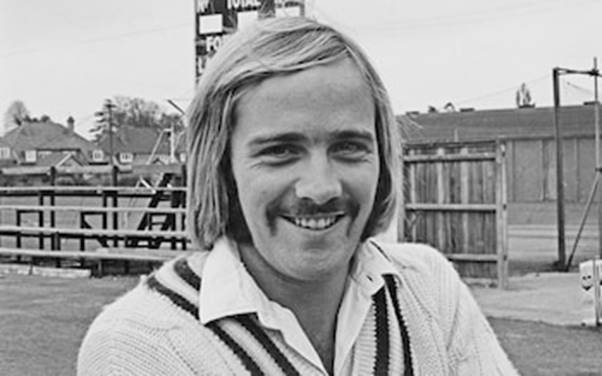
Andrew Murtagh, the former Hampshire all-rounder and now author, in his playing days in 1974 – Credit
Evening Standard
Besides, he adds, if you are feeling mentally drained by the experience, the dressing room is not a place to discuss it . There, the principal coping mechanisms are banter and alcohol .
“I don’t think cricket is any different from other professional sports in that no one ever walks into the dressing room and says: ‘Lads, I’m really suffering’. In my day, to admit weakness would never happen.”
Fowler does not disagree: “If you said you’d got depression they’d have thought you were a nutcase and no good at cricket. People kept quiet. It was like homosexuals in the 1960s who wouldn’t say anything.”
Indeed, Thomas McCabe, author of a British Medical Journal investigation into cricket and mental health published in 2022, suggests the professional dressing room imposes an omerta that lasts until the point of finishing with the game.
“It is interesting to note,” he says, “that most of the cricketers featured in the media discussing mental health difficulties have retired from the game.”
Murtagh admits his personal experience is of a time so long ago it might be deemed ancient cricketing history. But he is not sure, after talking to current players, that the public admissions of depression by players like Trescothick and Flintoff has changed the tenor of dressing-room conversation.
“The PCA [Professional Cricketers’ Association] and others have put in place several good initiatives,” he says. “But I still don’t believe players talk about such things.”
Certainly, in a recent interview with Talksport, Thorpe’s widow Amanda did not think that things have improved. She described the cricket authorities’ response to her husband’s mental health issues as “woeful”, adding that she reckoned he would still be alive had he been better supported by the game.
There is, though, something else about the community of a dressing room, beyond the prevailing mickey taking. Players spend far more time in each others’ company than athletes of any other sport. After a long day’s play, they unwind by socializing together. During a season, particularly for international players on overseas tours, they see far more of each other than they do their partners. For them, cricket is not just their profession, it is their entirety. When they retire from the game , either through age or injury, that comfort blanket is brusquely removed.
“Cricket is like my family,” is how Smith described it in that final interview. “You are together so much of the time. It’s difficult to adjust to normal life after the bubble bursts. You miss the adrenaline surge; you continue the old lifestyle and live beyond your means. If you don’t know how to reinvent yourself that can leave you in a terrible position.”
Murtagh concurs: “You have spent your entire life from the age of about 10 playing cricket. Then, suddenly, for whatever reason, you are deemed not good enough. It’s a very cruel adjustment.”
He was luckier than some. When he hung up his batting gloves, he became a teacher at Malvern College, coaching the next generation of players. Yet even while embracing a new profession, he was plagued by depression. Smith was one of many who tried his hand at various business ventures that failed. For many of his later years, he attempted to alleviate his depression by self-medicating with alcohol.
David Bairstow, the wicketkeeper/batsman who represented Yorkshire, and occasionally England, was another who found life hard once removed from the game. An ebullient, whole-hearted character, he took his own life eight years after he played his last game. His son Jonny would mark each of his many centuries playing for England by looking up to the heavens to acknowledge his father.
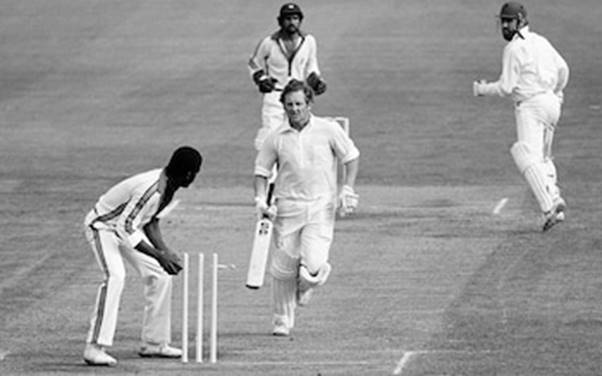
Batsman David Bairstow took his own life eight years after he played his last game - Credit Patrick Eagar/Getty
Bairstow opens A Clear Blue Sky, his autobiography published in 2017, with the memory of how, as an eight-year-old, he was confronted by the horrifying aftermath of his dad’s suicide.
“First, the bare, stark fact. My dad David Bairstow was only 46 years and 126 days old when he committed suicide almost 20 years ago. My mum Janet, my sister Becky and I found him when we returned home at 8.30pm on one of those typically lampblack and cold January nights. He had hanged himself from the staircase.”
Bairstow admits he had no idea there was an issue in his father’s mind. To the boy he remained, right until the point of his death, the same confident character he exhibited on the cricket field. Despite the fact his inquest found he had sought medical help, the depths remained unrevealed.
“I spoke to a lot of people for this book,” says Murtagh. “And I’m still not sure I found the answer as to whether it is the game itself that creates such mental torment or the people who play it.”
Here is the deep irony contained within Murtagh’s investigation. Watching Smith in his prime, it was not just that it was impossible to conceive that someone so brave, so steadfast, could be brought so low by depression. It was that, with his every glorious cut and drive, his every magnificent four and supersonic six, he cheered so many of us up. For us he was a cure for the blues. – The Telegraph