How to Get out of the Heart Disease Danger Zone
With deaths from the condition rising for the first time in decades, here’s how to tell if you’re at risk and the ways to protect yourself – Image Rutgers University
By Bryan Williams
When I began my career as a junior doctor 40 years ago, the situation surrounding heart disease was terrible. People would come into hospital with a heart attack, and it was quite often a pre-terminal event. Not everyone expected to go home.
But in the subsequent decades, the landscape improved dramatically. Smoking rates started to come down, and we developed better treatments for blood pressure control , and statins for lowering cholesterol. New surgical procedures were developed for people who have had a heart attack or suffered a stroke , which have saved countless lives.
Patients can be whisked straight into a cath lab, a specialized hospital room where doctors can use minimally invasive procedures to open up blocked arteries with a stent. Likewise, stroke centers can now carry out emergency procedures to remove clots from the arteries leading to the brain. These research-led innovations are up there with the greatest success stories of modern medicine.

Bryan Williams is an NHS consultant physician and leading scientist in the field of heart disease. He is also chief scientific and medical officer of The British Heart foundation - Credit Rii Schroer
Yet, since the turn of this decade, we’ve started to see an alarming reversal, and as the chief scientific and medical officer for the British Heart Foundation (BHF), I find this deeply concerning. The BHF’s latest data shows that the proportion of working age adults dying from heart disease has risen by 12 per cent since 2020 . There are now around 420 deaths per week from heart disease and stroke, which is horrific. It has set us back 10 or 15 years in terms of the progress we’ve been making, and the frustration is that much of it is preventable.
So why is this happening? Of course the challenges being faced by the health system are playing a role. People are less able to get access to their GP to obtain preventative treatments such as statins, while the well-publicized delays in ambulance response times and the challenges facing emergency care are also a factor. Time is muscle in the heart, and the longer it takes to get people to hospital, where surgeons can open up blocked arteries and get blood flowing again, the more likely that there will be long-term heart muscle damage, and people will die.
But the other big element, in my view, is obesity . As the progress we were making against heart disease and stroke first plateaued and then began to reverse, obesity rates in children and adults have increased dramatically . Nearly 30 per cent of adults in the UK could be classified as obese, and that’s having a huge impact on heart disease rates. One of the reasons for this is because carrying excess weight can lead to fats building up in the arteries, raising blood pressure, and potentially ultimately leading to deadly clots.
How do you know if you’re in the heart disease danger zone?
One of the reasons why heart disease has always been such a deadly killer is because most of the risk factors are symptomless. Even if your blood pressure or cholesterol levels are elevated, you won’t feel a thing.
My advice to anyone is first to look at your family history. If any relative has died before the age of 65 from a heart attack or stroke, it’s imperative that you get your blood pressure and cholesterol checked, and it’s particularly important that you don’t smoke, remain active and try to keep a healthy weight, because you may be genetically predisposed to a greater risk of heart disease.
This also means that if you’re aged between 40 and 74, and you get a notification to get a health check from the NHS, it could be one of the most important things you do for securing your future. The NHS has also developed a simple digital tool where anyone can enter their weight, height, blood pressure and cholesterol levels, and your heart age will be estimated compared with your real age. If it’s elevated, then you’re more at risk.
Who is most at risk?
If you look over the life course, the risk in men and women is equivalent, but if you specifically look at premature deaths under the age of 65, two thirds of them are in men. People have suggested biological reasons for this – the BHF previously funded a study linking higher testosterone levels to the blood vessels being more likely to harden – but I think that lifestyle is the main driving factor.
You can see that in the geographic inequalities surrounding the disease – you are about three times more likely to die prematurely of heart or stroke if you live in the north of England compared with the south, and that’s probably linked to smoking rates, obesity rates, the availability and affordability of healthy food , and the fact that many people out of necessity are eating food loaded with salt, sugar and fat.
What do you need to track?
Blood pressure is extremely important. My advice is that if it’s normal when you get it measured, you don’t need to get it re-checked for another three to five years, and to make it more frequent once you’re over 50, perhaps every two years, for example, as blood pressure does tend to go up with age.
I also think that remote monitoring is going to become normalized, with more people having blood pressure monitors in their homes. If you’re doing it yourself, I would suggest sitting down, resting for five minutes, and then taking three readings, one minute apart. And then do that a few times over a week, and look at the trend, because occasionally you might get a high blood pressure day, but we’re not concerned about that – it’s the consistent trend of your blood pressure that’s important.
Cholesterol is a bit different, because if it’s normal as a young person in your late teens or 20s, it will largely remain normal throughout your life, unless you suddenly start eating a poor diet full of fat. In this case, gaining too much cholesterol can lead to narrowing of blood vessels and a greater risk of blockages, which could lead to a heart attack or stroke. But generally, unless your lifestyle has drastically changed and you’ve put on a lot of weight, in which case it might be good to get your cholesterol re-checked, it’s by and large a one-off check.
One of the main things doctors are trying to detect through that test is whether you’re part of the subset of people who have familial hypercholesterolemia , a genetic condition which impacts one in 250 people in the UK, which increases cholesterol and makes you more at risk of dying from heart disease prematurely. It’s really important to detect because it can be either treated with statins or these new injectable cholesterol-lowering therapies, which can be given every six months.
Wearables can play a role in ensuring that you’re being active enough, which is good for your heart. While you can’t directly measure blood pressure with smartwatches and rings, they can measure different features of your pulse, and in the coming years, built-in algorithms could use that to estimate whether your blood pressure is elevated or not. In the future, I suspect that many of these devices will have a traffic light system, prompting you to get your blood pressure checked by a medical professional based on certain characteristics of your pulse.
At what age do you need to start worrying about heart health?
It’s important to get on top of these things early. I’m not suggesting that all 30-year-olds make an appointment with their doctor – that wouldn’t make me popular with GPs – but if you get the opportunity in your 30s to have your blood pressure and cholesterol checked, it would be a sensible thing to do, especially if you have a family history and either of your parents developed heart disease at a younger age.
How to get out of the heart disease danger zone
Quit smoking
Even if you’re over 60, quitting smoking can reduce your short-term risk of heart disease and stroke dramatically. There’s a pretty immediate benefit – within weeks, you can see reductions of the likelihood of these events happening.
The reason why smoking is so deadly for the heart is because it increases the risk of atherosclerosis, the narrowing of the arteries which enables clots to form. Through this it also accelerates the impact of other risk factors , such as higher blood pressure and abnormally high cholesterol, they come together to increase the risk for the heart.
Do regular daily exercise
Try to get some kind of physical activity each day. That doesn’t necessarily mean getting clad in Lycra and busting a gut in the gym; it could be something as simple as walking to work or just a bit farther to the bus stop to get your heart and circulation moving.
One of the most comprehensive studies so far showed that as few as 2,337 steps per day can begin to lessen your risk of dying from heart disease, while if you’re able to do more intense aerobic exercise, such as walking at a pace where you get out of breath, cycling, or swimming, that’s even better. But even things such as gardening or playing with your children or grandchildren can make a difference.
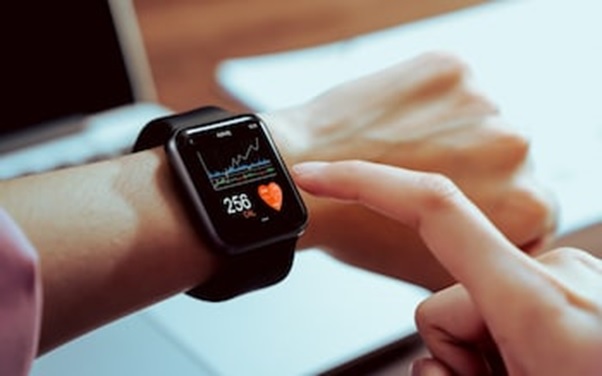
Tracking your exercise via wearable technology like smartwatches is a good way to ensure you’re being active enough Credit: iStockphoto
Lower your salt intake
One of the problems with ultra-processed foods (UPF) is that they are often rich in salt – and we know that this puts a lot of strain on the heart, as it drives up your blood pressure.
The recommended upper limit of salt intake is about 6g (¼oz) per day, which is equivalent to a teaspoon. Foods which are characterized as “high salt” are those that contain 20 per cent or more of this upper limit, so more than 1.2g. The bottom line is to avoid eating lots of pizzas, processed foods and ready meals, as these foods generally contain lots of salt , and also try to avoid adding extra salt to your meals.
If you suspect irregular heartbeats, get checked out
If you’ve ever noticed any signs of irregular heartbeats – you might feel episodes where it seems like your heart is fluttering in an irregular fashion or very quickly, causing you to feel faint – it’s important to get checked out, because that can be a sign of electrical abnormalities in the heart.
Atrial fibrillation , for example, which is where people experience bouts of excessively quick heart rhythms, can increase risk of blood clots, which can then lead to strokes.
Cardiologists can send you home with a wearable monitor which enables them to check your heart rhythm over a period of days, helping them come to a diagnosis, while many newer smartwatches can also collect data that helps pick up the tell-tale signs of atrial fibrillation.
Maintain a regular sleep pattern
BHF research has linked going to bed between 10pm and 11pm each night with a lower risk of heart disease, which illustrates the extent to which a good night’s sleep is important. We know that people who are regularly sleep deprived or who have poor sleep quality are at a greater risk. It doesn’t directly cause the underlying disease, but we believe that the exhaustion and tiredness is the trigger that makes clotting more likely to happen.
This is where wearables can also have a role through their ability to record and give us feedback about the quality of our sleep. But trying to maintain a reasonable bedtime, and not looking at your phone in the hour before you go to bed, is important.
As told to David Cox. The Telegraph