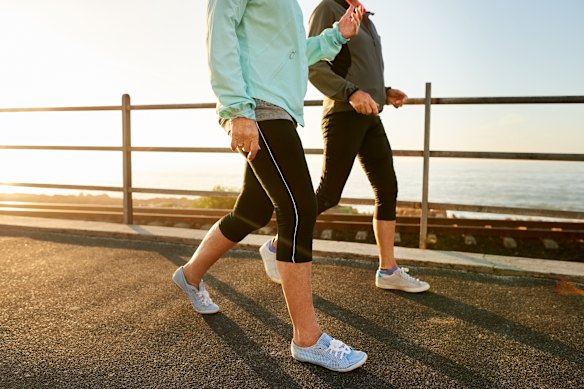
The patterns of accumulating steps matter among people who aren’t physically active - Getty Images
Does It Make a Difference How You Get Your Daily Step Quota? A New Study Says Yes
By Sarah Berry
A potent message about physical activity lately is that every step counts and that exercise “snacks” can give us tangible benefits. The thinking goes they offer benefits on par with longer exercise sessions, or what we might, in the context, call “meals”.
So, the findings of a new study may seem confusing at first.
The international study, led by an Australian team, sought to understand whether the pattern of accumulating steps matters among physically inactive people (about 80 per cent of the population).
They already knew that most of the steps we accrue tend to be through incidental movement. What they didn’t know was whether it made a difference if you took those steps in longer bouts – 10 to 15 minutes of walking at a time – compared with shorter bouts of five minutes or less.
For the study, published in the Annals of International Medicine , the researchers looked at the accelerometer data of 33,560 adults aged between 40 and 79 who walked fewer than 8,000 steps a day and had no cardiovascular disease or cancer.
After analyzing the participants’ step count and the patterns of those steps, they followed up on their health outcomes eight years later.
The difference was strikingly clear, said senior author Professor Emmanuel Stamatakis, from the Charles Perkins Centre at the University of Sydney.
The risk of a heart attack or stroke among those who accumulated their steps in bouts of five minutes or less was three times higher than those who did bouts of 10 to 15 minutes (13 per cent risk versus 4 per cent risk respectively).
“The key takeaway is: even if you don’t do enough physically, by changing the pattern you can make the most out of whatever you are doing,” Stamatakis says. “It’s a really important message.”
Why? The researchers suggested that we needed the longer durations to meaningfully activate cardiometabolic mechanisms such as improvements in heart-rate variability, parasympathetic (vagal) tone or insulin sensitivity.
Does this dilute or debunk the idea of exercise snacks (such as 20 seconds of all-out stair sprints ) or short bursts of vigorous incidental activity (such as walking quickly for five minutes) being as effective as longer bouts of activity?
No, says Stamatakis.
About 95 per cent of the time, walking is a light-to-moderate intensity activity, he says. Compared with vigorous activities it is “far less potent”, but by extending the bout it makes it more effective.
And, he adds, light and vigorous activities influence the body in different ways.
By increasing the length of light-intensity activity bouts we can activate our aerobic system and improve metabolic health.
Even short bursts of vigorous activity can cause more drastic adaptations to our physiology, acting directly on cardiorespiratory system.
“The study reinforces that even small increases in daily physical activity can benefit health,” says Professor David Dunstan, of the Baker Heart & Diabetes Institute.
“Importantly, it shifts the focus beyond just counting daily steps, offering early advice that how those steps are accumulated throughout the day could matter, particularly for people who are the least active.”
The study focused on people who do not meet the physical activity guidelines because they have the highest risk of chronic disease, including cardiovascular disease, diabetes, dementia, cancer and obesity.
“‘Do more’ is a very important message,” says Stamatakis. “It’s sound advice but the reality is the majority of the population, for whatever reason, do not invest the time. So why not try and understand how to maximize the potency of activity among physically inactive people?”
For people who are physically active, even those of us who are active couch potatoes and meet or exceed the guidelines despite spending much of the day sitting, he says step patterns will likely matter less.
“Those people will get the most benefits from the volume of exercise they do,” he explains.
If he were to design the optimal strategy for someone who does very little activity, Stamatakis says he would suggest trying to increase the length of walking bouts whatever intensity they are. But he would also suggest trying to incorporate a few bursts of higher intensity within the longer bout.
For instance, if you walk for 15 minutes, maximize your walking pace for one to two minutes to get slightly out of breath.
“They’re complementary in each and every way,” he says of ‘snacks’ and ‘meals’. Putting a number on the potency of the two together? That, Stamatakis says, is the plan for the next paper. – Sydney Morning Herald