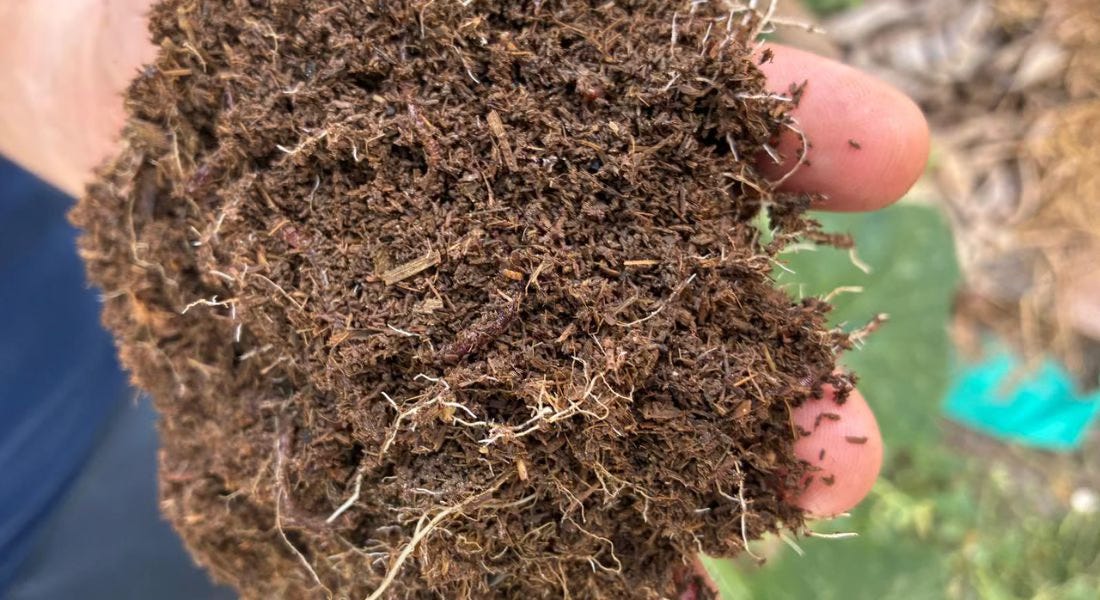
Rich soil with worms from Fry Taylor’s composting - Photo by Fry Taylor
Beyond Petitions and Posts: Composting as Everyday Climate Action
By Nazish Saad
Paris, France
As the impacts of climate change intensify, many of us have turned into online environmental warriors; signing petitions, liking Greta Thunberg’s posts, and sharing climate memes. But when it comes to action, how about taking the small daily steps that can actually make a difference?
There is a straightforward way we can all reduce the waste going into landfills. This simple daily habit would also give us healthier plants for our gardens, our balconies, and our indoor greenery — while reducing the cost of expensive fertilizers and pesticides.
Converting food waste to soil food – or composting – is accessible for any home. The process is also increasingly being recognized as the most direct path to soil regeneration and the production of nutrient-rich healthy food.
Reducing greenhouse gas
Another advantage of composting is that it reduces the production of methane, a powerful greenhouse gas, in landfills where food waste breaks down without oxygen. The US Environmental Protection Agency estimates that landfills release almost 60% of the world’s methane emissions into the atmosphere, accelerating global warming.
While composting is easy enough to do at home, even the most environmentally conscious urban dwellers balk at the process because of the fear of smells, plus insect and rodent invasions. And yet, humus, the dark, organic soil that is formed of decaying plants and animals, is often referred to as “black gold” because of its benefits to plants, soil and the environment.
“I hate the idea of waste. I didn’t want my food remains to end up on a landfill,” Emma Murphy from Clarity Hair Salon in Ireland told Sapan News. “So, I started making compost on my balcony and have never stopped since. It’s amazing for my plants and I feel good about not having any wastage.”
The issues that prevent city residents from composting are easily overcome, say urban environmentalists like Anusha Fatima and Rahul Rai who co-founded Trashit , a compost and soil regeneration company in Karachi in 2017. Trashit aims to empower residents and communities to take responsibility for their own waste.
Fatima has also worked with Nick Padwick, a third generation farmer and the owner of Wild Soils , which makes compost used on King Charles’ Sandringham estate in Norfolk, England. During their ongoing year-long project Padwick showed Fatima the Soil Food Network techniques that create compost for farmers and urban gardeners using chemical-free methods. They collaborated recently to bring these techniques to flood-hit Pakistan , holding workshops and seminars in various cities, as well as online.
The first step to making compost, says Anusha Fatima, is to separate green (or wet) waste from brown (or dry) waste. Green waste, high in nitrogen and moisture, typically includes vegetable and fruit leftovers, eggshells, tea and coffee remains. These ingredients can even be frozen in bags in home freezers until they are ready to be used. Brown waste is rich in carbon and consists of dry materials such as soil, shredded paper, dry leaves and wood chips.
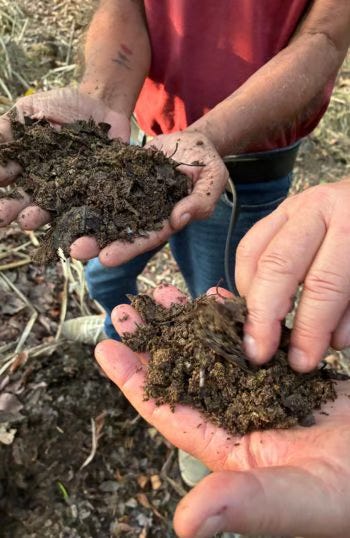
Turning waste into rich soil - Photo by Nazish Saad
You simply keep adding your green and brown waste together in a compost bin - it could even be a bucket with a cover - until the bin is full. You can mix it up and open the cover to let the mixture breathe occasionally.
Some people simply add vegetable and fruit peels to their compost bins and add layers of old soil along with discarded leaves from potted plants.
It can take from a few weeks to months for the compost to be ready for use, depending on factors such as temperature and the materials used to make the compost.
No dairy please
Fatima advises against adding items like dairy, meat, and bones which attract smells and rodents. Also avoid plastics and tetra packs as they do not disintegrate easily. Adding live worms to compost helps break it down and prevents smells and insects.
“I love using just a small amount of hair in my compost because it’s packed with nitrogen, acting like a natural booster that enriches the soil without overwhelming the mix,” said Fry Taylor from Green Salon Collective in Belfast, Ireland.
He told Sapan News that studies conducted by his salon have shown that hair in soil will boost growth compared to plants without hair.
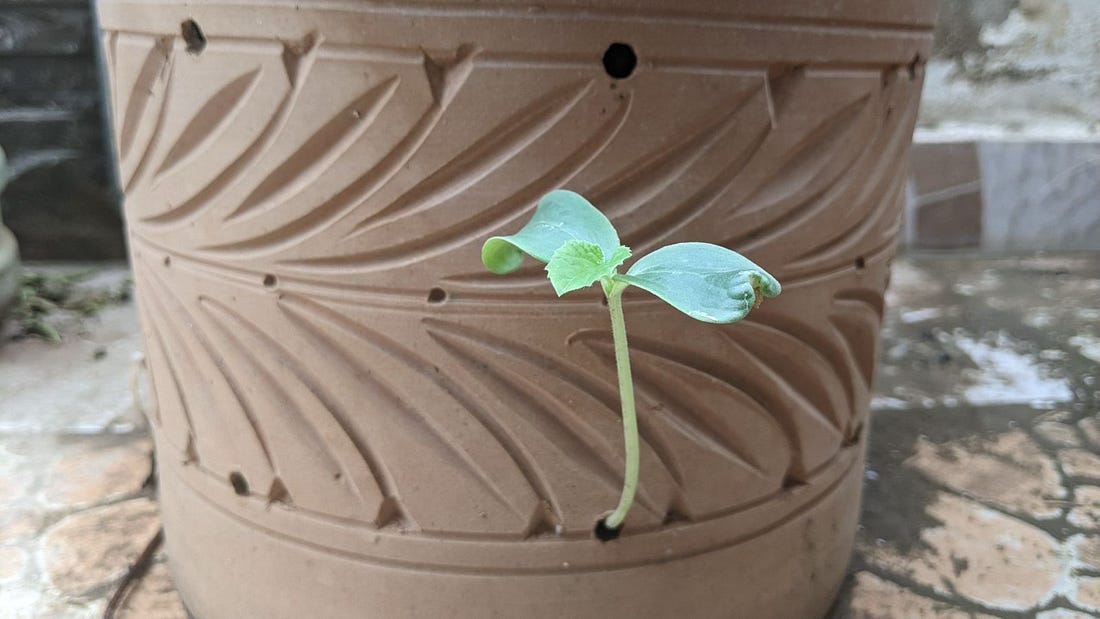
Trashit provides helpful tips and materials such as compost starters and the ‘Eco-Khamba’, a pottery container to collect compost and convert food waste into a real treasure for plants. Their website also provides a step-by-step guide for composting.
New life sprouts from the food waste composted in an ‘Eco-Khamba’ - Photo Trashit
Once compost is ready, individual ingredients that went into it are not separately identifiable – the mixture looks like dark soil. It may have a sweet smell and a fine texture. It can then be added directly to indoor plants, gardens or stored in containers until needed. The liquid that accumulates during the process can also be used as a fertilizer since it is rich in nutrients.
As awareness of the benefits of home composting grows, many cities offer drop-off bins for composting. To facilitate composting for urban citizens, organic grocery stores sometimes have compost bins on their premises for those who prefer not to compost at home. Some trash collection companies also pick up compost or food waste for compost from homes for a fee.
Collective action
If none of these solutions are accessible, apartment building residents can implement a communal composting area to produce compost for use in their own building complex.
Local initiatives to lobby government officials to implement composting programs have also proven effective in many areas. Given the power of a collective action, apartment building residents can group together and maximize their clout.
And what better use for a group initiative than one that starts from one’s own kitchen and gives back to the environment in a circular, cleaner, greener way?
(Nazish Saad is an investor in cleantech and a business consultant from Karachi, based in Paris. Passionate about bringing positive change and solving corporate problems through unconventional solutions, she is a partner at Terre de Couleur, a cosmetic biotech company in Europe and Founding Partner at Ecobricks Pakistan, a startup focusing on upcycling plastic waste into high value objects. - nazishmunch@gmail.com)
This is a Sapan News syndicated feature - www.sapannews.com