From Spain to Nathiagali, GIFF 2025 brought stories that made us cry, think, and reflect on cinema's true purpose
From Mother to Prince Charming: Gandhara Independent Film Fest Was a Reminder that Short Films Can Hit the Hardest
By Sara Danial
There’s something about sitting in a dimly lit auditorium, popcorn in hand, watching stories unfold that feel so close to home, even when they come from thousands of miles away. That’s exactly what the Gandhara Independent Film Festival (GIFF) 2025 offered this weekend at the National Academy of Performing Arts in Karachi. An initiative by Cirque Films, this festival, one of the best events on the city’s cultural calendar, was a celebration of cinema that connects humanity through its most intimate medium: storytelling.
GIFF ’25 was an emotional rollercoaster, bringing together filmmakers from Pakistan, Spain, Moldova, Canada, Argentina, Indonesia, and beyond. With films screened back-to-back and discussions that questioned how culture shapes stories (and vice versa), it became a melting pot of ideas and inspirations. The best part? It reminded us that short films, often overlooked, are some of the most powerful ways to capture life in all its raw, fleeting beauty.
Mother (Mai)
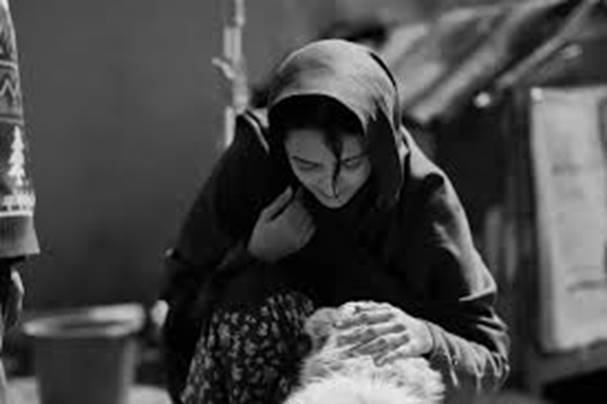
I watched Mother (Mai) by Tito Refoxo from Spain. Set in a small village in Galicia in 1970, it tells the story of a mother desperate to find her missing daughter, Sara. What starts as grief turns into defiance. She fights her family, her husband, and even the moral codes of the town.
The scene that hit hardest was when she’s told it’s a mother’s “obligation to accept it.” But her pain refuses to accept silence. The priest takes her to the cemetery, where she finally finds peace by her daughter’s grave, clutching a tattered doll. It’s gut-wrenching, beautiful, and in just a few minutes, it captures what motherhood really is: unconditional love that refuses to fade.
Place Under the Sun
Then came Place Under the Sun by Vlad Bolgarin from Moldova, which was a gentle yet painful look at a struggling father and his eight-year-old son trying to sell vegetables at a local market.
The father, once a pianist, now sells peaches and cucumbers to survive, and the son dreams of buying him a big house and a cow one day so he can stop working so hard. When the boy ends up buying peaches from his own father, it’s hard not to tear up. Children, after all, feel big emotions even in their tiny worlds. It’s these kinds of films that teach us, adults, that resilience and hope often come from the smallest shoulders.
Kareem
Closer to home was Kareem by Abdul Majid Abbasi, a Pakistani short that tugged at every heartstring. Shot in the scenic hills of Nathiagali, it tells the story of a seven-year-old boy, Kareem, waiting for his father to return from abroad. Surrounded by guests who ignore him and a mother he doesn’t want to share, Kareem retreats into silence, his only friend being Jackie, his loyal dog. In the end, as Jackie’s barking echoes Kareem’s unspoken pain, you can’t help but feel the loneliness of so many children in similar homes.
During the post-screening Q&A, Abbasi shared how a team of 50 people worked on this film, and costume designer Zoya mentioned how she researched 1970s attire to recreate the era accurately. That attention to detail? It showed.
Prince Charming
And then there was Prince Charming , directed by Sheheryar Munawar, starring Mahira Khan and Zahid Ahmed, two names we don’t often associate with art-house cinema.
The film on SeePrime dives into post-marital depression, a topic that’s barely talked about in Pakistan. It portrays a woman yearning for her old self, the version of her husband before the grind of marriage, and the fading tenderness that once glued them together. It’s raw, it’s real, and it hits home, especially in a society where marriage is seen as the ultimate achievement, especially for women. To see this topic on screen was refreshing, and honestly, necessary.
The panel discussion titled “How Does Culture Shape Stories? And Do Stories Shape Our Culture in Return?” was interesting, moderated by Kiran Murad and featuring Nadeem Baig, Fizza Ali Meerza, and Nabeel Qureshi. Nadeem Baig pointed out how Pakistan’s storytelling is deeply rooted in its socio-political context, saying, “In Pakistan, society is more important than culture,” and that filmmakers are now using stories to challenge and reshape that culture.
Fizza added that one can’t disconnect story and culture, they’re part of each other. “And the story is essentially embedded in history (time). So, anything you say or the work that you do may be used as a reference to culture, society and time. “The form may change, but the connection will never die,” she said.
Nabeel mentioned how films like Na Maloom Afraad reflected their time but wouldn’t resonate the same way today, depicting how fast our society evolves.
GIFF 2025 was a reminder that cinema, especially indie cinema, still has the power to make us pause, reflect, and feel. These short films, whether about loss, hope, childhood, or love, weren’t long enough to demand your time, but they were deep enough to change your mind. And maybe that’s what real cinema should do: not just entertain but stay with you long after the credits roll. Images