Antarctica: December 2001 - 2
By Dr Khalid Siddiqui
Ohio

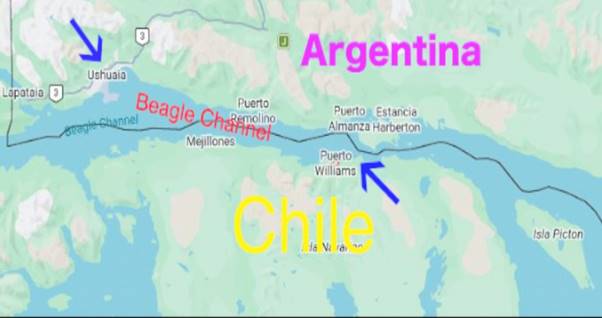
In the evening the ship left Ushuaia and sailed through the Beagle Channel towards the Drake Passage (“DP”). We passed Puerto Williams, Chile – the southernmost town in the world.
It took us about 36 hours to cross the DP. It is named after Sir Francis Drake who crossed it in 1578. It was by accident. He was anchored in the Strait of Magellan. He thought that Tierra del Fuego was the tip of a yet-unexplored southern continent, and there wasn’t any body of water further south. He felt that the only way to sail between the Atlantic and Pacific Oceans was through the Strait of Magellan. Convinced, he decided to sail west to exit the Strait and head northwest along the coast of Chile. Once in the Pacific Ocean he was hit by a major storm which pushed his fleet south instead of north. That’s how he ended up reaching an open ocean. That passage of water was named the Drake Passage. He realized that Tierra del Fuego was not the tip of a continent but an island.
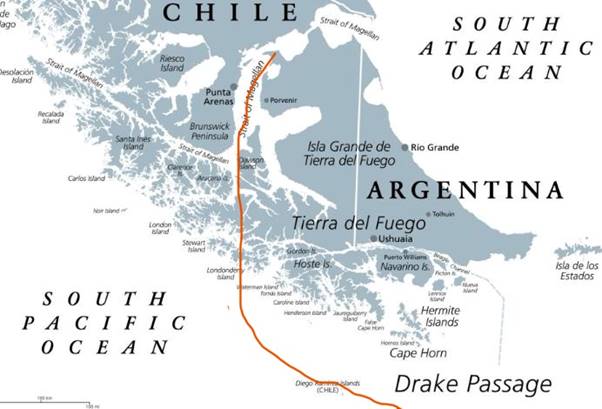
Willem Schoten, a Dutch, was the first to deliberately and intentionally navigate through the DP in 1616. He conclusively proved that Cape Horn was the southern tip of South America (It was named Horn after Hooran, Schouten’s hometown in Netherlands), and there was no land mass south of Cape Horn. Antarctica was discovered in 1820. So, for two hundred years prior to that there was confusion about the geography south of South America. The Drake Passage was re-defined as the 800-km of sea between Cape Horn and Antarctica.
DP is the most turbulent sea in the world for three reasons: 1. The Antarctic Circumpolar Current flows uninterrupted around Antarctica. 2. There is no landmass within that 800-km strip of sea around the earth to calm the raging storms. So a storm that starts anywhere within this strip goes around and around. 3. Warm air from the north meets Antarctic cold creating rapidly intensifying storms. Historically, only 30% of the time Drake Passage is calm (Drake Lake), and 70% of the time it is rough (Drake Shake). Before the introduction of steam-powered vessels, Drake Passage was the great maritime graveyard. Sailors feared it more than pirates, war or disease. 800 ships have been lost in DP.
As opposed to the Alaskan cruise, which is quite monotonous, the Antarctic one is animated, challenging and unpredictable. In Antarctica the weather conditions change on a dime; the sea is very rough; and there are more birds and animals to see up close.
In the evening, we were given a detailed briefing about the important features of the trip. There was a physician on board who offered scopolamine patches or meclizine pills for seasickness, but only few took it. During the night almost all of us who had not taken those precautions started having seasickness. The sea was turbulent and the ship would rock constantly to make everyone uncomfortable. However, the staff insisted that it was not too bad, it could have been worse. I also had to take meclizine in the morning.
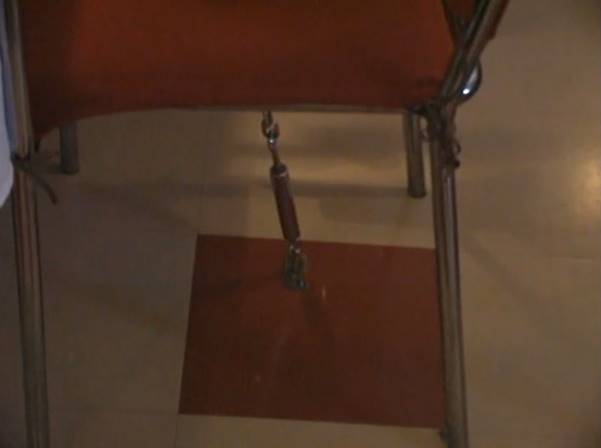
Once the ship entered the Drake Passage, a different type of motion was added. The ship followed the movements of those massive waves. The wave would gradually lift the ship from the side causing it to tilt, giving us the feeling of going up a rollercoaster. And when the wave dropped the ship hit the water with a thud like a “roller-coaster dip”. Walking would feel like trying to move inside a gently moving building. People would walk zig zag down the corridors – “Drake dance.” People held railings while walking in the hallways. Nothing remained steady. Loose objects would move. Hangers would swing in the closets. Even lying in bed would give the constant feeling of being lifted and lowered. Sleeping would be difficult. Plates, glasses and even furniture would slide if not secured. Drinks in glasses would spill. Crews would use anti-slip mats and special serving techniques. The dining room chairs were anchored to the floor to prevent from sliding on the floor. That helped, but the people themselves would slide off the chair if they were not holding on to the table.
Later in the day, when I was coming out of the shower, the ship tilted precariously to one side. To maintain the balance, I grabbed the hinge-jamb (side post) with my left hand. Just then the door slammed on the three fingers of my left hand. Pain was excruciating, and the fingers swelled up. I saw the resident doctor. There was no X-ray machine on board. The only relief came in the form of pain medications and an ice pack. (An X-ray on my return showed fractures in all three fingers. That put an end to playing tennis for six weeks.) I am glad that I didn’t learn about it earlier; otherwise that would have psychologically ruined my trip. The swelling came down in a few days, and the pain subsided. Most of the time I was wearing gloves which helped. I continued with the trip as planned.
Even when the ship had left DP, and entered the waters of Antarctica, the turbulence continued. Instead of seeking the protection of the coast, the ship would anchor in deep sea, some distance from the coast, for safety reasons. The coastal waters were full of pack ice, drifting icebergs and submerged ice, all of which could damage the hull.
Each evening, we would be given a briefing about the next day’s schedule. The tourists had come from all over the world. There was one Indian with his two daughters. Please watch the video.
https://youtu.be/q-Gbb-J3lG0
Usually, the ship would sail at ‘night’ to the next destination and, by morning, would be anchored some distance from the shore. Early in the morning, the Australian guides would inspect the destination and, if necessary, cut a trail through the snow and ice for the tourist to walk on. Sometime after breakfast, depending upon the weather conditions, we would get in the rubber boats called zodiacs, and head for the landing site. Please watch the video.
https://youtu.be/MsQc7WwT1sM
That’s how we hopped from one place to the other. Each station would have its own unique features, i.e., birds, seals, etc. We, however, never ventured too deep inland for safety reasons. It could be dangerous to end up in an uncharted area of deep snow. Also, if the weather got worse then the tourists would have enough time to get back into the zodiacs, and leave the area. On paper, the days were 22 hours long but, almost all the time, it was cloudy and hazy. And the temperature rarely was above the freezing point.
Fossilized Trees (Coal)
During an evening briefing, we were informed that the next day we would be visiting an area of fossilized trees. The Geologist, Dr D., was very excited. That was one of the main reasons he had come in the first place.
Between the period between 300 million and 34 million years ago, Antarctica was covered by different types of forests. When the plants died, they fell into the swampy water. As the oxygen content was low in the swamp, the dead trees didn’t decay completely. This partially decomposed material accumulated as peat. Over a period of time, sediment (sand, mud, clay) buried the peat. As more layers piled up on top, the heat and pressure increased. The rising temperature and pressure changed peat into three types of coal: lignite, bituminous and anthracite. This transformation is called coalification. In Antarctica, bituminous coal is the most common type to be found.
Oil, on the other hand, is produced by a completely different process. It dates back to 50-200 million years. In ancient oceans billions of plankton, algae and microorganisms lived. When they died, their remains sank to the sea floor. The dead organisms mixed with mud and sand. Layers of sediment slowly buried this organic material. Low oxygen prevented complete decay. Over millions of years the deeper burial increased temperature and pressure turning the organic matter into a waxy material called kerogen. Further heating would convert kerogen into oil and natural gas. Oil moved upward and accumulated beneath the impermeable rock forming oil reserves. Natural gas collected over the oil. The entire process took ten to hundreds of millions of years. In short, coal is a plant product and oil an animal product.
In the morning, after breakfast we started boarding the zodiacs. It was a long process as there was only one boarding station, and the zodiacs and guides were limited. So, while some tourists would already be on the location, others would still be in the process of boarding the zodiacs. We were the early ones. We saw the pieces of petrified wood from the ancient forest. These pieces were found in different locations on the continent; but they had gathered all of it in one location. Please watch the video.
https://youtu.be/kBVSls079us
Suddenly, the wind picked up, and it became very cold. I quickly took the pictures as the snowflakes started hitting the camera lens. The guides determined that it was too dangerous to stay any longer; so, we had to hurry back to the ship. More importantly, the outgoing zodiac service was temporarily suspended because of the unfavorable wind direction. There were many tourists, including Dr D., still on the ship!! In the meantime, all of us had safely returned. The guides waited for another hour or so to see if the wind had died down; but it didn’t. So, the operation was called off. Unfortunately, Dr D. was not able to see those fossilized wood pieces – something he was so excited about.
Returning to the ship from every field trip, we needed to wash our shoes to prevent soil from one area getting transmitted to another area. Also, we had to remove our heavy clothing/shoes in the changing room. Please watch the video.
https://youtu.be/RyGXSFiMCE4
The tourists who had missed it, requested about returning to the same spot some other day; but it was declined because of the tight schedule. Besides, there were many other tour groups operating, and each one had its assigned time and place for each site. They were very strict about keeping the schedule and avoiding overcrowding. That’s why we never saw any other ship throughout our trip as the ships were either ahead of us or behind us.