Ron Charles Substack
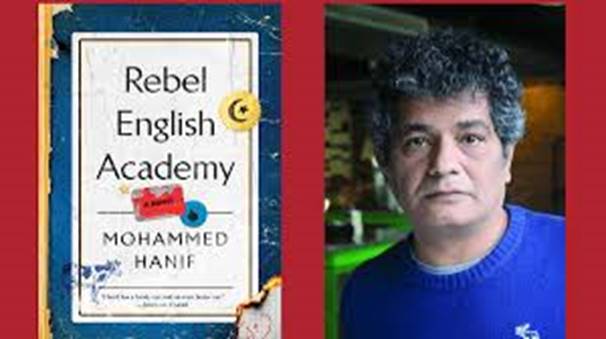
Select Excerpts from Mohammed Hanif’s The Rebel English Academy
The latest novel by Mohammed Hanif is set in the immediate aftermath of the hanging of former prime minister Zulfikar Ali Bhutto but revolves around an eclectic cast of characters, including a disillusioned socialist who runs an English tuition centre for the children of peasants in OK Town, his childhood friend who is a mosque imam and who provides him space in his compound, the on-the-run young daughter of a former comrade and an ambitious young army captain deputed to gather intelligence against the martial law regime’s foes.
Eos presents, with permission, excerpts from Rebel English Academy, published recently by Maktaba-i-Danyal in Pakistan.
On the night of the hanging
Every thing is as calm and orderly as it should be in a jail devoted to the safety and care of one very important man. All prisoners but one are asleep in their cells, restless, dreaming of their victims or their loved ones, which in most cases are the same people.
The Rawalpindi sky is clear and full of stars; all the talk about omens is rubbish: there are no meteor showers, no storms brewing on the horizon, the sky is not going to shed tears of blood, the earth is not about to split open and swallow its wretched inhabitants and their grief.
The man who is awake has asked for a safety razor, claiming that he doesn’t want to look like a mullah in death. After consultations with superiors, the jail superintendent has sent for a barber, who shaves the man gently, making sure to clear the fuzz from his earlobes. The man asks for a cigar and the jail superintendent doesn’t need to ask for his superiors’ permission. No man who is about to be hanged in three hours and forty-five minutes has ever tried to kill himself with a Montecristo.
The jailer makes sure to light it himself; the man chews on his cigar, takes two deep puffs and regrets it, thinking maybe he should have quit when he had the time. The man asks for his Shalimar perfume, sprays himself and lies down on the floor. A mosquito buzzes near his ear. On any other night he might have called in the jailer and given him a dressing-down for infesting his prison cell with poisonous insects, might have accused him of being a tool of the White Elephant, his favourite invective for the United States of America, but tonight he just shoos the mosquito away half-heartedly, listening to the rising and fading whirr of its wings. He is grateful for the company.
Everyone agrees on the above events. Those who wanted to hang him, those who wanted to save him, those who wanted a martyr in the early morning whose blood could help them bring about a revolution, even those who were indifferent, all agree up to this point that the man lay down on the floor, pulled a sheet over himself and stayed still, dress-rehearsing being dead.
Although everything was still and orderly in and around the cell where an about-to-be hanged man practised his death pose, there was activity, quite a lot of activity, around the country in some crucial spots. Many would later say, especially journalists and diplomats who made a living out of exaggeration, that it was the longest night of their lives, that they knew something historic, something catastrophic was about to happen. But only those who had been woken up without warning with a degree of rudeness would remember this night when their own time came.
An imam was hauled up from his small room adjacent to his small mosque and ordered to get ready to lead the funeral prayers of a very important man. One of the world’s sturdiest planes, a C-130, was on standby at Rawalpindi air base to ferry the body to the man’s village. A military truck followed by six machine-gun-mounted jeeps made its way towards the airport, with some sleepy, some alert soldiers, their commander wondering why a dead man needed so much protection. Elites stay elite even in their death, he thought.
Some soldiers sang a tea jingle: “Chai chahyie, kaunsi janab.”
“Shut up,” barked the commander. “We are on VIP duty.”
A caretaker at the village graveyard was asked to start digging a grave, and when he asked what size, he was slapped. “Your own size,” he was told.
Above are the facts that everyone agrees upon. As with every hanging, there are differing accounts about the man’s walk to the gallows. How did he walk? Some say he never actually walked. That he collapsed on the shoulders of his jail guards and had to be carried. His jiyalas say that he walked on steady feet, head held high, climbed onto the podium as if addressing the nation one last time, kissed the noose and put it around his neck.
Others say he was carried on a stretcher and two policemen, themselves shaking at the gravity of the moment, had to prop him up by his armpits before fitting the rope around his neck. You can’t hang a man when he is horizontal on a stretcher.
There was one oversight by the jail superintendent, but that was taken care of by the ingenuity of a captain who happened to be on the scene on a top-secret mission. After discovering that the jail administration had forgotten to order a coffin, the captain barged into the jail armoury, looked around, saw a body-sized wooden crate that was used to store the jail guards’ rusting guns, shouted at them for not having any respect for their weapons and handed the crate over to the jailer who, in gratitude, leapt forward to kiss his hands.
The captain put his hands behind his back and reminded him that he was on post-hanging photo-shoot duty and would like a few private moments with the body after the man was hanged. The jailer agreed, knowing he had no choice in the matter, and asked the captain if he would like to witness the hanging. The captain declined the offer, saying he wasn’t on hanging duty.
He was here on a different mission.
Before being taken to the waiting cargo plane, the hanged man was left alone in the jail superintendent’s office for a few minutes with the captain, who had brought a professional photographer with him. In those few minutes, the photographer had to perform the most shameless, and as these things go hand in hand, the most high-powered assignment of his otherwise mediocre career.
He pulled down the hanged man’s soiled shalwar and, with the flash on, took half a dozen photos of his genitalia. It was done in the forlorn hope of confirming the persistent rumour that the hanged man was not circumcised and hence a Hindu. The very fact that photos were never processed or released was proof enough that the man was indeed circumcised and hence a Muslim.
The man himself might have argued forcefully that the one didn’t prove the other, that many Muslims in his hometown never bothered to circumcise their children. But this little episode ended when the captain made a phone call and reported that the bastard was dead and circumcised. There was a sigh on the other end of the phone. The director of Field Intelligence Unit’s internal security said that the bastard was lying and cheating even in his death. “And you, Captain, you had one job. What are we going to do with you?” said the director and put the phone back on its cradle with historic disappointment.
The nation was thus spared the indignity of waking up to newspapers with pictures of a hanged man’s genitalia on the front pages.
The captain was punished with a transfer to a town where car number plates started with the letters OK and where people from far-off districts came to get their vehicles registered. The captain had done a brief stint in OK town cantonment after getting his commission three and a half years ago and knew that the vehicle registration plates were the only exciting thing about the city. He knew he would need to create his own entertainment and come up with a mission to shine on this punishment posting.
Three nights after the hanging, when our captain, let’s call him Captain Gul, is inspecting his room in the Bachelor Officers’ Quarters and testing the strength of his bed, all the while looking at himself in the dressing table’s smudged mirror, admiring a hint of a cleft in his chin, his wild sideburns and lush black moustache, a few miles away there is a knock on the door of the Rebel English Academy which, despite its misleading name, is a law-abiding and affordable tuition centre for basic English. Its founder and sole teacher, Sir Baghi, is about to receive a young lady guest he is not expecting at all.
Allah’s will
Molly Rafique must have planned it this way, although he would insist forever that it was all Allah’s will. When Molly sneaks his young lady friend into the academy, Sir Baghi is finally enjoying an afternoon of solitude.
He had sent his students home the moment they heard a newspaper hawker shouting in the street about the hanging. Baghi knows that it will be a very long weekend. He wants to use this unexpected holiday to mark papers, review his syllabus and read the fourth chapter of To the Lighthouse.
He also plans a visit to Venus cinema for a matinee in the hope of finding some random afternoon love. It’s not in his nature to be optimistic but he is hoping that the cinema won’t be shut down.
Molly’s lady friend carries a faded sea-green sports bag, with the logo of a panther in the middle of a leap, ‘Pride of OK Town’ inscribed under the panther in fading gold letters. She is wearing baggy tracksuit bottoms, a white dupatta embroidered with white and yellow nargis flowers loosely draped around her neck, a girl old enough to know that she needs a dupatta but young enough not to know what to do with it. She has the air of somebody about to take a leap and start running, somebody who is being chased by their own past or, at least, what they hope is their past.
Molly is sweating, his forehead a network of the entire world’s troubles. A sheen of sweat covers his shaved upper lip, his famous beard quivering. “Can you look after my guest while I do the funeral prayers?”
Funeral prayers? Baghi groans, the veins in his neck bulge because of the unspoken words. He always buttons up his always-black shirt’s collar, less a sartorial choice and more an attempt to hide a crimson hammer and sickle tattoo on his upper chest. Baghi is past his shouting days but he still gets the occasional urge.
He knows the mosque is Molly’s business but why does Molly want to have a funeral in absentia for a man hanged two hundred miles away and buried in his village in the dead of the night three days ago? A man who was clearly a feudal despot in the clothes of an awami pseudo-socialist, bald and squeaky and certain of his own immortality, the type of man who, from his death cell, writes a threatening pamphlet titled ‘If I Am Assassinated’ … and is assassinated anyway, someone who says you can kill a man but you can’t kill an idea. Baghi wants to tell Molly you can’t have a funeral in absentia for an idea. But the mosque is Molly’s business.
On another day he might have said, Molly, surely you don’t want to start a socialist revolution in your mosque? Better not to start it anywhere — look at me.
“What can I do? The bazaar is full of jiyalas and they want a funeral. I know he wasn’t very nice to you but he is gone to Allah now, where we all must go one day, and we must honour the dead,” says Molly, moving towards the door.
Yes, we must honour the dead, Baghi wants to say, even if the dead once had a chilli-powder-laced rod rammed up my ass for writing a letter.
Baghi also wants to say that this is a teaching institution and not a resting place for girls with hurriedly packed sports bags but, before he can say it, Molly is gone, leaving behind the smell of his favourite ittar, a confused mixture of rose and jasmine, and his guest with large, searching eyes, scanning the place for something familiar.
She puts down her bag, moves towards Baghi and holds out her hand. Baghi observes her hand, hesitates before taking it. When was the last time he had shaken hands with a woman? This was not the kind of town where people shook hands with women, not the kind of neighbourhood where people left single women in bachelors’ quarters to be entertained. Her handshake is determined and it forces him to look her in the face.
Ruin, he thinks, she is going to ruin us.
In five years of teaching English to sons and daughters of peasants and shopkeepers, Baghi has developed a revolutionary technique: single words spring up to describe a moment in life. In order to teach these students, you didn’t need proper sentences. Verbs and nouns and adjectives and qualifying adverbs could wait. Usually, a word was enough to describe a given situation, an intention or, in this case, a sense of impending doom.
Baghi rarely gets to say that he was right because it has been proven, often enough, from matters of politics to affairs of the heart, that he was almost always wrong. Later it would turn out that he was right in this moment when he forgets all the flourishes of a successful English tutor and a closet revolutionary, looks at her and comes up with the perfect word: ruin.
Baghi doesn’t much care for the native language tradition which has evolved many ways of describing a face, especially a woman’s face — in fact, most of classical poetry was devoted to capturing a woman’s features. Snakes and wine goblets featured prominently. You looked for wine goblets in the eyes, poisonous vipers in the hair, and the face was always book-like. To Baghi’s enduring irritation, nobody ever said which book, a slim T.S. Eliot volume or a copy of the Original and the Biggest Heer. The English language, Baghi believed, was more accommodating, more precise, yet more expansive.
You could do away with wine goblets and coiling, hissing snakes; you could just say her nose was sharp and quivered gently when she breathed, a little dimple on the left cheek, which still had baby fat, set off a mole on the right cheek. If he was into women, he would say she could probably set anybody’s bed on fire and turn their life to ashes by loving them and then abandoning them to waste away their life writing below-average poetry, invoking as many snakes and broken goblets as they pleased.
Baghi had wanted to do many things in life: bring a violent revolution, make the rich suffer, give all the peasants’ children a world-class education. But right now he was content doing small courtesies; he was going to ask his lady guest to have a seat and politely inquire if they had met in a past life.
But before he can say it, she plonks her bag on the floor and takes a seat. He offers her tea, he offers her water. She refuses with a wave of her hand and sits on the chair; she looks towards the ceiling, the bookshelf, the blackboard, then speaks suddenly, and while native poets may have heard a koel cooing, Baghi only hears a dry-throated, husky voice which some men with unresolved sexual urges might find desirable, a voice defeated but refusing to surrender, the voice of someone ready to get up and go looking for a fight again.
“Do you often entertain his friends?” The question sounds like an accusation to Baghi.
“No,” Baghi says. “Not like this.” He fingers his buttoned-up collar, stutters and finds himself defending his friend and landlord Maulvi Rafique’s character, not that his character needs defending: he is a man of God, a rising star of the spiritual marketplace; people offer him mutton qorma and cash in advance to listen to him telling them how to live their lives and how to prepare for the afterlife.
She is waiting, still looking at him, as if urging him to explain his life as the entertainer of stray women.
“I mean, sometimes we have friends over, common friends, and we talk, but if you are asking if he has brought a woman to my academy, I would have to say no. This is an institution of learning and not a…”
She is not listening to him any more. She is the kind of woman who tunes out when a man starts to bullshit. That’s one of the many reasons on Baghi’s list for staying away from women.
“I didn’t know he was the Bhutto type,” she says.
“Not a good day to be his jiyala,” Baghi says.
“There never was a good day to be a jiyala,” she says, looking up at him, expecting him to say more.
“He’s a maulvi, offering prayers for the dead is his job.” Baghi shrugs.
Baghi doesn’t like to talk politics with women… He has learnt his lesson and likes to keep his affairs away from female comrades.
“Can I get you something cold or maybe a hot drink?”
Repeating oneself is the essence of life. When he tells this to his students, he attributes it to Virginia Woolf but he is not sure if she ever said it. That is under the category of Things Virginia Woolf Might Have Said, an evolving list in his teaching career. The bourgeois comrade who caught him in the study circle also accused him of never having read a word written by a woman. Baghi is trying to prove her wrong.
“Water,” his guest says.
Baghi takes out one of the two glasses he keeps aside for guests. Students drink from plastic tumblers — no casteism in this academy, no hierarchies, but they are young and careless and Baghi has no patience for glass shards in the feet and blood on the floor. She accepts it without a word, gulps it down in one go.
“And how do you know Maulvi sahib?” He is deferential and doesn’t call him Molly in his absence as he has called him to his face since they were children… Molly used to bristle when he started calling him Molly but Baghi could tell that he secretly enjoyed it. He was his Molly boy before he became a serious scholar of religion who accepted cash only for his sermons and refused to eat farm-bred chicken and knew people who could spring you from a police dungeon.
She looks at Baghi as if trying to decide if she should lie to him or just slap him. “I pray behind him. This is the only mosque where women can pray but you wouldn’t know because you don’t believe in God.” Baghi is startled. He doesn’t believe in God but over the years he has learnt to keep his non-faith to himself and his academy students. She has probably heard it from Molly.
“He’s a friend, more like an elder brother to me. There was a fire at my house so he offered to put me up, temporarily,” she says and watches him for a reaction.
Molly has friends? Baghi knows that he has followers, many, many followers, worshippers who prostrate behind him feverishly, broken people trying to put themselves back together, repentant paedophiles, proud murderers, lovers, addicts, heartless traders, all flock to him for salvation. Baghi believes he is the only friend Molly has, the only one who refuses to pray behind him or anyone else. But no, Molly has another friend-sister who is here sitting in his chair, a friend with hazel eyes and roasted-wheat skin who has landed in the academy with an oversized sports bag because, obviously, Molly has no other place to take her.
Does Mrs Molly know that her much-respected husband — my god on this earth, my companion, my protector, mera sohna — has a lady friend-sister who is sitting in the same compound a few metres away?
The mosque loudspeaker turns on and Molly’s friend-sister seems surprised at the proximity of the electric crackle and the piercing sound of prayers that follows. She takes her dupatta and covers her head, probably realizing for the first time that she’s sitting in a mosque, in Allah’s own house.
“You don’t remember me?”
Baghi is blank for a moment. “Were you a student? I would have remembered.”
“Not to worry. I was here only for two weeks. I failed. Are you still a good English teacher?”
Nobody has ever asked him that. Nobody. Because they all know that he is the best there is. They might also say that teaching English is the only thing he is good at. The revolutions he had hatched lay in dust. The Mazdoor Militia he had started folded after one industrial action with two dead and even the defunct militia expelled him after his open letter to Ummah. Brief visits to police lock-ups and picnics in shabby rehabs were all in the past.
But yes, he is good at something. Something useful. Send a peasant’s son to Baghi’s Rebel English Academy, a young boy who can’t even call his own cow ‘cow’ in English, and within three months he would write a perfectly composed essay called ‘Our Cow’ that would get him passing grades in high school. Send him for another three months and he might get a job as a clerk, six months and he might pass the police recruitment exam and become an official torturer.
“I try. This is the most I can do, I just help them.” He doesn’t tell her that some of them go on to become police officers and diplomats. He is trying to be humble like you should be with a young woman you have just met. You are supposed to rub your own nose in the dust in the hope she will pick you up by the scruff of your neck and say, oh come on, don’t be humble. She has no such plans. She sits there waiting for him to pick himself up.
“Some of my students have become UN diplomats — one almost became a foreign secretary. But they were hard-working children, no credit to me.”
She has no interest in his glorious career where he grooms future UN diplomats. “I failed my English in FA,” she says as if he was personally responsible for her failure. “Second division for every subject and F for English. Zero, anda.” She makes an egg with the forefinger and thumb of her right hand. “I went to college for a year on sports quota. District gold medal in 400 yard hurdles.’”
“I am sorry to hear that,” he says. He doesn’t remember her name but it seems rude to ask her now so he continues. “I wish you had stayed longer than two weeks because the system I have devised —”
He gets an appreciative smile out of her but then she cuts him off mid-sentence. “I used to come with my friend. My friend became a doctor and she says you gave her a new life, English life. Now she lives in Norway. Maybe you should try teaching me again.”
Baghi blushes. And also panics. “Are you planning to stay?”
Excerpted with permission from English Rebel Academy by Mohammed Hanif, published in Pakistan by Maktaba-i-Danyal. Originally published in Dawn, EOS, February 22nd, 2026. - Courtesy Dawn