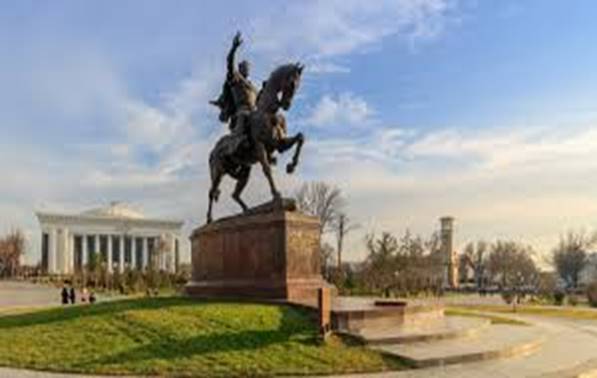
Temur’s image had a recent resurgence in Uzbekistan where he is seen as a national hero following the fall of Communism. A giant statue of him stands in a park in Central Tashkent. Also in Tashkent, there is a copy of the Holy Qur’an which is reportedly the only surviving copy of the holy book, out of six or so, written at the orders of Hazrat Osman
Amir Temur
By Dr Asif Javed
Williamsport, PA
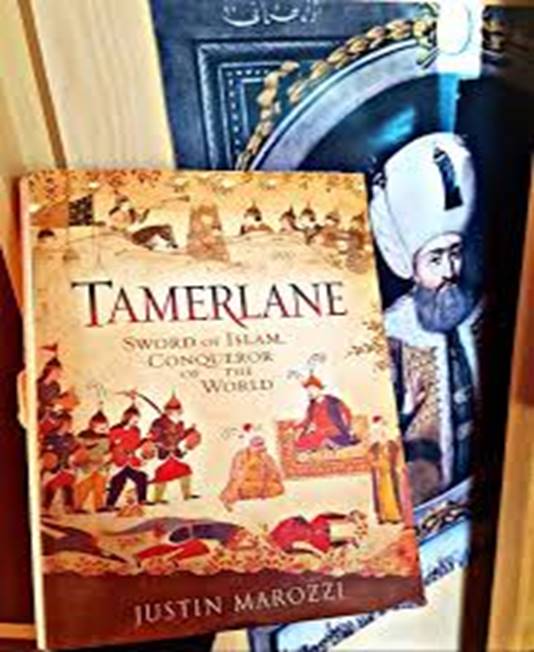
Just before the Battle of Angora against Ottoman Sultan Bayezid, “Temur dismounted from his stallion, he knelt to offer up his customary prayers to the creator of the universe, humbly prostrating himself on the scorched earth, dedicating his victories to Allah and asking Him to continue bestowing divine favor on his servant,” writes his biographer, Justin Marozzi. The Scourge of God was about to inflict a crushing defeat to yet another Muslim ruler.
A brilliant military tactician, Temur was also not averse to using trickery. Before the Battle of Angora, he had been in secret communications with the Tartar cavalry of Bayezid. Having used their tribal loyalty, and the promise of a richer plunder, he made them switch sides right in the heat of battle. This was not the first, or the last, time that he used this tactic to gain victory.
Temur was born in Uzbekistan. He was from the Barlas clan who were “Tartars, a Turkic people of Mongol origin.” In his youth, while he struggled to survive in a hostile world, he had his shoulder and leg injured (while trying to steal sheep, his detractors say), carried the effects of this injury for the rest of his life and walked with a pronounced limp.
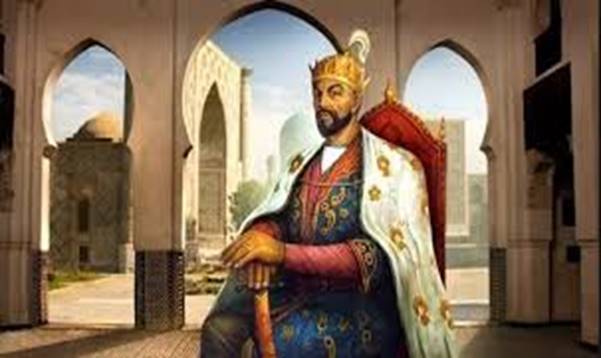
Temur’s invasion of India has puzzled some historians. Delhi was one thousand miles away, was ruled by a Muslim Tughlaq dynasty at the time that posed no threat to him. But the “unpredictable opportunist inside Temur” was aware of the famed riches of Delhi and the power struggle that had followed the death of the king – PhotoUzbekistan travel
Temur has been described as highly intelligent, ambitious, manipulative, cynical and exploitative. He had a lifelong obsession to be recognized as an heir of Genghis Khan. Not a direct descendent of Genghis, he kept a puppet Khan from the bloodline of Genghis as the nominal sovereign. He also married the widow of one of his adversaries to legitimize his claim to the throne. This wife of his was a direct descendant of Genghis Khan that allowed Temur to proclaim the title of Gurgan, the son-in-law of the great khan. “Temur’s political and religious ideology,” notes Matozzi, “was a shrewdly calculated amalgam of the customary laws of Genghis Khan on the one hand and Islam on the other.”
Temur did appreciate men of letters. His interaction with Ibn Khaldun, the celebrated author of Muqadama, took place in 1401 during the siege of Damascus. Khaldun, it turns out, had been in Damascus when Temur’s Tartar hordes laid a siege to the city. Khaldun spent a month in Temur’s camp and was impressed with Temur’s knowledge of history of Arabs, Persians and Tartars: “He is one of the greatest and mightiest of kings…he is highly intelligent, addicted to debate and argumentation about what he knows and what he does not.”
Temur’s interaction with Hafiz, arguably one of the greatest poets of Persia, was even more interesting. During his invasion of Persia, Temur was made aware of this couplet of Hafiz:
If that unkindly Shiraz Turk would take my heart within her hand, I’d give Bukhara for the mole upon her cheek, or Samarkand.
Temur was outraged. He asked for Hafiz to be brought to his court. Samarkand and Bokhara were dear to Temur, were the seats of his empire, and were famous for their glory and wealth. Temur, with a menacing look, asked Hafiz to provide an explanation. “It was a dreadful moment for Hafiz,” writes Marozzi. “His life hung in the balance. A careless answer would cast him his head. ‘Alas! O Prince, he replied, it is this prodigality which is the cause of the misery in which you see me.’” The poet extraordinaire’s answer amused Temur. Hafiz’s life was spared.
That Temur was brave is beyond any doubt. An incident from the city of Urganch in Khwarzam proves it. As Urganch was surrounded by Temur’s army, he received a message from the ruler of the besieged city. A duel to the death between Temur and the local ruler was suggested to settle it. Against strong advice, Temur,
lame on the right side, accepted the challenge. To the consternation of his advisors, Temur emerged from the frontline of his army, on the designated time, fully dressed for combat. He moved forward, closer to the besieged city’s walls and announced himself. His terrified adversary failed to turn up. Temur returned to his lines to a “tumultuous reception from his men,” writes Justin Marozzi. “It was a gesture of outstanding bravery and blind recklessness.”
The list of cities which were plundered and sacked by Temur and their population massacred is long: Kat, Urganch (razed to the ground), Isfahan, Zarang, Baghdad, Damascus, Aleppo and Delhi. In Aleppo
Against strong advice, Temur, lame on the right side, accepted the challenge. To the consternation of his advisors, Temur emerged from the frontline of his army, on the designated time, fully dressed for combat. He moved forward, closer to the besieged city’s walls and announced himself. His terrified adversary failed to turn up. Temur returned to his lines to a “tumultuous reception from his men,” writes Justin Marozzi. “It was a gesture of outstanding bravery and blind recklessness.”
The women and children fled to the Great Mosque but Temur’s soldiers followed them, bound the women with ropes and put the children to the sword-all of them…The virgins were violated without concealment…a Tartar would seize a woman, ravage her in sight of vast multitude of his companions and the people of the city and her father and brother and husband would see her plight.
Although details do differ, the general pattern was the same: After a city was captured, “the men would be butchered, women thrown in to slavery, and the city plundered and torched.” There were exceptions when a city would surrender. While this would avoid the destruction, Temur would impose a heavy ransom that would cripple the local economy for generations to come. But unlike Genghis Khan, he was not a sadist. He used the fear factor to terrorize and demoralize his opponents.
If one looks carefully at Temur’s military campaigns, a strange picture begins to emerge: For a period of thirty-five years, he kept his army on a relentless march (except for a pause of two years once). He never lost a battle. This is a remarkable record and compares favorably with those of Alexander the Great and Genghis Khan. But unlike Alexander and Gengez, he did not have a desire to create and maintain an empire. Instead, he followed a unique model of conquest followed by reconquest of the same area. “Conquest required armies, armies required soldiers, who had to be paid and rewarded for their effort,” writes Marozzi. “Keeping his armies on the move, plundering and sacking as they went, was his overriding raison d’etre.”
While many of his victories were against weaker opponents, there were several close calls. The Battle of Angora was against Bayezid Yaldaram, and in Bayezid’s backyard. Beyazid, who had terrorized Europe, was also undefeated at that point. Similarly, both battles against Toktumash, the Khan of Golden Horde, were tough engagements and both fought far away from home. Temur was an outstanding chess player and “famously brilliant at maneuvering his armies to victory in the battlefield.” One begins to wonder whether he had learnt the art of war from his chess board. It is said that at the end of Battle of Angora, when defeated Ottoman Sultan Bayezid was brought to his presence, victorious Temur was already engrossed in a chess game.
Temur’s invasion of India has puzzled some historians. Delhi was one thousand miles away, was ruled by a Muslim Tughlaq dynasty at the time that posed no threat to him. But the “unpredictable opportunist inside Temur” was aware of the famed riches of Delhi and the power struggle that had followed the death of the king. He may also have been trying to emulate Alexander the Great as well as Genghis Khan. Regardless, Delhi was captured after a battle. Before the battle, Temur ordered the execution of 100,000 prisoners “fearing a rebellion”. After the victory, a heavy ransom was imposed on the city. This was followed by a three-day massacre. “The carnage that ensued was momentous even by Temur’s standards…It took more than a century for Delhi to recover.”
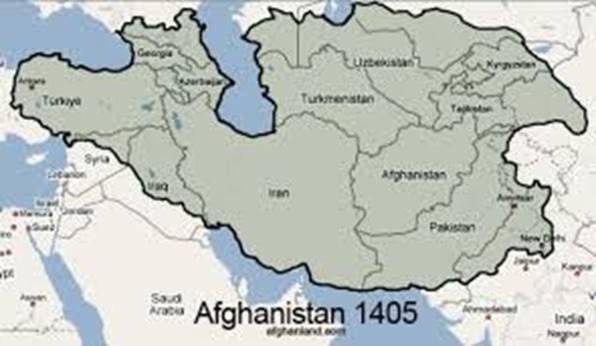
At the time of his death, Temur’s vast empire encompassed most of Central Asia, Western Asia, Middle East as well as parts of Caucasus. He was about to invade China when he died
Ironically, three hundred and forty years later, it was a descendent of Temur, Mohammad Shah Rangeela, the Mughal ruler of India, who was defeated by Nadir Shah of Persia. Temur had ravaged Persia several times. Now, the roles were reversed. The Persian king was as ruthless as Temur if not worse. He too ordered a massacre in Delhi, humiliated Mohammad Shah who begged for mercy, handed over the keys to the royal treasury to the invader. Nadir Shah took all that he could from the treasury, including the Peacock Throne and Koh-i-Noor. The ultimate humiliation was the forced marriage of a Mughal Princess to Nadir Shah’s son. Temur was long gone when Nadir Shah ravaged Delhi. But one wonders whether Mohammad Shah, Temur’s unworthy descendent, was aware of the atrocities committed by his famous ancestor in Delhi and Isfahan. The following verse should have been written about Mohammad Shah’s predicament:
Hamiyat—naam—hey—jis—ka
Gayee--Temoor--key—ghar--say
At the time of his death, Temur’s vast empire encompassed most of Central Asia, Western Asia, Middle East as well as parts of Caucasus. He was about to invade China when he died. He would have been surprised and disappointed to know that, in less than a century, his empire will cease to exist.
Temur’s image had a recent resurgence in Uzbekistan where he is seen as a national hero following the fall of Communism. A giant statue of him stands in a park in Central Tashkent. Also in Tashkent, there is a copy of the Holy Qur’an which is reportedly the only surviving copy of the holy book, out of six or so, written at the orders of Hazrat Osman. After Hazrat Osman’s martyrdom, it was taken to Kufa by Hazrat Ali. There it remained until the city was captured by Temur who brought it to Samarkand. After Czarist capture of Central Asia, it was taken to St Petersburg. It was returned to Uzbekistan at the petition of Muslims to Lenin. It remains, safe and secure, in a glass case in Tashkent.
In 1941, Temur’s body was exhumed by a Soviet archeologist (at the order of Stalin) who confirmed the injuries to Temur’s right shoulder and thigh bone. Within days of exhumation, Germany attacked Soviet Union. Temur’s admirers were quick to blame the German invasion on the desecration of their national hero’s grave. By a strange coincidence, a short time after Temur’s skeleton was reinterred, the German army surrendered at Stalingrad.
On his death bed, Temur left specific instructions to be laid to rest at the feet of his spiritual guide. Perhaps, deep inside this man of contradictions was a believer who may have hoped that, on the judgement day, the Almighty would be kind to him for securing His last Holy book. It is unknown whether Temur’s spiritual guide ever made him aware of the following verse of Surah Maida: If anyone slew a person, it would be as if he slew the whole people.
References:Tamerlane by Justin Marozzi; The Mongol Empire by Michael Prawdin; The OttomanCenturies by Lord Kinross
(The writer is a physician in Williamsport, PA and may be reached at asifjaved@comcast.net )