
Ibn Arabi, Hafez Shirazi, and Shaykh Saadi: Teachers for Our Time on the Mingling of Hearts for Promoting Humanity
By Dr Amineh Hoti

In its final stages of publication, “The Mingling of the Oceans: A Theory of How Civilizations Can Live Together” is forthcoming by Ambassador Akbar Ahmed, Frankie Martin and myself. This is a rich book on how people today can live together and get along despite their differences. With the current raging wars, horrific genocides, and despicable ethnic cleansing, this book offers a great resource for policy makers, media personnel, and teachers and students at universities across the world. The title of “The Mingling of the Oceans” is inspired by the work of the Mughal Prince Dara Shikoh’s book Majma al Bahrain.
The book looks at some of the greatest names in history to examine how they transcended their own group to respect and reach out to humanity. These are called the Minglers. In sharp contrast are the anti-Minglers who are wall builders: they don’t like bridges between cultures and nations; they build walls instead. They only see their own group and refuse to take on an empathetic, compassionate perspective much to the detriment and harm of humanity. The great need is to cultivate more Minglers through educating because the world today is dominated and ruled by Anti-Minglers: the ones pressing the bombs, the ones giving space and flames to hate, the ones not stopping the wars but supporting it, the ones building walls. But in sharp contrast to this toxic mix, we will here be focusing on three great Minglers from the Persian and Islamic voices— Ibn Arabi, Hafez of Shiraz, and Saadi of Shiraz. These three great teachers offer particularly beautiful expressions of the vision of Minglers. Ibn Arabi speaks to the mingling of spiritual paths; Hafez speaks to the mingling of hearts; and Shaykh Saadi to the mingling of humanity itself. Their words speak with remarkable immediacy to our own fractured world. They suggest that peaceful civilization does not begin only with political agreements, but with a transformation of the person.
Al Majalla
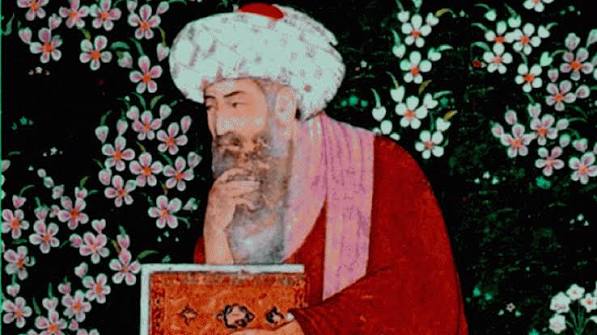
Ibn Arabi: The Mingling of Spiritual Paths
Muḥyī al-Dīn Muḥammad ibn ʿAlī ibn al-ʿArabī al-Ḥātimī al-Ṭāʾī, known simply as Ibn Arabi, was born in Murcia in al-Andalus in 1165, present day Spain. He grew up in Seville and travelled extensively through the Islamic world, encountering scholars, mystics and communities across North Africa and the Middle East. He eventually settled in Damascus, where he died in 1240.
Known as “The Greatest Master” or Shaykh al-Akbar, and attributed with more than 850 complex treaties, few thinkers in the Islamic mystical tradition have written with greater intellectual and spiritual depth about the relationship between God, humanity and religious experience. Ibn Arabi understood human diversity not as an unfortunate flaw in creation but as part of the extraordinary richness of Divine creation. Ibn Arabi mathematically and poetically maintained the Unity of Existence, i.e., that all of the universe and cosmos is a mirror-like manifestation of a single, absolute Divine Reality, i.e., beloved God, Allah. His writings encourage the seeker to move beyond a narrow confidence that God can be contained within one human formulation. One of his most famous expressions of this expansive spiritual vision, even radical universal pluralism, comes in The Interpreter of Desires: “My heart has become capable of every form: it is a pasture for gazelles and a monastery for monks, a temple for idols and the pilgrim’s Kaaba,
the tables of the Torah and the book of the Qur’an.
I follow the religion of Love; wherever its camels turn, Love is my religion and my faith.” The heart here becomes spacious enough to encounter religious difference without fear. This is not a call to erase difference. Ibn Arabi’s vision does not require the Muslim to cease being Muslim, the Christian to cease being Christian, or anyone else to abandon the tradition through which they understand the Divine. Rather, it asks whether commitment to one’s own faith can coexist with humility before the faith of another. Eastern and Western scholars praise this framework as a masterpiece of interfaith harmony elevating and centering love above rigidity and literalist understandings of dogmatic religion.
Western philosophers and scholars see Ibn Arabi as the pinnacle of illuminative and metaphysical philosophy combining the analytical sciences of the West with the profound spiritual realities of the East. One of Ibn Arabi’s most important works is The Bezels of Wisdom, in which he presents the wisdom of different prophets through a series of spiritual reflections. The work does not treat religious history as a simple contest. Instead, it explores how Divine wisdom can appear through different prophetic forms. Each prophet represents a particular spiritual quality, yet no single quality exhausts the mystery of God. Wisdom is distributed across a sacred history larger than any one community.
Ibn Arabi’s treatment of Jesus is especially significant. In the chapter devoted to Jesus, he describes him as a sign of Divine life and spirit. Jesus becomes an example of how the Divine can be encountered through a human being without being reduced to the human form. The chapter invites readers to contemplate the mystery of revelation across religious boundaries. Another important work, The Meccan Openings, records Ibn Arabi’s spiritual experiences, visions and reflections during his travels. It is not simply a theological treatise. It is also a record of encounter—with cities, teachers, pilgrims, women, scholars, mystics and ordinary people. The work suggests that spiritual knowledge is not acquired only through books, it is also received through meeting the living diversity of humanity.
One of the most important stories associated with Ibn Arabi is about his meeting with the philosopher Ibn Rushd, known in the West as Averroes. Ibn Arabi was still a young man when he visited the older philosopher in Córdoba. Ibn Rushd, already famous for his commentaries on Aristotle, is said to have asked him whether mystical unveiling agreed with rational thought. Ibn Arabi replied, in essence, that it both agreed and did not agree. Between the two answers, he said, spirits take flight and bodies tremble. The story is brief, but its meaning is profound. Reason and spiritual experience are not simply enemies. Nor can one be reduced entirely to the other. Each reveals something, and each has limits. The encounter between the philosopher and the mystic becomes a meeting between different ways of knowing. This is a valuable model for civilizations. A peaceful society does not require every person to think in the same way. It requires the ability to allow different forms of knowledge to meet without immediately destroying one another.
Ibn Arabi’s life also included a profound encounter with a woman named Nizam, whom he met in Mecca. He dedicated his collection The Interpreter of Desires to her and described her as a figure of extraordinary beauty, intelligence and spiritual refinement. Later readers sometimes treated the poems as merely romantic, but Ibn Arabi explained that the beloved could also serve as a symbol of Divine wisdom. The story of Nizam illustrates how human love can become a language for spiritual perception. The beloved is not erased by symbolism; rather, the human encounter becomes a doorway into a larger understanding of beauty, knowledge and Divine presence. This is one reason Ibn Arabi’s poetry and prose remain so important. He does not ask us to escape the world in order to find God. He asks us to learn how to see more deeply within the world. His metaphor of the heart is a metaphor of capacity. The heart can become larger. It can encounter unfamiliar forms without immediately rejecting them. It can remain rooted while becoming receptive. This is perhaps what genuine interfaith dialogue requires. Dialogue does not mean saying that all religions are identical. Nor does it require abandoning theological convictions. It means creating a space in which people can encounter one another with sufficient generosity to listen, learn, and recognize the humanity of the other. In that sense, Ibn Arabi’s mystical vision has a deeply practical dimension. A civilization in which people are incapable of imagining the sacredness of another person’s experience will struggle to live peacefully with difference. A civilization in which hearts become spacious enough for encounter has another possibility before it. The goal is not uniformity. It is mutual respect and dignity in relationships.
Hafez: The Mingling of Hearts
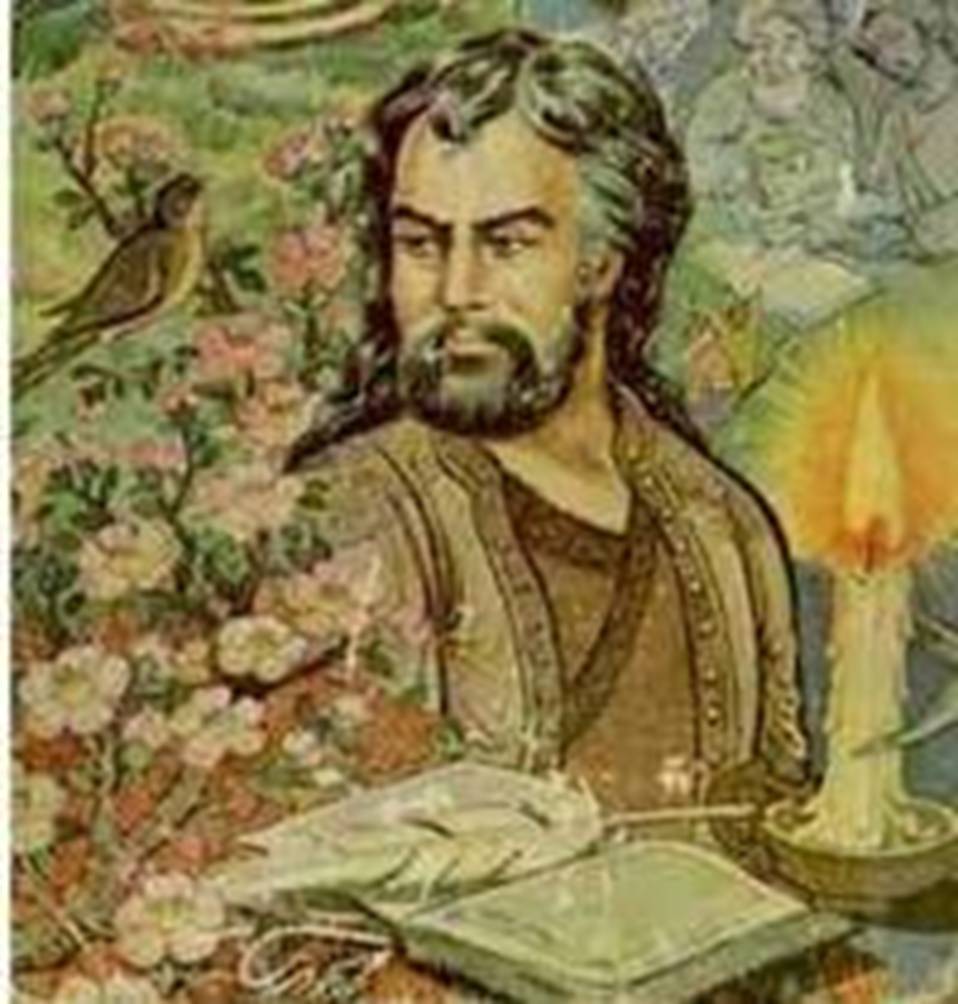
Hafez Shirazi is one of the most beloved and enduring literary teachers of the Persian-speaking world. Known as Hafez of Shiraz or Hafiz Shirazi, his full name was Khwāja Shams al-Dīn Muḥammad Ḥāfeẓ-e Shīrāzī. He was born around 1315 CE—although some scholars place his birth a little later—in Shiraz, Persia, in what is now Iran. He spent most of his life in Shiraz and died there around 1390. His tomb is in the Musalla Gardens of Shiraz, which has become a place of pilgrimage for admirers of his poetry from around the world; though recently Shiraz has become dangerous to visit as it has been bombed by America-Israel’s war on Iran.
Hafez is remembered not simply because he was a great poet, but because his poetry transcends boundaries with graceful fluidity. Hafez nurtured the concept of the “Rind” – a spiritual freethinking person who may seem sinful but actually possesses a heart that is pure and sincere in worship and deeds, which Hafez contrasts with the corrupt hypocritical self-declared pious elite and men of power. His verses speak of the beloved, music, gardens, longing and joy, even wine, yet beneath these worldly (dunia) images lies a profound mystical sensibility – a continuity of faith and grace. Like in Shah Abdul Latif Bhittai’s the Shah Jo Risalo, the beloved can become a symbol of the Divine; earthly love can become a doorway into spiritual love; and the human heart can become the place where apparent opposites meet. For the purposes of our Mingling of the Oceans, Hafiz offers a particularly important insight: the antidote to division is not necessarily argument, but the opening of the heart. Human beings can become imprisoned by the categories they inherit. We learn to divide the world into “us” and “them”—our religion and theirs, our nation and theirs, our community and theirs. Hafiz gracefully and gently unsettles these distinctions because his poetry reminds us that before we are representatives of a category, we are human beings capable of longing, suffering, delight, and love. This is why the language of the heart is so powerful for peacebuilding. The heart recognizes something that political language can sometimes obscure: that the stranger has an interior life as rich and vulnerable as our own.
Goethe, the German philosopher, was so taken by Hafez’s brilliant teaching that he wrote the West-Eastern Diwan as a tribute to him. Ralph Waldo Emerson and Friedrich Nietzsche also deeply admired and praised his intellectual poetic mastery. One of Hafez’s most distinctive poems is the ghazal often translated as “The Sun Never Says.” In it, the sun becomes an image of generosity that gives without demanding repayment:
“Even after all this time
The sun never says to the earth,
‘You owe Me.’
Look What happens
With a love like that—
It lights the whole Sky.”
Love gives freely, without turning generosity into a debt.
The repetition of the sun’s silent generosity is important. The sun does not ask the earth to become the sun. It does not demand sameness before offering light. It gives because giving is its nature. This image helps us understand Hafez’s contribution to the idea of coexistence. To love another person, community, or civilization is not to possess it. It is not to require the other to become a reflection of oneself. It is to offer light while allowing the other to remain distinct.
A famous story associated with Hafez illustrates the tension between worldly power and spiritual freedom. According to a later tradition, the Central Asian ruler Timur heard that Hafez had written a verse suggesting that he would exchange the cities of Samarkand and Bukhara for a single dark mole on the cheek of his beloved. Angered by the apparent insult to his magnificent cities, Timur summoned Hafez and demanded an explanation. Hafez is said to have replied that his generosity was the reason he was now reduced to poverty! The story captures something essential about Hafez’s poetic personality. The ruler possesses cities, armies and material power; the poet possesses imagination. The ruler thinks in terms of ownership, while the poet speaks in the language of love, where value cannot be measured by territory. The story also reveals Hafez’s courage. He does not flatter power by pretending that worldly grandeur is the highest form of greatness. His poetry places the heart, love and spiritual freedom above wealth and conquest.
Another celebrated poem, translated as “The Tavern,” turns away from religious hypocrisy and toward inner transformation: “The tavern door is open…
Come, leave the sermon behind and enter the house of love.” The “tavern” in Hafez can represent a space outside rigid respectability, where the seeker is released from pride, judgment and self-righteousness. It is a symbol of spiritual intoxication—the loss of the narrow ego in the presence of Allah, the beloved. This is why Hafez’s poetry can be so valuable in conversations about peace. He warns us that moral language can become another form of vanity. A person may speak constantly of virtue while remaining incapable of compassion. A community may defend its purity while treating others with cruelty. This is particularly relevant today for all nations.
Hafez asks us to look beyond appearances. The heart, not the public performance of righteousness, is the true measure of a person. Allah in The Qur’an also mentions the importance of the qalb – the human heart. Hafez’s poetry, inspired by the Qur’an, therefore offers us an understanding of coexistence. It does not ask us to pretend that differences do not exist. Rather, it asks whether difference must inevitably produce distance. The answer, for Hafez, seems to be no. His poetry repeatedly returns to the beloved, to the joy of existence and to the possibility of encountering the Divine through beauty and love. In doing so, he loosens the rigid boundaries through which human beings so often understand themselves and one another. If our encounters with one another are governed by suspicion, competition and the calculation of what we are owed, relationships become transactional. But if encounter begins with generosity, curiosity and recognition, something different becomes possible. The sun does not ask the earth to become the sun. It simply gives light. Perhaps this is one of the deepest lessons of mingling: to live together does not require sameness.
denabooks.com
Shaykh Saadi Shirazi: The Mingling of Humanity
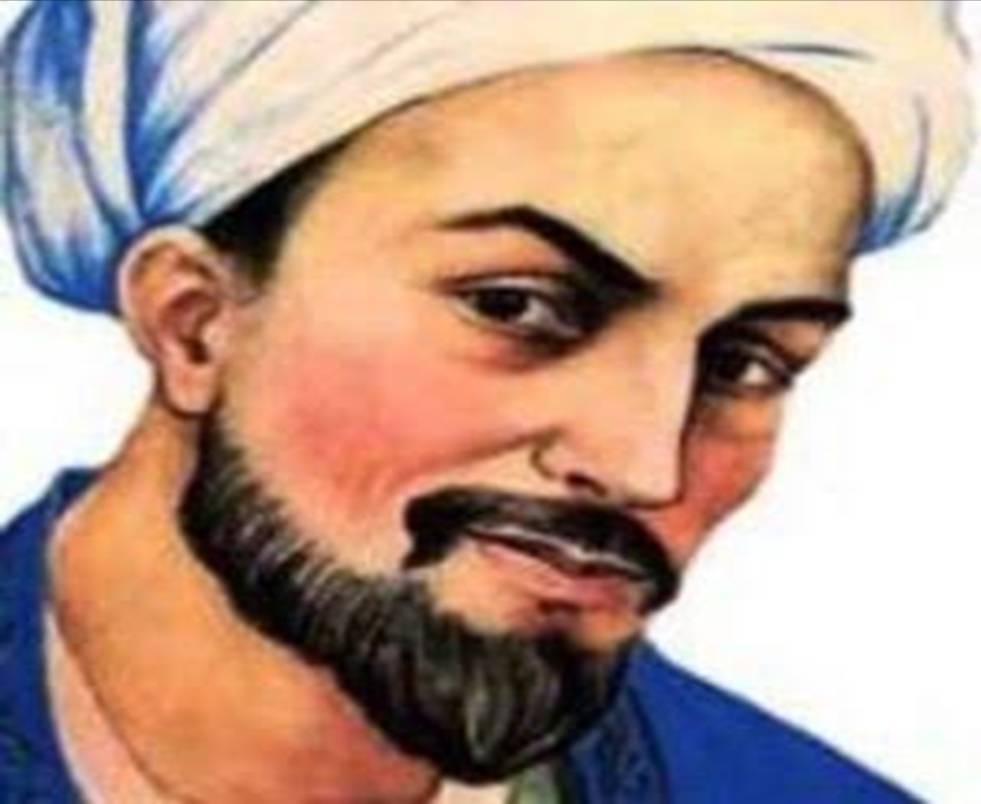
If Ibn Arabi speaks to religious encounter, Hafez to the heart, then Shaykh Saadi of Shiraz, “The Master of Speech”, Ustad-e Soxan, speaks directly to our shared humanity. Abu Muhammad Muslih al-Din bin Abdallah Shirazi, better known as Shaykh Saadi, was born in Shiraz around the late twelfth or early thirteenth century and died there in the thirteenth century. He became one of the great poets and moral thinkers of Persian literature. His influence has extended far beyond Persia. His poetry has been translated into numerous languages and continues to be read throughout the world. Shaykh Saadi’s two best-known immortal classics –treasures of world literature –capture the human condition: they are called the Bustan, or The Orchard, and the Gulistan, or The Rose Garden. The Bustan is written largely in verse and presents an ideal moral world shaped by justice, generosity, humility and love. The Gulistan combines prose and poetry, offering stories about rulers, dervishes, travelers, scholars and ordinary people and are guides for psychological intelligence, ethical governance, intellectual humility, and the balance between mercy and justice.
His works were introduced to the West in the 17 th century and Western scholars immediately recognized his universal genius that reflected their own Enlightenment values of reason, tolerance, inclusiveness, and above all human dignity, thus placing his work on the same level as the finest classics of world literature. The American scholar Ralph Waldo Emerson was deeply inspired by Shaykh Saadi and dedicated a poem to him calling him, “the cheerer of men’s hearts.” In his introduction to the Gulistan, Emerson says that Shaykh Saadi, “speaks to all nations” and much like Homer, Shakespeare, and Montaigne, he is “perpetually modern”. Goethe in his West-East Divan agreed that Saadi is an unsurpassed “moral educator”. The French Enlightenment philosopher Voltaire framed his famous work Zadig as a piece of philosophy inspired by Saadi’s moral philosophy. The German giant Hegel hailed Saadi’s brilliance acknowledging him as “master of didactics”. The famous British writer, Sir Richard Francis Burton, who did a translation of the Gulistan sang praises about how Saadi was humorous, sharp and relevant across time.
These works are not abstract philosophical systems. They are books of lived wisdom. Saadi teaches through encounters, reversals and small human dramas. A king may be corrected by a poor man. A scholar may be exposed by a child. A beggar may possess greater dignity than a ruler. A single act of kindness may reveal more wisdom than a long sermon. Among his most famous verses is the celebrated passage from the Gulistan, known as Bani Adam—the Children of Adam. The verses of this poem are displayed on a large hand-knotted Persian carpet on a wall inside the meeting room at the United Nations Headquarters in New York City written in beautiful golden Persian calligraphy: “All Human beings are like parts of a body,
created from the same essence.
When one part is hurt and in pain,
the others cannot remain in peace and be quiet.
If the misery of others leaves you indifferent,
and with no feelings of sorrow,
you cannot be called a human being.” Saadi does not begin with politics. He does not begin with nationality, geography or ideology. He begins with the body. We are limbs of one another. If one part suffers, the rest cannot remain indifferent. The metaphor, inspired by a saying of the Prophet Muhammad (pbuh) is striking because it makes compassion almost physiological. The suffering of another is not presented as somebody else’s problem. It becomes, in a profound moral sense, our own pain.
At the United Nations in New York, these words stand today reminding us of an idea that is both ancient and urgently contemporary: human beings share a common dignity, and the suffering of one part of humanity cannot ultimately be isolated from the rest. The passage offers an ethical foundation for civilization. If we believe that humanity is one body, then the question changes. We no longer ask only, “What happens to my people?” We begin to ask, “What happens to humanity?” That shift—from my people to our humanity—may be one of the essential movements required for peace.
Saadi’s life story gives this teaching additional force. Tradition holds that he spent more than thirty years travelling through the Islamic world, visiting places such as Baghdad, Damascus, Jerusalem, Makkah and Madina Shareef. Some accounts describe him meeting scholars, rulers, merchants, dervishes and villagers across a vast region. Other stories portray him as a captive during the Crusades, though the details of his biography are difficult to verify and have been shaped by later legend. What matters is the literary identity created through these stories: Shaykh Saadi as the traveler who has seen the world beyond the boundaries of his birthplace. He does not write as someone who has remained enclosed within one city. He writes as someone who has encountered many kinds of people and learned that human character cannot be judged by appearance, wealth, or nationality.
One story from the Gulistan tells of a king who asked a wise man whether he should be more grateful for his kingdom or more fearful of losing it. The wise man replied that a ruler should remember the fragility of power: the same people who praise a king today may condemn him tomorrow if he abandons justice. The story is simple, but its lesson is central to Shaykh Saadi’s moral vision. Political authority is legitimate only when it serves human welfare. A ruler who forgets the suffering of ordinary people has already separated himself from humanity.
Another story tells of a dervish who was insulted by a powerful man. Instead of responding with anger, the dervish reminded him that human beings are like members of one body: to injure another is ultimately to injure the whole. The story transforms forgiveness from weakness into wisdom. The dervish refuses to allow another person’s cruelty to determine his own character. Shaykh Saadi’s stories repeatedly place the powerful and the powerless in unexpected relationships. A king may need the counsel of a beggar. A scholar may learn from a laborer. These reversals teach readers to look beyond social rank.
His poem “The Rose Garden” offers an image of shared humanity: “The rose and the thorn, the flower and the dust, all belong to one garden.” The image reflects Shaykh Saadi’s larger moral imagination. Life contains beauty and pain, dignity and humiliation, joy and grief. A humane society does not pretend that suffering can be removed from existence. It asks whether people can protect one another from unnecessary suffering. This is precisely why Shaykh Saadi’s poetry has resonated across cultures and is particularly relevant today against the wars waged in the Middle East!
From the Heart to Humanity
Ibn Arabi, Hafez, and Shaykh Saadi wrote in different circumstances and belonged to different generations, yet their visions can be brought together around a single profound idea. Ibn Arabi teaches us to make the heart spacious enough for difference. Hafez teaches us to open the heart. Shaykh Saadi teaches us to recognize the suffering of another human being as connected to our own. Together they offer a philosophy of mingling. Mingling does not mean dissolution. Oceans mingle without losing their waters. Rivers meet without erasing the landscapes from which they came. Civilizations can meet without surrendering their histories. Religions can encounter one another without pretending that their theological differences do not exist.
Indeed, perhaps the richness of civilization lies precisely in this capacity to remain distinct while entering into relationship. The metaphor of the ocean in Dara Shikoh’s the Mingling of the Oceans is, therefore, particularly powerful. Oceans mingle while each drop keeps its own distinct identity as Rumi once famously said of humans: “You are not a drop in the ocean, You are the entire ocean in a drop.” If each human being realized their status as God’s given high status of khalifa and of being the entire universe, that would be a powerful force to not want to kill others and take over the world. Instead, mingling, humility, compassion and coexistence within a system of justice is what a civilization capable of peaceful coexistence might look like: the ability to encounter. Encounter requires curiosity. It requires humility. It requires the courage to discover that the other may possess something we do not. And, above all, it requires the ability to see the human being before us before seeing the category to which we have assigned them. The three poets help us approach this in the following ways:
Ibn Arabi tells us that the heart can become capacious enough to encounter many forms of spiritual expression. His Bezels of Wisdom, Meccan Openings and Interpreter of Desires present a world in which Divine wisdom is encountered through many prophetic, intellectual and human forms. His meeting with Ibn Rushd reminds us that reason and spiritual experience can meet without one destroying the other. Hafez tells us that the heart must be opened through love. His poems of the beloved, the tavern and the generous sun challenge possessiveness, hypocrisy and spiritual pride. He reminds us that love cannot be reduced to ownership and that generosity does not require repayment. Shaykh Saadi reminds us that the human family is bound together by a common vulnerability: when one part suffers, the whole body should feel the pain. His Gulistan and Bustan teach through stories in which rulers, scholars, travelers, dervishes and ordinary people are all measured by the same moral standard—how they treat others. These are not merely beautiful poetic ideas. They can become principles for education, diplomacy, interfaith work and peacebuilding. I know that when I was teaching Pakistani students at Air University, FC, NUST, and Fatima Jinnah, students were so keen to learn and engage with these ideas: A youth taught to encounter difference with curiosity rather than fear is being prepared for peaceful citizenship. A religious leader taught to recognize the dignity of another tradition is better equipped to build bridges between communities. A university that brings students from different cultures and faiths into genuine conversation is not merely teaching tolerance. It is teaching the skills of civilization. And a political or social leader who understands that the suffering of distant communities ultimately affects the moral health of one’s own society has begun to think beyond the boundaries of tribe and nation. Before people can live together, they must be able to imagine one another as fully human. Before communities can forgive, they must be able to imagine that the other has suffered. Before religions can enter dialogue, they must be able to imagine that the Divine may be approached through forms they do not themselves inhabit.
Under the current world wars, what some have called a Third World War, I pray and hope that understanding and compassion through education and policy making prevail world-wide. And that we are able to draw upon the ideas and wisdom of great world teachers such as the Minglers above to bring about and give weight to the dignity of humanity as powerful tools for peace to overcome wars, which only rain bombs and destruction to all life on earth, such as we have all witnessed with trauma over the last three years.
(Dr Amineh Hoti, PhD. is a Cambridge University-trained social anthropologist (PhD), public intellectual, and authority on peacebuilding, interfaith relations, and conflict resolution. She is Honorary Professor in the School of Politics and International Relations at the University of Nottingham; Fellow-Commoner at Lucy Cavendish College, University of Cambridge; Visiting Fellow at Beaconhouse National University; External Expert at GIFT University; She was Senior Consultant to the UN Office on Genocide Prevention and the Responsibility to Protect. At the Higher Education Commission, she served as Program Director of the national Seerat initiative, overseeing the appointment of academic chairs in global peace, human rights, and women’s rights across the country’s universities. She is the author of Sorrow and Joy (Cambridge University Press), Gems and Jewels: The Religions of Pakistan, and is co-author of the forthcoming book: The Mingling of the Oceans: A Theory of How Civilizations Can Live Together. With Akbar Ahmed and Frankie Martin. Beacon Books, London.)