Aurangzeb Strengthens Ties with US during Spring Visit to Washington
By Elaine Pasquini

Washington, DC: The annual International Monetary Fund and World Bank spring meetings are always a busy time for Pakistan’s Finance Minister Muhammad Aurangzeb, but this year saw the high-ranking government official participating in an unusually high number of unprecedented events as Pakistan continues its role as mediator between Tehran and Washington to end the seven-week Israeli-US war on Iran.
In Boston at the Pakistan Conference hosted by Havard University, the finance minister expressed confidence in Pakistan’s economic reforms and optimism on his country’s future for trade and business relations with the US and other countries, despite the current Middle East conflict which he called one of the most crucial “supply shocks” the global economy has experienced in many years.
Accompanying the minister to the conference, Rizwan Saeed Sheikh, Ambassador of Pakistan to the United States, told attendees that Pakistan-US bilateral relations are not “merely optional but an important necessity of the present and the future.”
Sheikh further noted that Pakistan is a highly important country due to its geographical location, political history and decisive role in global affairs. In addition, the country has been blessed with countless assets, including natural and human resources, especially its youthful population.
In light of Pakistan’s decades-long positive diplomatic role and efforts, it was chosen as the facilitator for US-Iran negotiations, Ambassador Sheikh said, also expressing his gratitude to both countries for their expression of trust.
One highlight of Minister Aurangzeb’s visit to Washington was his talk at the Atlantic Council moderated by Michael Kugelman, senior fellow at the Council, where the finance minister emphasized the importance of the longtime relationship between the United States and Pakistan.
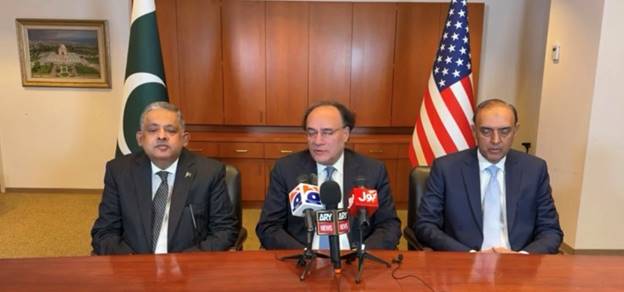
“We want to move with all of our partners from aid to trade,” he said. “And certainly, with respect to the US, we are very focused, both on trade and investment.” He went on to specifically point out minerals, mining, IT and pharma as the sectors which can be “a real win-win position.”
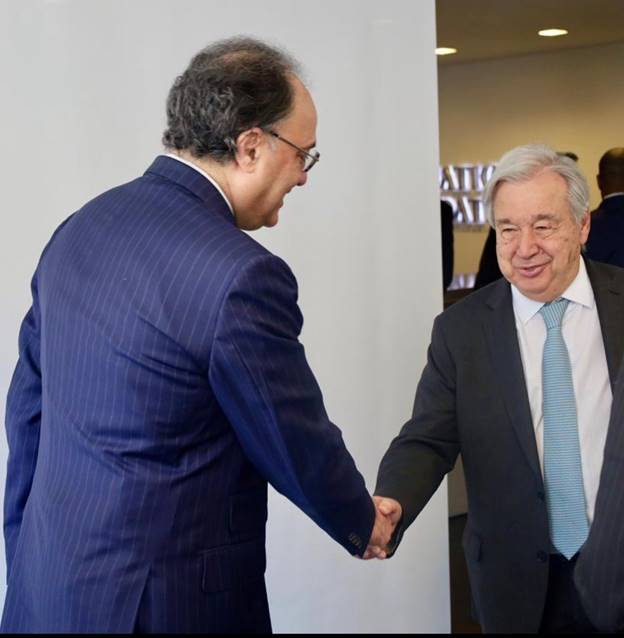
The minister’s flurry of activities included constructive discussions with officials in the US administration, particularly focusing on the trade and investment agenda.
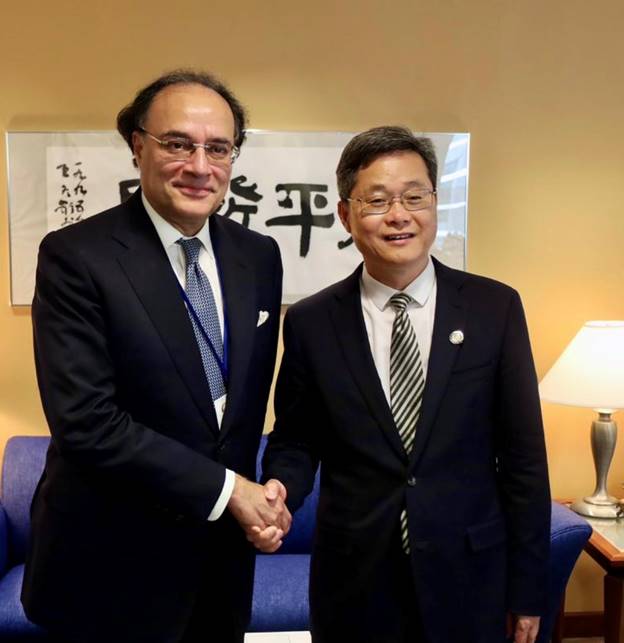
During a meeting with his Chinese counterpart Lan Fo’an, he expressed deep appreciation for China’s longstanding and unwavering bilateral support to Pakistan, as well as the constructive role played by China’s executive director at the IMF in facilitating Pakistan’s program engagements.
In addition, Aurangzeb met with Abdulhamid Al-Khalifa, chief executive officer of the OPEC Fund for International Development, and with global investors at a JP Morgan seminar on Pakistan’s economic outlook.
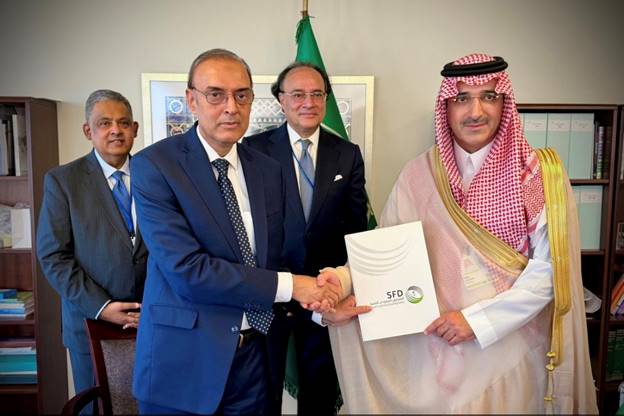
On his final day in Washington, the finance minister and Ambassador Sheikh witnessed the signing of the Saudi Deposit Extension Agreement between the Saudi Fund for Development (SFD) and the State Bank of Pakistan which provides for the extension of the maturity of a $3 billion deposit placed by the SFD with the State Bank of Pakistan.
This extension of the deposit reflects the strong and longstanding economic partnership between Pakistan and Saudi Arabia and will further support Pakistan’s external sector stability.
(Elaine Pasquini is a freelance journalist. Her reports appear in the Washington Report on Middle East Affairs and Nuze.Ink.)