

Barbara Slavin
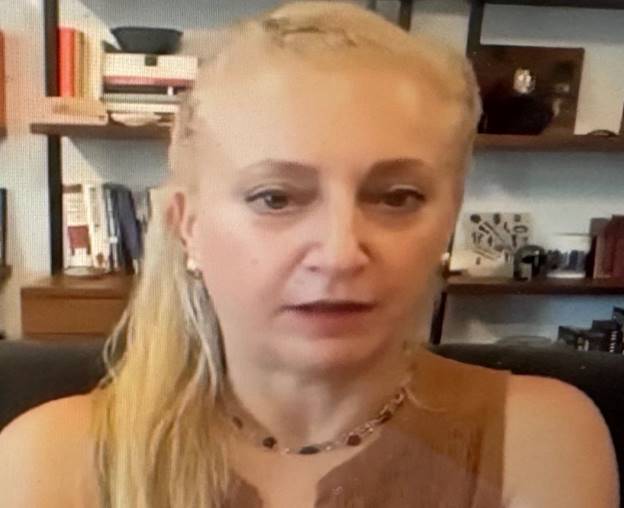
Lara Friedman
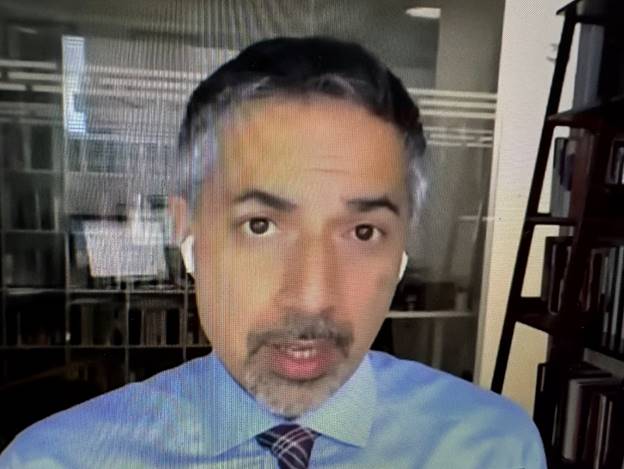
Trita Parsi
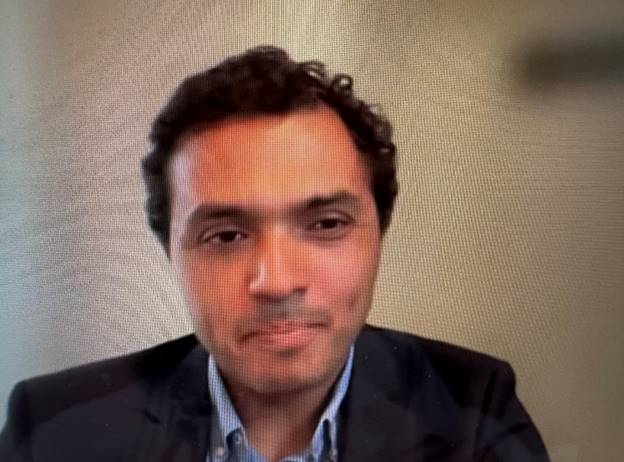
Ahmed Moor
Quincy Institute Examines State of Iran-US Negotiations, US Relations with Israel
By Elaine Pasquini

Washington, DC: The ongoing negotiations between Iran and the United States, along with Washington’s changing relations with Israel, was the topic of a June 23, 2026, webinar co-hosted by the Quincy Institute for Responsible Statecraft and the Foundation for Middle East Peace, moderated by Ahmed Moor, a fellow at the Foundation.
With respect to the rocky relationship between the US and Israel, Barbara Slavin, distinguished fellow at the Stimson Center, noted that since October 7, 2023, Israel has lost support, particularly in the United States. New polls reveal that 60 percent of Americans now say they are “not supporters of Israel, at least under this current leadership.” In addition, young people in both the Democratic and Republican parties support Palestinians more than they do Israel. “So, I think we have seen a major change,” she said. “I think that the way this war has turned out has reinforced a desire of many Americans to go a different way. Recent polls show that 78 percent of Americans want the conflict over, and that included 60 percent of Republicans.”
Lara Friedman, president of the Foundation for Middle East Peace, said potentially the current negotiations between Iran and the US are an opportunity to see some positive changes. “What we're seeing with this Iran MOU is…right now from the Trump administration towards Israel is language that even out of a different Republican administration would have sparked absolute hysteria from the pro-Israel sector, which really doesn't have anywhere else to go. The pro-Israel sector has hitched their wagon so completely to President Trump and this administration. All they can really do right now is hope to ride this out and hope that something changes.”
Currently, in the US the electorate has changed. There is a domestic political change going into a midterm cycle that is showing the crumbling foundations of the US–Israel relationship. “All of those foundations right now are crumbling,” Friedman said. “That is the new reality.”
Trita Parsi, co-founder and executive vice president of the Quincy Institute, continued the conversation, stating: “We are in a particularly stark, unfettering moment within a larger unfettering period, because this is not going to be a single moment in which it happens, but we're going to be in this phase for some time, because of the demographic shifts that are taking place, and also because the reality is there is a stark divergence of interest between the United States and Israel. It was only for so long that lobbying efforts and other types of things would be able to cover that up and hold this thing together, despite the fact that there are geopolitical gravitational forces that are pushing the two countries in different directions.”
The United States has realized for the last 15 or so years that it needs to exit from the Middle East, not commercially, not in other ways, but militarily, Parsi argued. “This is no longer something that the United States needs to be involved in in the manner that it has been so far.”
For the Israelis, this is something that they see as a nightmare. “They want the United States to constantly be dramatically present in the region in order to help artificially create a balance that is favorable towards Israel,” he argued. “And that's been the case for the last 15-20 years, but it's not going to be the case going forward. The more the Israelis push the US deeper into the Middle East, the more the disaster intensifies, and the greater the American public on the left and the right will push against this type of involvement.”
Slavin interjected that changes in the region are going to have an impact with Gulf Cooperation Council countries who are already diversifying relationships, distancing themselves in various ways from the United States, trying to find ways to co-opt Iran, bribe Iran into not attacking them again. “I'm very interested to see how those processes develop, whether there can be the beginnings of a regional security architecture…that includes Iran instead of excluding Iran,” she said.
If the region can begin to move forward, that may determine where the next US administration goes “because Americans want out of the Middle East; they don't want to keep getting sucked back in after everything we've been through, particularly since 9/11,” she added.
Closing with the question of what is the best alternative to a negotiated settlement for the US and Iran, each panelist agreed there is no other alternative to that deal.
In addition, Parsi said that “without a deal, we're going back to some form of military confrontation. The Iranians will close the strait again. It will create all kinds of economic pressures. So, I think there really isn't any alternative.”
Friedman noted the failure of this is “the return of essentially a full-on neocon approach to change the whole region. I think logically that is the only alternative.”
Slavin ended the program, stating: “We’ve all been arguing for years that there is no military solution to the problems that we have with the Islamic Republic of Iran, there are only diplomatic solutions. So, my hope is that after 60 days we are not back at war and they simply extend negotiations. It may be fragile, but it's better to keep extending the nominal ceasefire than to go back to war.”
(Elaine Pasquini is a freelance journalist. Her reports appear in the Washington Report on Middle East Affairs and Nuze.Ink.)
