
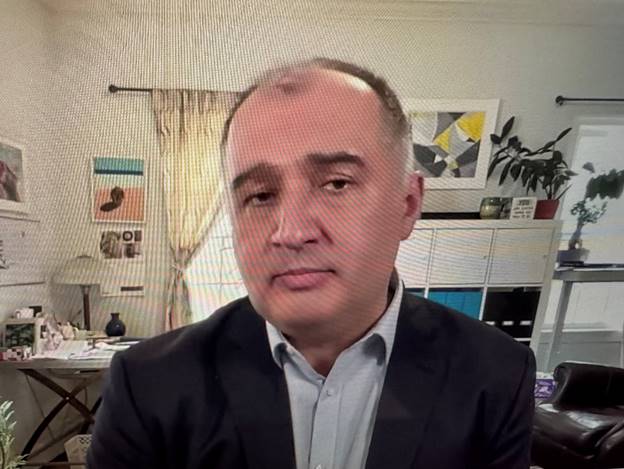
Alex Vatanka
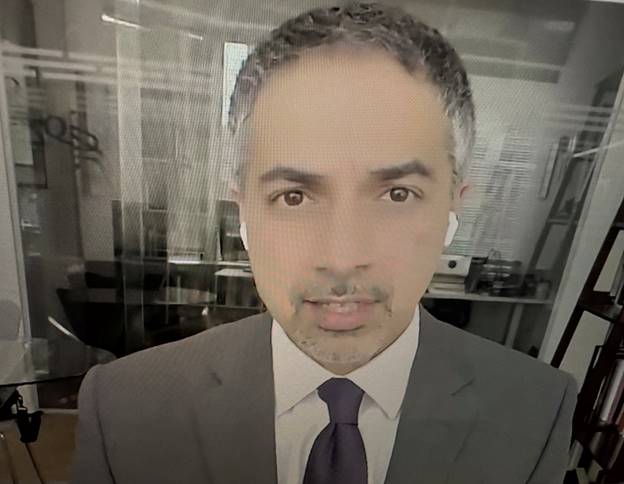
Trita Parsi
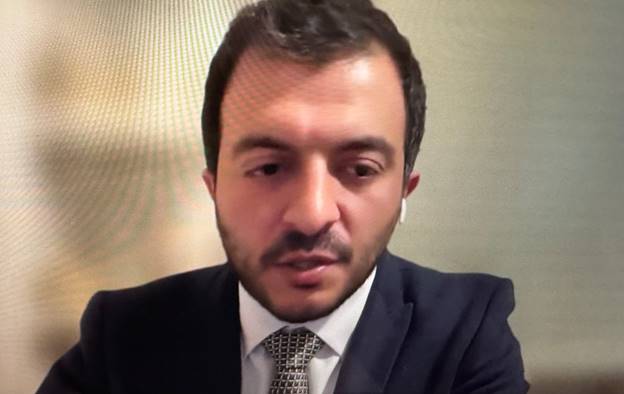
Ozan Ahmet Cetin
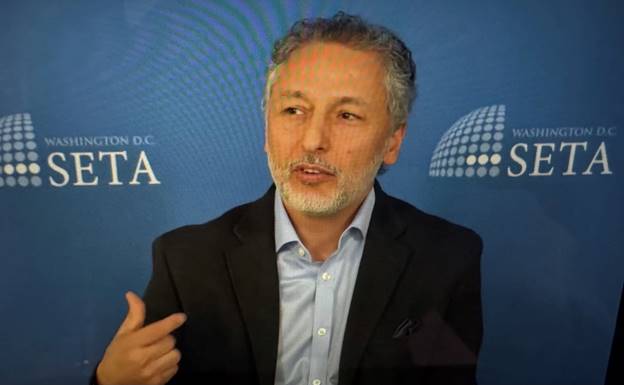
Kadir Ustun
SETA Foundation at Washington DC Explores US-Israel War on Iran
By Elaine Pasquini

Washington, DC: The SETA Foundation at Washington DC hosted a virtual panel discussion on March 5, 2026, to examine the current phase and possible future of the US-Israel war on Iran. Ozan Ahmet Cetin, nonresident fellow at SETA, moderated the hour-long program.
Reviewing the reasons for the failure of diplomacy to prevent the conflict, Trita Parsi, co-founder and executive vice president of the Quincy Institute for Responsible Statecraft, argued that the Iranians believed diplomacy was just a deception, that it never was real. “I don’t think that was the case,” he said. “I think diplomacy was real, but it wasn’t regular diplomacy. It was that Trump was under this crucial impression that Iran is much weaker than it is and as a result the only acceptable outcome was that Iran would completely surrender.”
President Trump’s assumptions that Iran was weak not only led to collapse of diplomacy but also “led to the war turning increasingly into a quagmire,” which, according to the Pentagon, might drag on for five months, he said.
Parsi argued that the Iranians should have talked directly to President Trump. “I think the more the Iranians did not talk to Trump directly… the more it reinforced Trump’s view that the Iranians were not serious but also that they were weak,” he said. “I think the manner in which the Israelis have been extremely active have very much shaped the view in Trump’s mind, particularly on the weakness of Iran.”
But President Trump can declare victory at any moment that he wants, Parsi stated. “He’s killed the [former] supreme leader and probably destroyed a significant number of missiles or launchers. He can at least say that he’s degraded it, that he showed them and wasn’t afraid of starting the war and that he wasn’t bluffing. It’s not about him not finding an exit. It’s about him not understanding that the cost of not taking the exit has become too high.”
While the majority of Americans oppose the war, there has been insufficient pressure on the White House to end US and Israeli attacks. “And that means that the American people are not angry enough about it, because it only matters when they are so angry that they actually call the White House or they’re turning that into some sort of a political pressure,” Parsi stressed. When President Trump feels “the pain of this is too hard, that he is not getting anywhere in the war, that is when he will change his mind and declare victory.”
Regarding Iran’s transition process, Alex Vatanka, senior fellow at the Middle East Institute, stated that 90 percent of Iran’s population of 92 million have had enough. “It’s one thing to oppose the regime because they were forcing the hijab on you, another thing is the regime bringing this kind of devastation to the country,” he opined.
While “Iranian people want to get rid of this regime, no opposition figure from outside is going to take over,” according to Vatanka. “You need a game plan and above all you need to look for ways to bring people inside the regime, the rank and file without blood on their hands. You need to get them on board to accept that the country’s future as we’ve known it for the last 5,000 years is at risk. But this needs a political game plan and I’m just not seeing that that’s what we have here.”
Iran is fighting for its survival, he continued. None of their recent diplomatic initiatives such as the Saudi-Iranian deal that the Chinese brokered at this point seem to matter. “None of it is shaping their calculations,” Vatanka said. “They know…if the American and Israeli bombs don’t get them their own people might get them.”
Kadir Ustun, executive director of the SETA Foundation at Washington DC, stated his opinion that the war is just the latest more upgraded stage in the regional competition between Iran and Israel and that Israel had wanted for a long time to attack Iran, but it couldn’t without American support, which it received under President Trump.
Türkiye has some immediate security concerns especially following the recent Iranian ballistic missile launched toward Türkiye which was intercepted by NATO forces positioned in the eastern Mediterranean. The country is also concerned about refugees fleeing the bombing and crossing Iran’s 350-mile shared border into Türkiye.
Ustun agreed with his fellow speakers that President Trump has the ability to “just say tomorrow that he won… but when you’re in a war you unleash a lot of unknowns and then you may not be able to easily pull back.”
(Elaine Pasquini is a freelance journalist. Her reports appear in the Washington Report on Middle East Affairs and Nuze.Ink.)
