
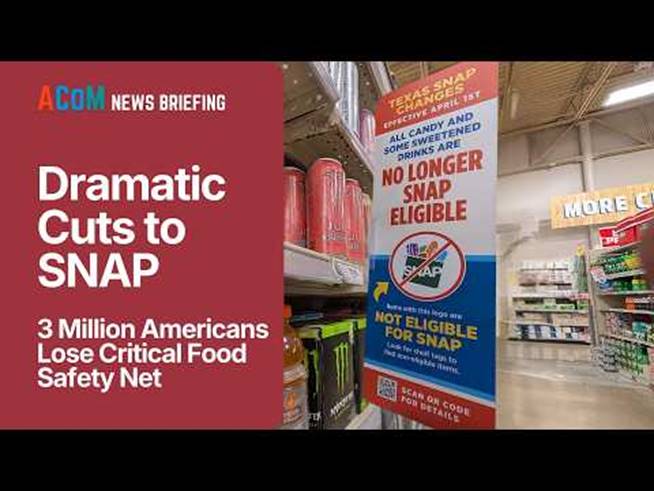
Three Million Americans Lose Critical Food Safety Net as Dramatic Cuts to SNAP Take Effect
Last summer, Congress passed HR1 — also known as the One Big Beautiful Bill — which cut almost $1 trillion from critical health and food safety nets, and imposed new eligibility requirements. The budget of the Supplemental Nutrition Assistance Program — SNAP — was slashed by $187 billion through 2034, the largest cut to the program since it began in 1964. Between the passage of that law in July 2025 and January 2026, more than three million people have lost SNAP benefits.
SNAP benefits help families, children, disabled and elderly people buy food. The program also creates an economic boost for communities, providing funds for small grocers and relieving strain on local food banks.
On April 29, the Congressional District Health Dashboard released new SNAP participation data, for every Congressional district in the US. For the first time, users will be able to track changes in SNAP participation quarter by quarter alongside 40 other Dashboard health and economic metrics, offering a clear view of district-level changes over time.
Speakers will explore the new data, highlight key insights and discuss the stakes for families and states, which will take on a greater share of funding the program. They will also conduct a live demonstration of the Dashboard, equipping reporters with a valuable tool to analyze health and its drivers across the country.
The Robert Wood Johnson Foundation is the largest health-focused philanthropy in the US. Presented by ACoM, in partnership with the Robert Wood Johnson Foundation
