Spotlight on Italy’s Vibrant Coffee Culture
Report and Photos by Elaine Pasquini

Trieste, Italy: “Coffee is always the beginning of something: a meeting, a break, a moment of sharing. This is why we’re simply saying see you later,” is the message greeting visitors to the LavAzza Coffee Museum in Turin, Italy, along with a giant two-story Espresso Moka Pot at the museum’s entrance.
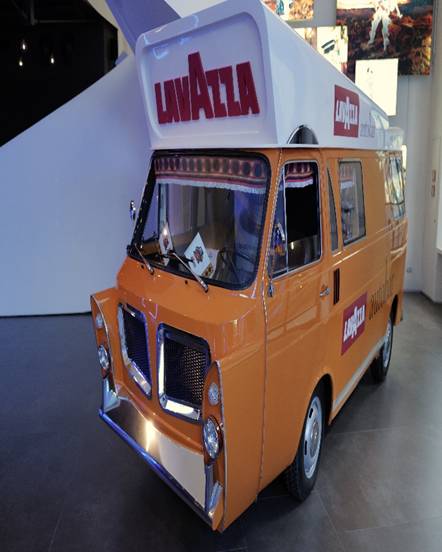
In addition, in the lobby there are three perfectly preserved vintage company delivery vehicles from the 1940s through the 1960s. The highlight is the LavAzza auto-bar coffee truck created by the Elsa Group for the company to promote outdoor coffee drinking, an early precursor of what is now referred to as a mobile “pop-up.” It is an elegant chrome and brightly painted version highly reminiscent of the old Volkswagen van cross-bred with 1960s rear fins on the front end.
The company was founded in 1894 by Luigi Lavazza from Murisengo in the Piedmont region of Italy. He began by selling customers the green coffee beans he had roasted by hand, thus beginning the simple enjoyment of the drink at home.
“Preserving the Italian-ness of espresso coffee is what gives our product its character and uniqueness,” said LavAzza President Emilio Lavazza, prior to his death in 2010.
Today, LavAzza, which provides quality coffee enjoyed globally, is the sixth largest coffee roaster in the world earning some $4 billion in sales last year.
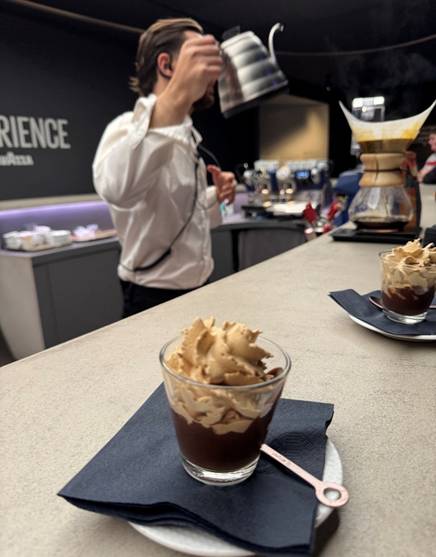
After viewing the many exhibits, visitors are treated to a complimentary drink. One of the favorites is the Torinese specialty, Bicerin in Bicchiere (coffee in a small glasses) that features espresso, hot chocolate and cream.
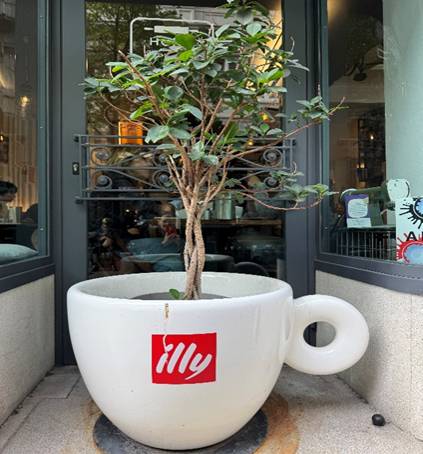
Some 325 miles east of Turin is Trieste, headquarters of LavAzza’s longtime competitor, Illy, a mainstay of the city’s economy.
Entrepreneur Francesco Illy, born in Timișoara in what is now Romania, founded the company in 1933. The family was prominent in Trieste. Francesco’s grandson, Riccardo, served as mayor of the port city for two consecutive terms from 1993-2001. Today, the founder’s heirs remain in control of the company’s executive leadership.
Due to Habsburg Emperor Charles VI making Trieste a tax-free port in 1719, the city became the main entry point for bringing coffee into Europe. Today, it remains the entry point for unroasted beans entering Italy and the Mediterranean region featuring specialized port warehouses, customs processing, and other necessary functions.
In addition, in 1755 when the city was part of the Habsburg Empire, Empress Maria Theresa established the Trieste Commodity Exchange, one of the oldest trading platforms in the world.
In the competitiveness of coffee culture, the Illy brand is considered to be of premium status and a step above LavAzza in the commercial mass market.
According to legend, Triestini, who inherited the Viennese coffee tradition while living under the rule of the Austro-Hungarian Empire for 540 years, drink twice as much coffee as Italians in other regions of Italy.
Local residents as well as tourists, especially those arriving by cruise ship from other ports on the Adriatic Sea, enjoy the old-style Viennese coffeehouses abundant in the seaside town.
(Elaine Pasquini is a freelance journalist. Her reports appear in the Washington Report on Middle East Affairs and Nuze.Ink.)