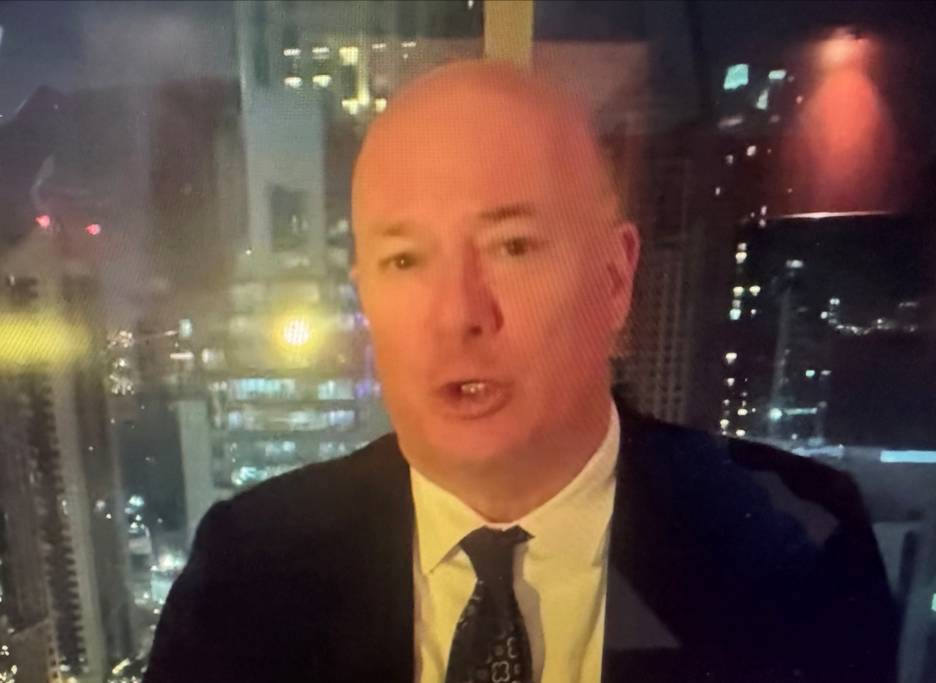
Ret Col David Des Roches
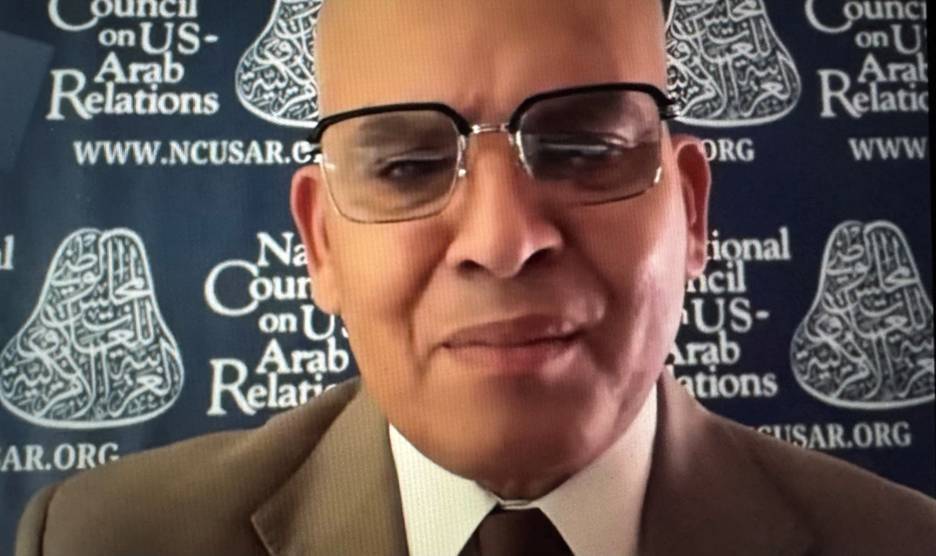
Abderrahim Foukara
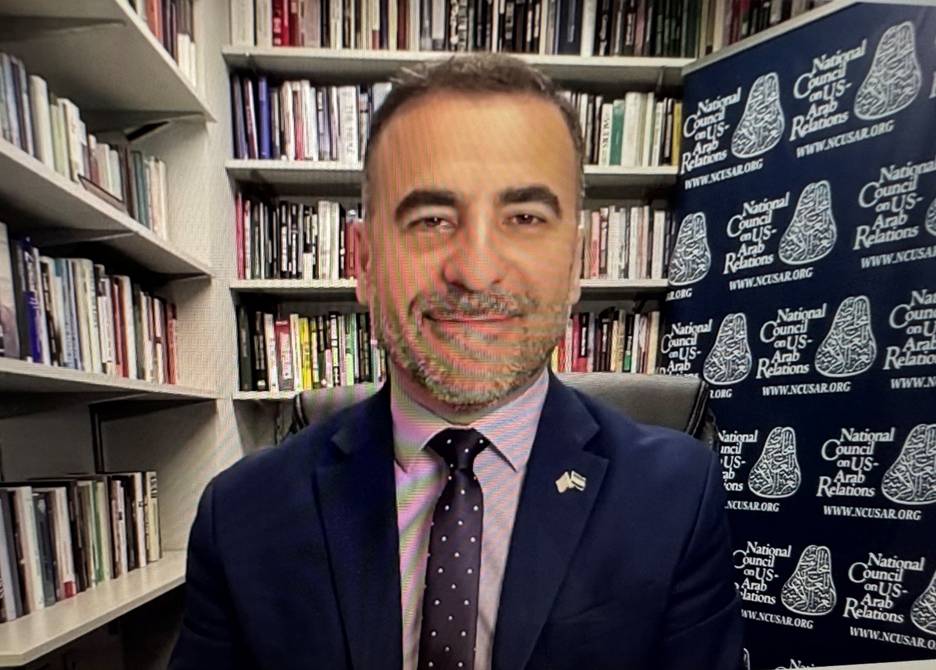
Fadi Hilani
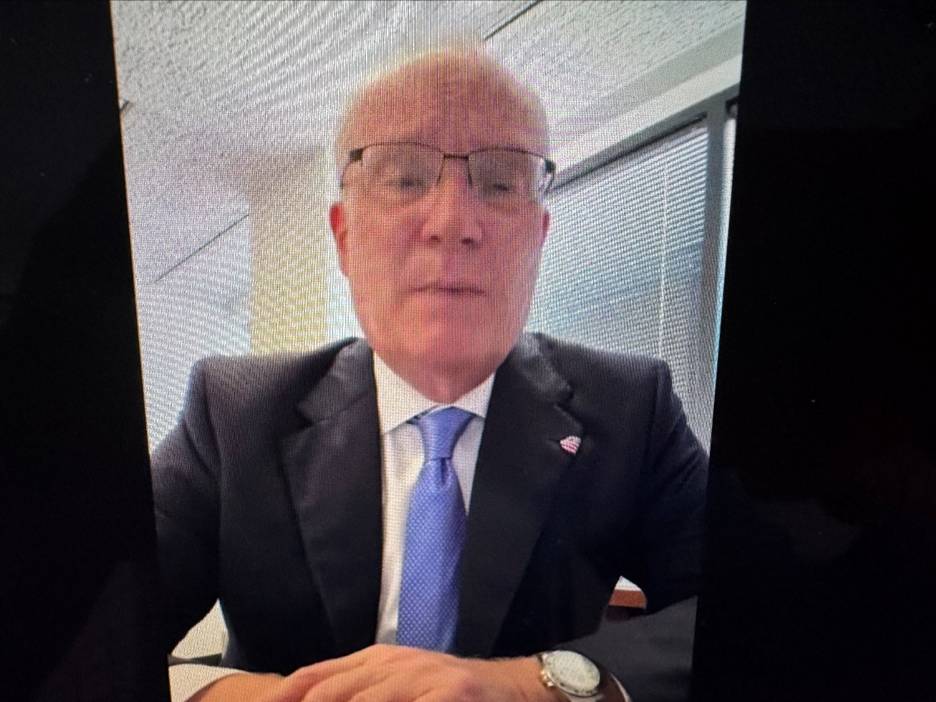
Timothy Lenderking

William Lawrence
Houthi Actions in Red Sea Bring New Dimension to US-Iran War
By Elaine Pasquini

Washington, DC: In light of the dramatically changing situation in Yemen where the Iran-aligned Houthis, battling Saudi-backed Yemeni government forces, have rapidly expanded their control along Yemen’s Red Sea coast, The National Council on US-Arab Relations (NCUSAR) hosted a webinar on the subject on September 16, 2026.
The Yemeni port of Al-Mokha, once known as a primary export hub for coffee export, is now in the hands of the Houthis, Abderrahim Foukara, distinguished fellow for US-Arab affairs and media leadership at NCUSAR, said. The port is approximately 47 miles north of the Bab al-Mandab strait which connects the Red Sea with the Gulf of Aden. The channel is a critical artery for crude oil and fuel moving from the Gulf to the Mediterranean via the Suez Canal as well as for Asian commodities and Russian oil.
Former presidential special envoy to Yemen Timothy Lenderking lamented the worsening humanitarian situation for the 23 million Yemenis who have been suffering through years of war. US foreign assistance which has often been a backbone of humanitarian efforts has largely dried up. “I’d like to see the US up its game in Yemen in the sense of being responsive to the crisis at hand,” he said.
The Yemeni people don’t sit around waiting for handouts. “They are oriented toward being able to plant their crops, raise their families just like so many people around the world,” he stated. Much of Yemen’s food is brought in commercially and that’s been disrupted by the conflicts in the Strait of Hormuz and Bab al-Mandab causing greater stress on moving produce and products in and out of Yemen.
Despite President Trump’s denial of the request by Saudi Arabia’s Mohammed bin Salman for military assistance against the Houthis, the Saudi and US leadership are still in regular contact at multiple levels, Lenderking said. “The channels that are open between Saudi Arabia and the Houthis are also very important and can lead to offramps and possible solutions and discourage the Houthis from taking further action.”
It is also a “good move that the US and the Houthis are in direct touch,” he added. “The US, I think, has warmed up to the fact that this is a serious matter.” But a solution is not going to happen on its own. “It’s going to be the US in partnership with the Saudis and other Gulf countries,” he said. “I think unilateral decision-making by the United States is not welcome because we’re talking about the neighborhood in which Saudis, Omanis, Emiratis, and Yemenis live.”
Appearing from Doha, Ret Col David Des Roches, principal at the Thayer Marshall Institute, said with respect to assisting the Saudis militarily “we’ve exhausted our carrier aviation fleet, and the ones that we have are involved in the Indian Ocean patrolling off of Iran. So, US action right now is extremely limited. Our capability to take any kind of coercive action against the Houthis is just not there. Clearly, the Saudis want more help, but I don’t think we’re in a position to deliver it right now. When I speak to people here in Doha, they think everything is on hold until the US midterm elections.”
Asked whether Türkiye and Pakistan are assisting Saudi Arabia now in view of the Mecca Joint Defense Agreement recently signed by Mohamed bin Salman of Saudia Arabia, President Recep Tayyip Erdogan of Türkiye and Prime Minister Shehbaz Sharif of Pakistan, William Lawrence, director of the North African Area Studies Program at NCUSAR, said they are helping with intelligence, surveillance and reconnaissance and talking about other types of support.
“The Turks are talking about defensive support of Saudi Arabia,” he said. “Pakistan considered air runs so there are conversations going on there and active intelligence-sharing and other types of support. Even the Brits are talking about sending military advisors and Washington has military advisers there. Many countries are ready to help Saudi Arabia.”
The Houthis now control 90 percent of the Red Sea coast but “I don’t think the story is over,” Lawrence commented. “There are the huge variables like what are the Saudis going to do, what will Trump eventually do, given that he’s dragging his feet in terms of engagement.”
He noted the two economic threats are the oil supply and price, along with the overall economic situation of the Red Sea and the Suez Canal.
In closing remarks, Fadi Hilani, director of the Levant and Middle East Area Studies Program at NCUSAR, said that Yemen can no longer be viewed as an isolated conflict. The challenge now is to prevent the struggle over Bab al-Mandab from becoming another cycle of regional escalation. The United States and its partners must balance the need to protect freedom of navigation and energy security with the need to avoid expanding the conflict into another prolonged war. Ultimately, the objective should be not only to deter attacks but to create the political conditions in which maritime security can be sustained.
“Crises over the control of strategic waterways becomes inseparable from questions of regional power, international trade and great power competition,” he said. “The central question is whether Yemen is becoming a second front in the US-Iran confrontation and whether the Houthis are emerging as an independent regional actor capable of exploiting this moment or increasingly functioning as a part of the broader Iranian strategy.”
(Elaine Pasquini is a freelance journalist. Her reports appear in the Washington Report on Middle East Affairs and Nuze.Ink.)