Mobile Art Show, Poetry Jam (Mushaira) and Musical Symphony: Human Stories from Karachi - IV
By Dr Ahmed S. Khan
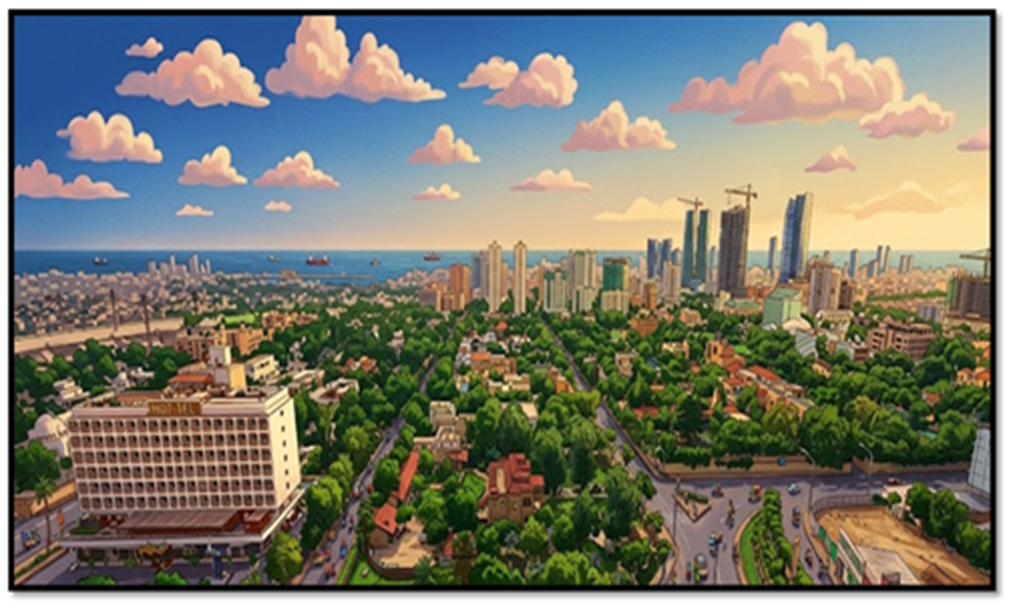
“You will yet be the glory of the East; would that I could come again, Karachi, to see you in your grandeur.”
— Sir Charles Napier, Governor of Sindh
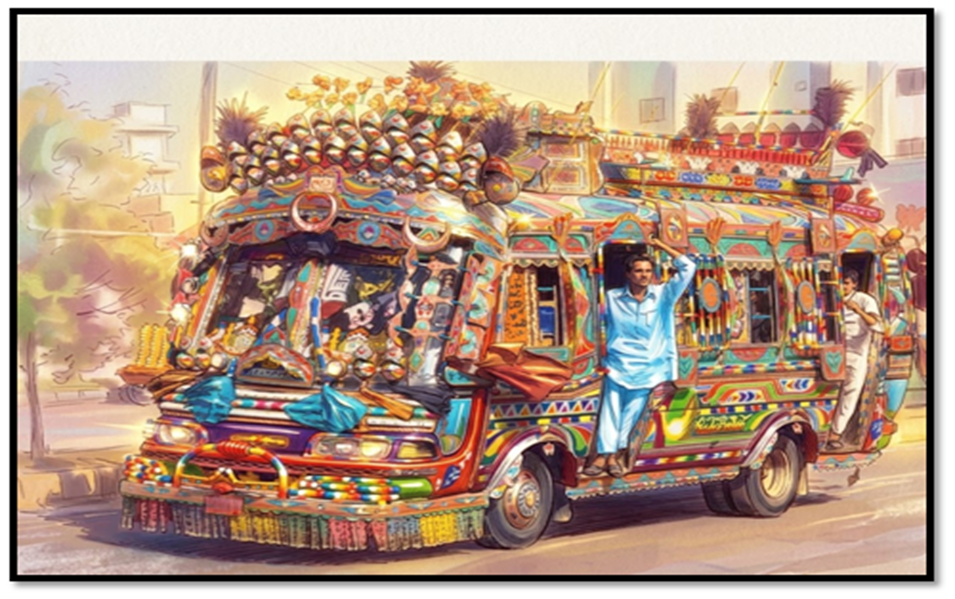
As Confucius observed, "Everything has beauty, but not everyone sees it," and Shakespeare noted, "Beauty is bought by judgment of the eye." People travel to the Louvre in Paris or the Met in New York to admire visual art, gather at London poetry cafes or South Asian Mushairas for spoken word, and flock to concert halls in Vienna, Berlin, or Chicago for orchestral music. Yet to experience all three simultaneously, one only needs to step onto the streets of Karachi.
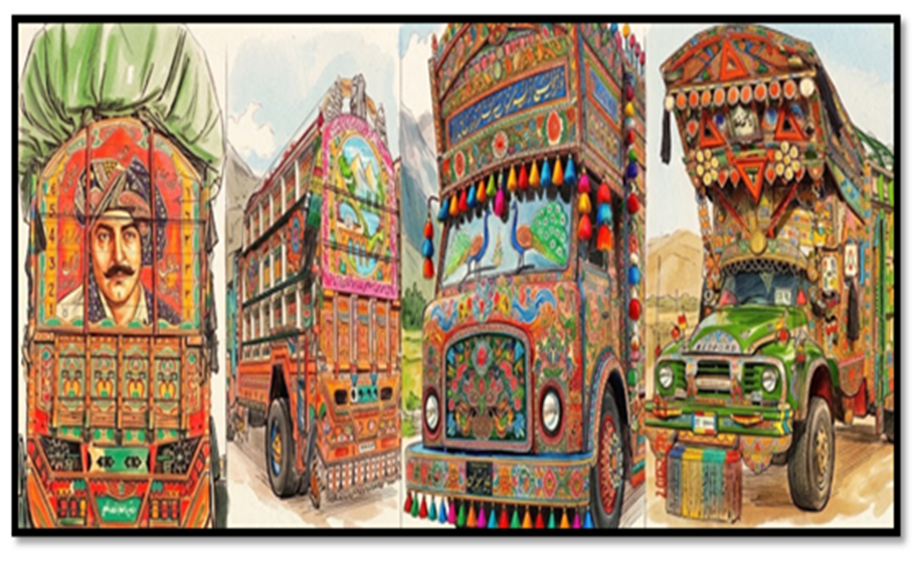
Karachi is the intellectual capital of Pakistan. People from all walks of life are extremely creative. Karachi’s roads offer a 24/7 open-air gallery of mobile art, poetry, and sound. Here, buses, trucks, and rickshaws are adorned with intricate folk paintings and poetic couplets, while the bells and charms dangling from their frames create a rhythmic, musical hum. It is a living masterpiece—waiting to be taken in by a curious eye, an appreciative mind, and a musical ear.
During my travels on the roads of Karachi, I experienced this endless moving exhibition of art, poetry, and music. The writings painted on the back of trucks, minibuses, and auto-rickshaws in Karachi—and across Pakistan—are a famous cultural phenomenon known as "Truck/Bus/Rickshaw Poetry (Shairee)". These painted texts range from witty humor and existential dread to deep romantic heartbreaks, class division, societal and ethical values, political commentary, and religious invocation. Here are some samples representing various themes.
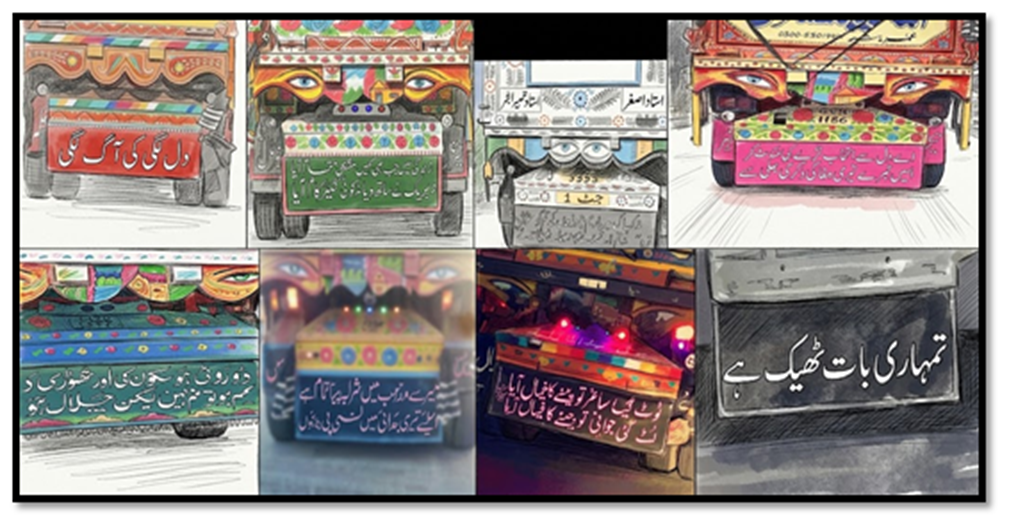
The classic catchphrases are short, recognizable slogans painted near the bumper or license plate:
Dekh Magar Pyar Say
Look, but with love
(The single most famous line in Pakistani transport culture, warning tailgaters or onlookers not to throw "evil eye" envious glances at the vehicle.)
Pappu Yaar, Tang Na Kar
Pappu my friend, don't tease/harass me
(A lighthearted plea to impatient drivers honking from behind.)
Buri Nazar Walay, Tera Muah Kala
O you with the evil eye, may your face turn black
(A classic curse against bad luck and envy.)
Tailgating and highway warnings turn traffic safety rules into cheeky humor:
Faasla RakhiaN, Warna Pyaar Ho JayeGa
Maintain distance, or we'll fall in love.
Faasla RakhiaN, Mujhay Pyaar Nahi Karna
Keep your distance, I have no desire to fall in love.
Horn Aahista BajaeN, Qoum So Rahi Hay
Honk softly, the nation is sleeping
(A piece of satire targeting civic passivity imposed on people by the ruling elite!)
Tapar Hai To Paar Kar, Warna Bardaasht Kar
If you've got the courage, overtake me; otherwise, tolerate my drive.
Other notable short catchphrases include:
Maan Ki Dua, Jannat Key Hawa
A mother's prayer is like a breeze from Paradise.
Pyar Zindagi hay
Love is Life.
Khair nal aah, Khair nall jah
Come in safety, go in peace.
Geo aur Geenay doo
Live and let live.
Kanch key Gurya, Pather kay log
A fragile glass doll in a world of stone.
Hosh kar dewanay
Come to your senses, O crazy one!
Sundar Chanda
Beautiful Moon.
Naseeb Apna, Apna
To each their own destiny.
Dil barai farookht, qaimat sirf aik Muskhrahat
Heart up for sale, the price is just a smile!
Hum Chalay, Dushman jalay
As I drive away, my rivals burn in envy.
Vehicle poetry in Karachi usually takes the form of rhyming Urdu (or Punjabi/Pashto) couplets (sher or ash'aar). These two-line verses reflect the driver's worldview, humor, heartbreak, aspirations and struggles on the road.
Zalim Palat Kar Dekh, Tamanah Hum Bhi Rakhte HaiN
Tum Agar Car Rakhti Ho, To Rickshaw Hum Bhi Rakhte HaiN
O cruel one, look back! I have desires too.
If you own a car, I own a rickshaw!
Ek Bewafa Ki Khatir Rickshaw Chala Raha HooN
I am driving a rickshaw for the sake of an unfaithful lover.
Jiss nay maN ko sataya
Uss nay rickshaw chalaya
Whoever troubled their mother
Ended up driving a rickshaw.
Chalti Hai GaaRi, Urti Hay Dhool
Jaltay Hain Dushman, Khiltay HaiN Phool
The vehicle moves, kicking up dust;
Enemies burn in envy while flowers bloom.
Maalik Key Ghari, Driver Ka Paseena
Chalti Hai Road Par Ban Kar Haseena
The owner's vehicle, the driver's sweat;
It glides down the road like a beauty.
Lu Tong, a.k.a. Lu T'ung (790–835 AD), the famous Tang Dynasty Chinese poet and tea master, in his poem "Seven Cups of Tea" (Seven Bowls of Tea) describing the transcendent experience of drinking tea, observed: "I am in no way interested in immortality, but only in the taste of tea."
In Karachi, roadside tea stall (dhaba) waiters have a unique way of asking drivers how strong they want their tea: "Kounsi chai logay?" ("Which tea would you like?")—100 km, 200 km, or 500 km? Karachi drivers have their own unique way to express their appreciation for tea.
Chai pee kaa Giranah too sub koo aatah hai
Maza to tub hay GirtooN koo Tham lay Pappu
Anyone can knock someone down after drinking tea,
The real virtue, Pappu, lies in holding up those who are falling.
HazarooN saal Pappu Aapni Mazduri pay rotah hay
Bari mushkal say hotah hay chai maiN Maza paida
For thousands of years, Pappu weeps over his hard labor;
Only with great difficulty is true delight brewed into a cup of tea!
(A playful adaptation of Allama Iqbal's famous line on moral strength and helping others, adapted to tea drinking)
Tumharay bina Zindagi main yah Sannatah
Tum he meri chai tum he mera Parathah
Without you, life is just a silent street,
You are my warm tea and my crispy paratha treat.
Mixing technology with emotions reaches the climax of imagination; a couplet on the back of a truck reads:
Dil mayra 2-GB
Aur Ghum mayra 32-GB
My heart has two gigabytes of space,
Yet thirty-two gigabytes of grief it must face.
In Karachi, minibuses and rickshaws frequently carry sharp political commentary:
I'm driving a rickshaw, not a bullet
(Popularized during civil peace campaigns in the city.)
Rakh kar rastay mein nafratooN kay container,
Tum nay dil ko Islamabad bana dalah
By placing containers of hatred on the path,
You turned my heart into Islamabad!
(A modern reference to political saga of blockades in the capital.)
Koi Manzoor e nazar Shaksh hee harah hoo gaa
Tab hee Aalaan Huwa Khail dobaro hoo gaa
Only because a favored soul lost the match today,
Did they announce a rematch and restart the play.
Some couplets represent the relentless lifestyle of a long-distance or city driver:
Road say Dosti, safar say Yaari
Dekh Pyaray, Zindagi hamari
Friendship with the road, companionship with the journey,
Look my dear, this is our life.
Pata kya khaak batayaiN, Nishan hai bay-nishan apna
Laga baithaiN bistar jahaN, wahi samjho makaN apna
How can I give you an address when I leave no trace?
Wherever I lay down my bed, consider that my home.
Lag gayi to rozi,
Na lagi to roza
If I find a fare, it’s my daily bread;
If I don’t, it’s a fast.
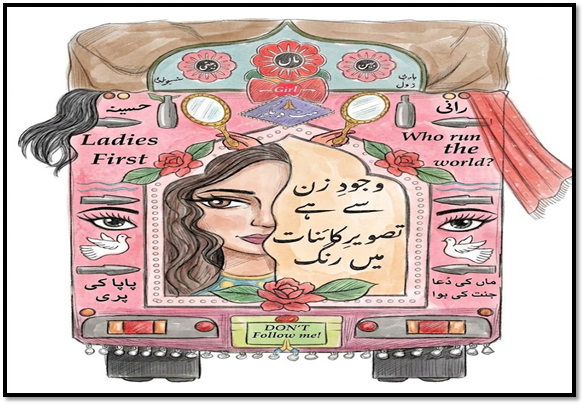
Many vehicles express grief over social inequality, heartbreak, or inner reflections of love, desires, materialism, and loneliness beneath the loud traffic noise:
Mohabbat na kar AmeeroN say, joo Barbaad kartay haiN
Mohabbat kar GhareebooN say, joo Hameesha yaad kartay haiN
Do not love the rich, for they only ruin you;
Love the poor, for they will remember you forever.
Paisa paas ho to duniya muRh muRh kar dekhti hai
Ghurbat mein to apne bhi rishte torh dete hain
When you have money, the world turns to look at you;
In poverty, even your loved ones sever their ties.
Agar kisi se Mohabat ho bhi jaey tu izhaar maat kar
Yah dunyah suchay JazbooN key Toheen karti hay
Should love blossom in your heart, keep it quietly inside,
For the world mocks true feelings and crushes honest pride.
Doo roti hoo sukooN key aur thori daal
Kum hoo too ghum nahi laykin Halal hoo!
Two simple pieces of bread, a quiet bowl of lentils to share,
Though modest in measure, let it be honest and fair!
KasH DilooN kay Bhi Election Hotay Shah Jee
Hum Dhandilee kar kay tumhaiN jeet latay
If only hearts had elections, O Shah Jee, what a game we'd play,
We’d rig every vote just to win your heart today.
Na Surat buree no seerat buree
Bura woo jiss key neyat buree
Neither the face nor character is naturally vile,
Evil lies only in a heart full of guile.
Dur Dur Rahtee hay pass nahaiN aatee
Kuch loogooN koo Izzat Rass nahaiN aatee
They stay far away, keeping distance cold and clear,
Some souls simply cannot handle being held dear!
ShookH naZr kay Teer koo roh’koo
Kaya qatL e Aam macha rakha hay
Restrain those sharp and playful glances from afar,
Must you start a massacre wherever you are?
Ayah tha ImtihaaN main mazmoon Bay Wafa
Wazahat joo teri key hum Top kar Gayae
When "Faithless" appeared as the essay prompt in the test,
I simply described you, and scored higher than the rest!
Phool chunnah agar jurm hay Iss Ghulshan main
KantooN hee say Bhar dejeyah Daman marah
If picking a flower is a crime in this garden so grand,
Then fill my lap with sharp thorns across the land.
Joo beet gaya woo sapnah hay
Joo aaj hay woo aapna hay
Yesterday was just a dream that slipped away,
The only thing truly ours is today.
Aiy bulbul tum khiyooN rohtay hoo, Tumharay bahG main phool nahaiN
Roona too hamaiN cha’hiay, Jiss key Zindagi main sakooN nahaiN
Oh nightingale, why do you weep? Are there no roses in sight?
It is I who should cry, with no peace in my life day or night.
Soocha tha paRh likh kar Pilot banaiN gay
IshQ kaa Nasha kaya laga khud hee Jahaz bun gae
I dreamt of studying hard to fly planes in the sky,
Then love got me high, and I became the plane myself, oh my!
Vehicle owners also adapt modern principles and civic critiques to the road. A truck states another version of Murphy's Law ("Anything that can go wrong, will go wrong"):
Zindagi main jab bhi khahaiN mushkill makaam Aaya
Na Break nay saath deya na koi Gear kam Aaya
Whenever life faced a tough, dangerous hill,
Neither the brakes held up, nor did any gear fit the bill.
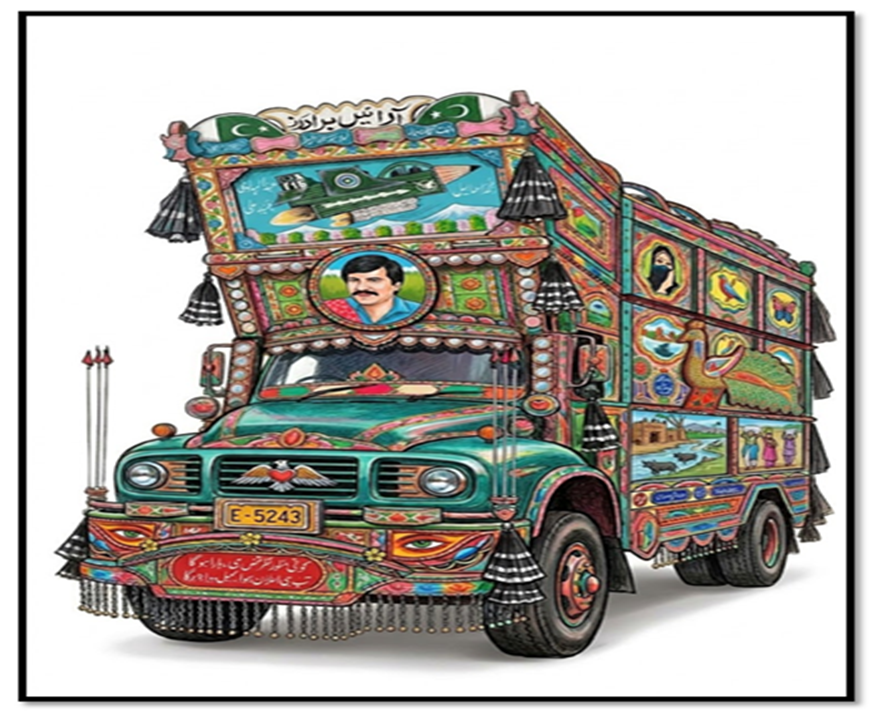
A message on the back of a rickshaw summarizes the state of the state in a very poignant manner:
Soch rahah hay Pakistan
No koi Dundha, No koi Kaam
Rishwat Aaam, Traffic Jam
Banay haiN hum Ghulam
Puree Dunya main badnam
Kaya hoga Anjaam!
Pakistan is lost in deep thought today,
No honest work or business in any way,
Traffic is jammed, corruption runs free,
We have become slaves for all to see!
Shamed globally, what will our fate eventually be!
Karachi’s roads, like many up to Gilgit and other South Asian cities, serve as an endless, moving exhibition. Its minibuses, trucks, and rickshaws carry vibrant canvas paintings layered with soulful Urdu couplets, while tuned horns, dangling bells, and metallic ornaments weave a distinct urban soundtrack. It is an immersive feast for the senses—demanding only an appreciative mind, a curious eye, and a musical ear. If one can suppress the traffic noise and focus on the synchronized signals of appreciation in mobile art, poetry, and music, the experience is truly one of a kind!
(Continued next week)