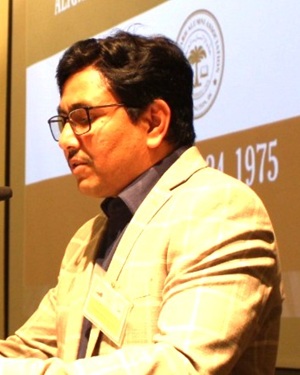
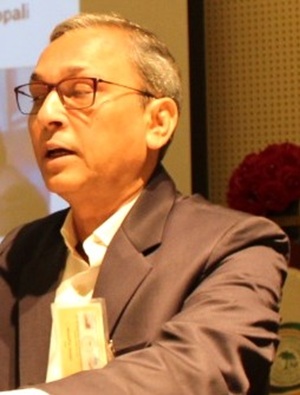
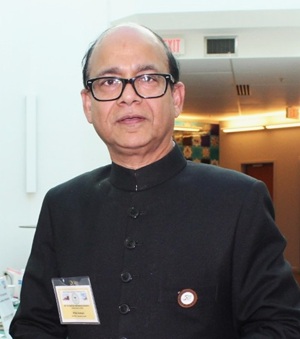
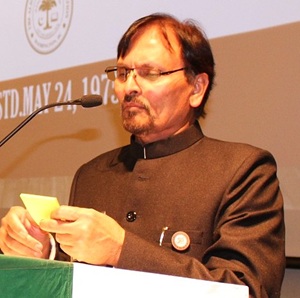
Aligarh Alumni Association Hosts 51st Annual International Sir Syed Day Mushaira
By Zafar Iqbal, PhD
Photographs by Afzal Usmani

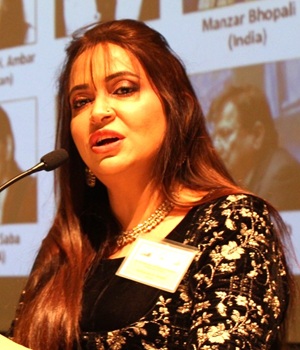
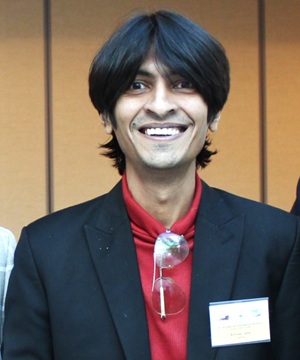
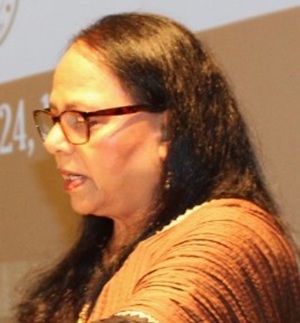
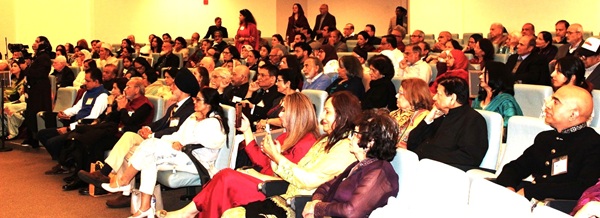
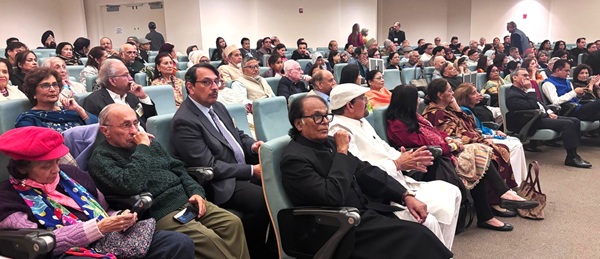
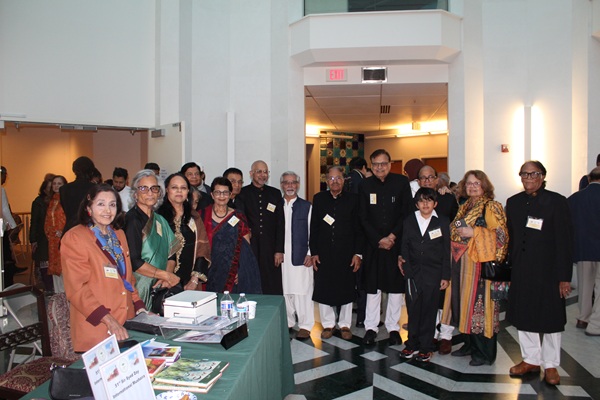
The Aligarh Alumni Association of Washington, DC, held its 51st Annual International Sir Syed Day Mushaira on October 18, 2026, at the Diyanet Center of America Auditorium in Lanham, Maryland. The prestigious gathering brought together acclaimed poets, scholars, literary enthusiasts, and community leaders to celebrate Sir Syed Ahmad Khan’s enduring legacy and the rich tradition of Urdu poetry.
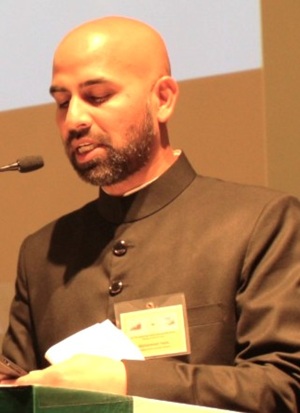
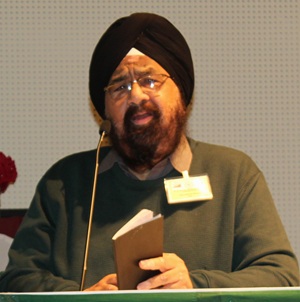
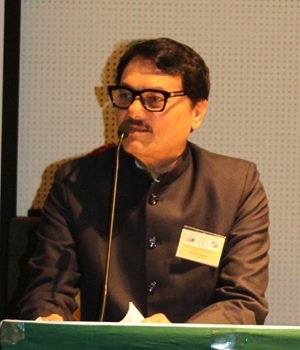
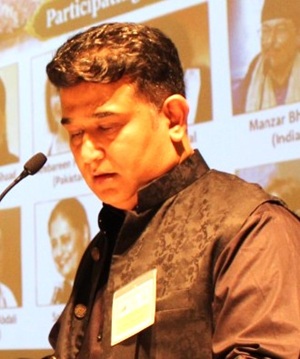
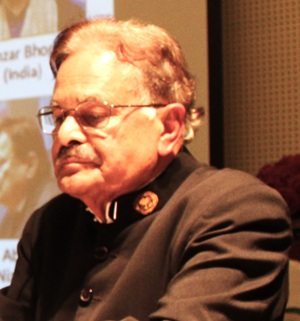
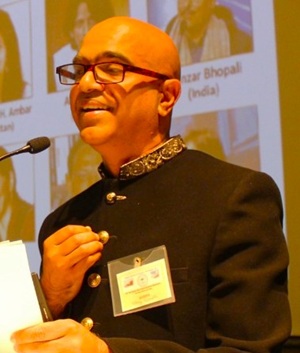
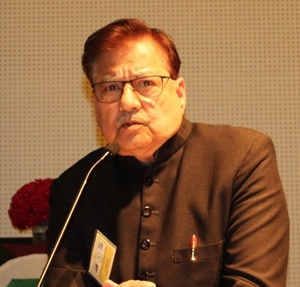
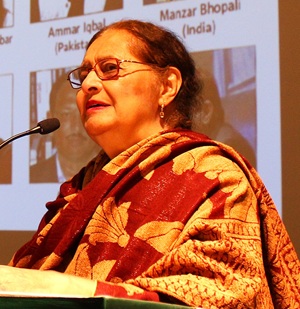
The lineup featured overseas guest poets Khushbir Singh Shaad, Ambareen Haseeb Ambar, Manzar Bhopali, Ammar Iqbal, and Muzaffar Abdali, along with Sabiha Saba of New York and Ali Minai of Ohio. Local poets included Abdullah Abdullah, Mohammad Akbar, Mohammad Jaweed, Razi Razziuddin, and Uday Kamath.
Representatives of numerous cultural and literary organizations attended, including the Association of Indian Muslims (AIM), Global Beat Foundation (GBF), Global Organization of People of Indian Origin (GOPIO) Metro-DC, Montgomery Nawabs, Sikhs of America, National Council of Asian Indian Associations (NCAIA), Muslims of America, and University of Karachi Alumni Association (UKAA).
Virginia Lieutenant Governor Dr Ghazala Hashmi, unable to attend, conveyed her regrets and best wishes. Distinguished guests included Mohammad Abdullah of the Indian Embassy; Dr Ajay and Pushpa Dashottar; Khalid Hameed; senior Aligs Layla and Imtiaz Ansari; and Jameela and Noor Mohammad. Qamar Khan and his wife traveled from Ohio to attend.
Poetry, Artificial Intelligence, and the Changing Mushaira Culture
One of the evening’s highlights was a philosophical verse by young Pakistani poet Ammar Iqbal:
Yun buni hain ragein jism ki; ek nas, tas se mas, aur bas.
The verse reflects on the body's intricate design and life's fragility, suggesting that a seemingly minor disruption can have profound consequences. Its underlying theme echoes the celebrated couplet by Pandit Brij Narain Chakbast Lakhnavi:
Zindagi kya hai, anasir mein zuhoor-e-tarteeb; Maut kya hai, inhi ajza ka pareshan hona.
These lines portray life as the harmonious arrangement of our constituent elements and death as the dissolution of that order.
In conversations with journalist Nuzaira Azam, visiting poets praised the poetry's quality and the audience’s literary appreciation. Ammar Iqbal highlighted mushairas as a distinctive Urdu tradition for preserving and transmitting oral literature. Asked about artificial intelligence and poetry, he observed that AI might imitate human consciousness but could not express genuine feelings. In his presentation, Mohammad Akbar also touched humorously on AI’s implications for poetry.
The poets reflected on mushairas' changing fortunes. Manzar Bhopali, a repeat participant, acknowledged declining attendance generally but praised the Washington audience’s enthusiasm and literary understanding.
Khushbir Singh Shaad similarly lamented the waning popularity of mushairas, noting that younger generations increasingly measure popularity through social media “likes.” Nevertheless, he emphasized that quality poetry still commands respect.
Ambareen Haseeb Ambar cautioned against turning mushairas primarily into entertainment-oriented events. While acknowledging that such gatherings provide a livelihood for some poets, she stressed their broader role in cultivating literary awareness and preserving enduring values. She maintained that good poetry remains the foundation of a successful mushaira.
Veteran supporters of literary and cultural programs Kaleem Kawaja, Maninder Singh Sethi, Renuka Misra, Samina Ahmad, and Syed Amir also shared reflections and connections drawn from decades of involvement. They praised the poetry and suggested giving overseas guest poets more time and introducing a brief intermission to accommodate elderly attendees. They further observed that serving tea and refreshments during the proceedings encouraged people to leave the auditorium and socialize, disrupting the program.
Distinguished Nizamat, Aligarh Tarana, and a Milestone Appearance
Dr A. Abdullah served as nazim and earned widespread appreciation for his eloquence, command of Urdu, literary insight, wit, and graceful presentation. His ability to engage poets and audience members alike enriched the proceedings and upheld the cherished tradition of nizamat in Urdu poetry.
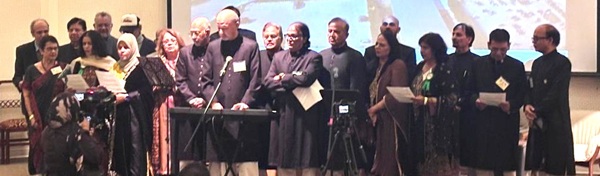
Accomplished conductor Masood Farshori led a stirring rendition of the Aligarh Tarana, Yeh Mera Chaman. Many audience members joined the Tarana team on stage, creating an uplifting moment that remains a cherished feature of the annual gathering.
Dr Sabiha Saba presided over the mushaira. Marking her 40th appearance at the annual gathering, she also recited the same ghazal she had presented at her first participation—a nostalgic tribute to her longstanding association with the event.
Recognition of Service and Contributions
The association presented the Sir Syed Ahmad Khan Award to Tariq Farooqi and Farzana Farooqi in recognition of their longstanding service and commitment to the association.
Dr Kaisar Jamil, a CSIR Emeritus Scientist and head of genetics at the B. M. Medical Research Center in Hyderabad, received a memento recognizing her contributions to cancer treatment. Hasan Ali Shoieb received a plaque for his efforts to promote literary activities in North America.
Tributes and Acknowledgments
The program paid tribute to distinguished literary and community figures who had passed away. Afzal Usmani delivered a eulogy remembering poet Bashir Badr, along with Dr Ayub Yusufi, Dr Suman Vardan, and Azim ur Rahman Khan, all of whom had been associated with the association’s activities for decades. Attendees observed a moment of silence and offered prayers for the departed.
In her welcoming address, association president Ariena Rashid thanked the participating poets, distinguished guests, and audience members. Dr Mohammad Akbar convened the program and served as master of ceremonies.
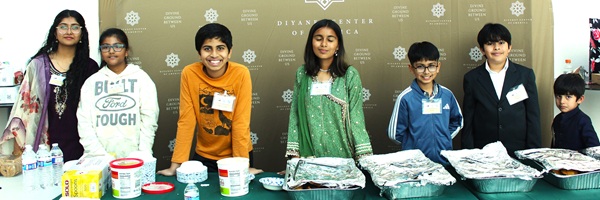
Mohammad Haziq and Imran Ansari thanked the participants, attendees, and volunteers, with special appreciation for Dr Renuka Misra, Dr Arti Raziuddin, Mohammad Jaweed, Khursheed Usmani, Zia Aslam, Asma Khan, and Nasreen Sikandar. The organizers also commended the young volunteers whose dedication and hard work contributed to the event’s success.
A few samples of poetry recited at the event
Ammar Iqbal
Hum darakhtoN ko kaha aata hai hijrat karna Tum parinde ho, vatan chhoD kar jaa sakte ho
Tum se baaton mein kuchh is darja magan hota hooN Mujh ko baaton mein magan chhoR kar jaa sakte ho
Ambareen Haseeb Ambareen
MaiN usey dekh rahi baDee hairani se Jo mujhe bhool gaya is qadar aasani se
MaiN usey khwab samajh sakti hooN lekin Ambar Lams jata nahin us ka meri paishaani se
Khushbir Singh Shaad
Hamare shaher ki aakhoN ne manzar aur dekha tha Magar akhbaar ki yeh surkhiaN kuchh aur kahti haiN
Hum ahl-e-shaher ki khwahish ki mil jul kar rahein lekin Ameer-e-shaher ki dilchaspian kuchh aur kahti haiN
Yeh tera taaj nahiN hai, hamari pagDi hai Yeh sar ke saath niklegi, yeh sar ka hissa hai
Na jaane Shaad teri kab samajh mein aaye ga Ki ab Zameer faroshi hunar ka hissa hai
Manzar Bhopali
Kidhar jaaeN ge ahl-e-safar nahiN maloom Voh badhavasi, apna hi ghar nahiN maloom
Hum apne ghar meiN bhi mahfooz reh nahiN sakte Ki hum ko niyat-e-deevar-o-dar nahiN maloom
Kabhi rozi, kabhi voh Ashiana chheen leta hai Jahan milta hai mauqa, aab-o-daana chheen leta hai
HameN apni tabahi ki khabar bhi ho nahiN paati Voh sab khushiaN ghaebana chheen leta hai
Muzaffar Abdali
Khuda bhi kaisa hua khush mere qarine par Mujhe shaheed ka darja mila hai jeene par
Chhatein bhi bat chuki hain, aangan bhi bat chuke lekin Chhidi hai jang ki haq kis ka hai dafeene par
Sabiha Saba
Ba-zahir raunaqon mein bazm-aarai mein jeete hain Haqeeqat hai ki hum tanha hain, tanhai mein jeete hain
Saja kar chaar-su rangeen mahal tere khayalon ke Teri yaadon ki ranai-o-zebai mein jeete hain