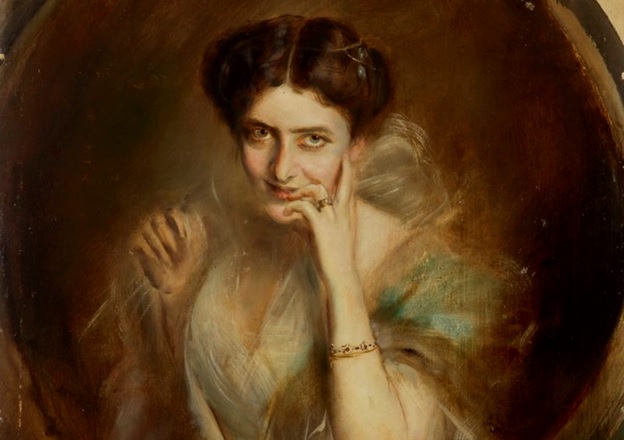
It is said that Mary Curzon, after seeing the Taj Mahal on a moonlit night, exclaimed that she was willing to accept immediate death if such a mausoleum could be built for her
Mary Curzon’s India Over a Century Ago
By Dr Syed Amir
Bethesda, MD
During the British Raj, the position of Viceroy, held by 24 white men, from Lord Canning to Lord Mountbatten, was regarded as one of the most powerful positions in the world. Their bosses--the Prime Minister and the Secretary of State--were thousands of miles away in London. The means of communication were poor, and it took weeks to reach London by sea. Their wives, known as vicereines, served a vital role and often were the sole advisors to their husbands, who, due to strict protocol and convention, felt isolated and lonely. The harsh Indian climate took a heavy toll on both the viceroys and, more particularly, their wives,
Among the viceroys, Lord Curzon (George Nathaniel Curzon), who served from 1899 to 1905, is considered one of the most distinguished and accomplished administrators, having done much good work in India. An imperialist at heart, he was nevertheless deeply interested in protecting and preserving India’s archaeological sites. To ensure that Indian’s heritage would not be lost, he established the Indian Department of Archaeology. Much of the renovation and restoration of the Taj Mahal, which had been in a state of decay, was accomplished during his tenure.
His love for the Mausoleum was expressed in many ways. He once noticed a brass lamp hanging in an ancient mosque in Cairo that he greatly liked. He ordered a replica made, and the craftsman from Agra did an excellent job. Curzon donated it to the Taj, where it now hangs from the ceiling of the interior dome. In his farewell speech before leaving India, he proudly said, “If I had never done anything else in India, I have written my name here, and the letters are a living joy.” It is said that Mary Curzon, after seeing the Taj Mahal on a moonlit night, exclaimed that she was willing to accept immediate death if such a mausoleum could be built for her.
Aside from Curzon, this essay recounts the story of Lord Curzon’s wife, the Vicereine, Lady Mary Curzon, who significantly influenced her husband’s policies and provided him with a source of comfort. The letters she wrote from India and abroad highlight many aspects of life, including social, religious, and human experiences, unfamiliar to the Western audience. These letters, first published in 1985, were collected and edited by John Bradley, a professor of English literature at several British and American universities.
Born in the United States around the turn of the 19th century, Mary Leiter was the daughter of a wealthy businessman in Chicago. During that period, it was customary for affluent Americans to seek out British aristocrats who had fallen on hard times to marry their daughters. The union conferred a high status in the European aristocracy, which money alone could not buy at home. Mary Leiter was introduced in London’s high society as a debutante. Her beauty, poise, and grace mesmerized English society.
In the summer of 1890, when Mary Leiter met George Curzon, he was thirty-one years old, a member of the British aristocracy but without significant wealth. Mary fell for him. Their engagement was long, as Curzon was ready to embark on an expedition to Afghanistan and Central Asia. There were concerns that the journey was so perilous that he might not return. Mary, in a letter dated July 4, 1894, remarked that “I shall not marry if you don’t come back, do not smile incredulously for I am not likely to change my mind, and will retire to a convent.” Curzon, against odds, returned safely from his trip. In April 1895, they were married in Washington and, after a brief honeymoon, sailed for England. Mary Curzon never saw the USA again, the country she loved so much.
In 1898, Curzon was appointed the Viceroy of India, fulfilling his long-held ambition. The appointed viceroy and vicereine disembarked in Bombay amidst a grand ceremony on their way to Calcutta, the then-capital of British India. As recorded by Nigel Nicholson in his book, Mary Curzon: They were escorted to Government House by a squadron of cavalry, a company of infantry, and the viceroy’s bodyguard”. The Viceroy’s House was a large, century-old building. However, its gardens abounded in wild animals. Flying foxes jumped from tree to tree. At night, howling jackals emerged from drains. Once, Mary found a wild civet cat, five feet long, drinking from a glass of milk by her bedside.
This brief essay cannot cover all of Mary’s letters from India to her father and family members. Therefore, I will focus only on those that showcase interesting and insightful aspects of life. The viceroy spent only three months in Calcutta during the cool season; at other times, he and Mary spent their time in Simla or touring.
In one of her early letters, dated March 1899, she described the challenges of traveling to the hill station: "The journey is straight up the mountain for 58 miles, and the horses pulling the carriages have to be changed every four miles." The privilege of riding in a carriage is reserved for the Viceroy, the Governor of Punjab, and the Commander-in-Chief. Everyone else has to walk. The Viceroy’s Garden Parties continued in Simla, as they did in Calcutta. A garden party usually started with guests lining up, singing "God Save the Queen," followed by their bowing and curtsying to the viceroy and vicereine. Unlike the formalities of Simla, Mary enjoyed the peace and tranquility of the nearby Mashaba resort.
Simla did not exist before the British arrived. It was established in 1864 as an imitation of the British city of Surrey in the Himalayas, featuring a church, hotels, a theater, and a racecourse. The viceregal lodge, built in the style of a Scottish castle, did not suit Mary’s taste. She wrote to her husband that it reminded her of the mansions of American millionaires with no taste. However, she adored the spectacular, picturesque view through the windows.
Lord Curzon disliked Simla due to the constant gossip and rumors of scandals that were a staple of British society. However, they loved Mashobra, a small, charming weekend retreat 17 miles from Shimla, where they could relax, eat, and drink in peace under the tall deodar trees. George Curzon became very dependent on Mary’s company and her advice; they affectionately called each other Kinkie and Pappy. When she left for Europe on vacation in 1901, he felt lonely and morose.
In 1902, Lady Curzon shaped the royal Durbar in Delhi, celebrated as the most remarkable pageantry ever seen in India, to honor the coronation of King Edward VII and Queen Alexandra. For a few weeks, the old sleepy Mughal capital was transformed into a metropolis of incredible pomp and gaiety, with electric lights, military parades, and a dazzling spectacle of power and British supremacy. The vicereine dazzled in a stunning dress, the legendary Peacock Dress, which was made especially for the coronation ball. Poet Akbar Allahabadi composed the famous poem "Delhi Darbar," immortalizing the event in Urdu literature.
Another entry in Lady Curzon’s collection of letters describes their visit to the princely state of Hyderabad, where Nizam Mahboob Ali Khan welcomed them with great pomp and grandeur, including military honors. Triumphal arches were set up along the route, decorated with paintings of the guests. Mary recounts an awkward experience at the banquet hosted by the Resident. As was customary, no Hyderabadi ladies were invited, and the vicereine was seated next to the Nizam. Despite her valiant efforts, she could not elicit any responses from the princely ruler, who remained tight-lipped, answering only yes or no.
Mary Curzon faced persistent ill health during her time in India. The hot climate, her heavy official duties, and complications from a miscarriage greatly affected her well-being. She returned to England for rest and recovery, but it did not help. She passed away on July 18, 1906, in the arms of her beloved husband. She was only 36 years old.
(Dr Syed Amir is a former Assistant Professor, Harvard Medical School, and a health science administrator, US National Institutes of Health) |