
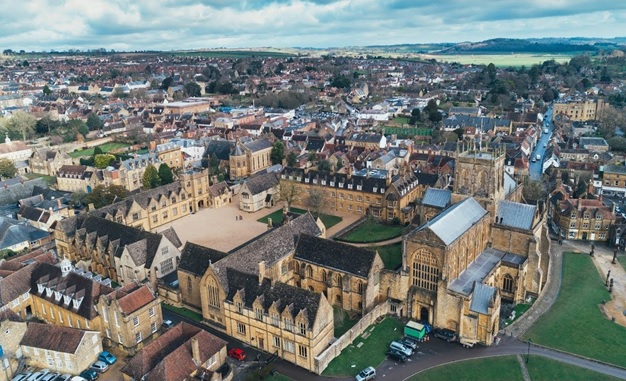
Sherborne school was one of the oldest schools of England and it ranked in the same category as Eton in its reputation and status. It had produced a long list of distinguished old boys. Among them was Alec Waugh, the brother of Evelyn Waugh, both novelists, and Alan Turing the mathematician. Indeed, Jeremy Irons, the distinguished actor, was at the school when I was teaching there, and may well have been one of my students
A Passage to England
By Dr Akbar Ahmed
American University
Washington, DC

For one full term in the spring of 1965, I was invited to enter the mysterious, closed, long-established world of the elite public school, long seen as the foundation of British identity and character. I was asked to teach English, and I ended up teaching English to the A level students some of whom were barely a year or two younger than me. Sherborne school was one of the oldest schools of England and it ranked in the same category as Eton in its reputation and status. It had produced a long list of distinguished old boys. Among them was Alec Waugh, the brother of Evelyn Waugh, both novelists, and Alan Turing the mathematician. Indeed, Jeremy Irons, the distinguished actor, was at the school when I was teaching there, and may well have been one of my students. The present Emir of Qatar is another famous old boy who remains an enthusiastic loyalist, having started a Sherborne Qatar for his country.
I was at Sherborne as part of a degree at Cambridge University for a Diploma in Education. I was to be attached to a school and then at the end of term an examiner would come out from Cambridge and observe me interacting with the students and school and grade me. My fate thus depended on the schoolboys. The other part of the Cambridge exam was the requirement to submit a long essay independent of the tour at Sherborne.
Before I moved to the school itself, I found accommodation at a local hotel. It was a lonely and somewhat disconnecting experience. I was the only “foreigner” and at meals in the dining room I had to watch the funeral arrangement for Churchill which was being endlessly broadcast on television with solemn music and solemn commentary. Churchill was seen as the giant of modern English history.
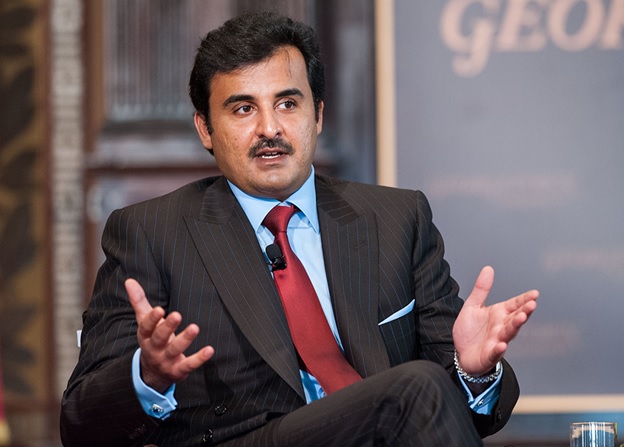
The present Emir of Qatar is a famous old boy who remains an enthusiastic loyalist, having started a Sherborne Qatar for his country
I was aware of my position as an outsider. Indeed, I came across a small item in the local newspaper that a curious aspect of this year’s teaching schedule at Sherborne School was a Pakistani teaching English to English students. It may not have been meant to be tongue in cheek, but it put me on edge as I felt I would be watched closely. At that time Pakistanis and Muslims were largely invisible so even the harmless act of teaching at a school raised eyebrows.
I had the advantage of being familiar with life at a boarding school. I had been educated in a school not dissimilar to Sherborne School. My school was called Burn Hall, and it was situated in the beautiful hills of north Pakistan on the route to Kashmir. It was run by Mill Hill fathers who maintained a strict routine, backed by humor, excellent teaching and strong discipline. Our days passed according to a regular rhythm from one item to the next, one event to the next: sports, classrooms, study periods, and lights out at an early hour. It worked like clockwork and gave our lives a certain structure and order. I pointed out that my school was often referred to as the Eton of Asia. One of my class fellows would become President of Pakistan and another ambassador to the US.
From the outside a top public school was a mysterious, snobbish, elitist and cliquish island of privilege. From inside, it was also some of these things, but there was a larger purpose and philosophy. It generated an ethos that bound the staff and students and students to students. You played the game according to the rules, you played fairly and to win squarely. The battle of Waterloo, it was famously said, was won on the playing fields of Eton.
Although the public school was an island and quite deliberately isolated from the world it was an unwritten expectation and ambition that its boys would go on to contribute at the highest levels of society. It was no coincidence that there was such a high proportion of MPs 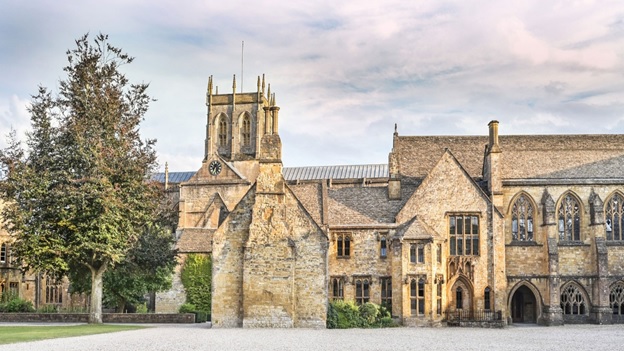
Sherborne Qatar
and Lords graduating from the English public school system and that it was popularly said that about half the prime ministers of England had studied at Eton.
My first task was to select material to teach my class. What were the authors most likely to interest the boys. They were living in a time of rapid change and uncertainty as all around them change was visible. There were new forms of music. The Beatles and the Rolling Stones had arrived like a thunderclap and were heard everywhere feeding into a sense of revolutionary change. New styles and new rhetoric were in evidence. My students were not immune from these changes.
I therefore selected quite deliberately a traditional piece of literature and a relatively contemporary one. The first was the poem Ulysses by Tennyson and the second E.M. Forster’s novel A Passage to India. Of course, I did not neglect the Bard and we discussed Julius Caesar, but it was Tennyson and E.M. Forster that I used to open discussions in class.
While Ulysses provided inspirational imagery and ideas it was still a remote poem essentially written by and for an
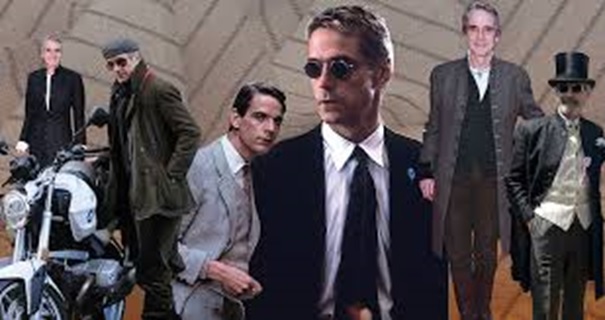
Jeremy Irons, the distinguished actor, was at the school when I was teaching there, and may well have been one of my students
older man. I felt that while appreciating the worthiness of the sentiment contained in the poem the boys may not have been able to fully place the context of the man Ulysses. We explored the contradictions of the protagonist. Ulysses is known as a man of high adventure. Indeed the 1950s film made about him has that well-known muscular actor, Kirk Douglas, playing the eponymous role. Yet it is the same Ulysses who in the poem reflects deeply philosophic ideas about knowledge: “To follow knowledge like a sinking star beyond the utmost bound of thought.” In the poem, Ulysses is old and showing his age, but he still remembers his glory days: “Though we are not now that strength which moved earth and heaven, we are what we are.” The last lines of course were stirring and universally popular: “To strive, to seek, to find and not to yield.”
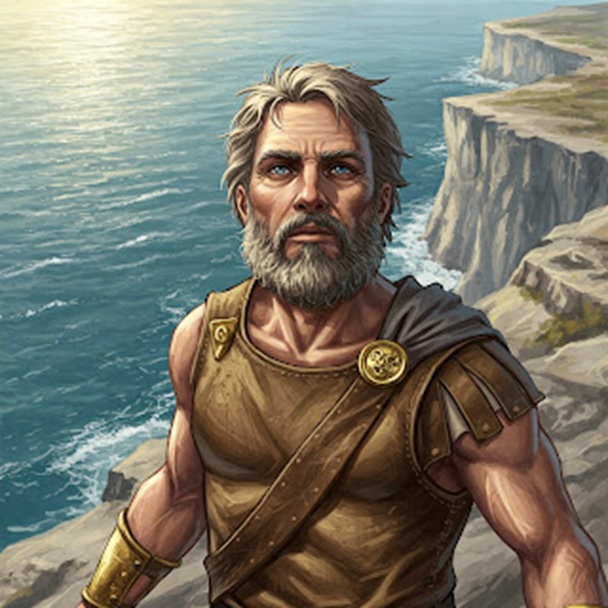
In the poem, Ulysses is old and showing his age, but he still remembers his glory days: “Though we are not now that strength which moved earth and heaven, we are what we are.” The last lines of course were stirring anduniversally popular: “To strive, to seek, to find and not to yield”
But it was A Passage to India on which I concentrated. Not only was it one of my favorite novels but it provided rich material for exploration and discussion. While introducing the book and the subject which I noted my class were not acquainted with I slipped in a bit of information calculated to pique their interest. Forster had dedicated the novel to Sir Ross Masood who I was to discover later was a relative of mine by marriage. This created a line of inquiry for the boys that captivated their interest and led to animated discussions in class about the nature of British colonialism, the Indian revolt against imperialism, and the illustration of warm friendship between individuals that transcended perfunctory encounters.
I pointed out the success of Forster in so brilliantly capturing some of his Indian characters. It wasn’t difficult to trace his perceptive depiction of Dr Aziz, which he based on his friendship with Ross Masood. Indeed, Forster wrote glowingly of Ross Masood in his other work. Aziz is a complex character: he is in one moment dreaming of joining the Mughal Emperor Aurangzeb in a military campaign and in another contemplating the prostitutes of Calcutta.
In contrast Forster failed with the Hindu Professor Godbole. He is really a concoction of clichés. He is vague and his actions sometimes make little sense and therefore appear duplicitous. This led to the discussion of the limitation of the novelist in understanding other cultures.
Then of course there was the infamous case of accusation of sexual assault in the Marabar caves. Miss Adela Quested claimed to have been molested but here confused and distraught condition plunged the community both English and Indian into a cauldron of controversy. Dr Aziz was accused and tried but, in the end, emerged triumphant as he was declared innocent.
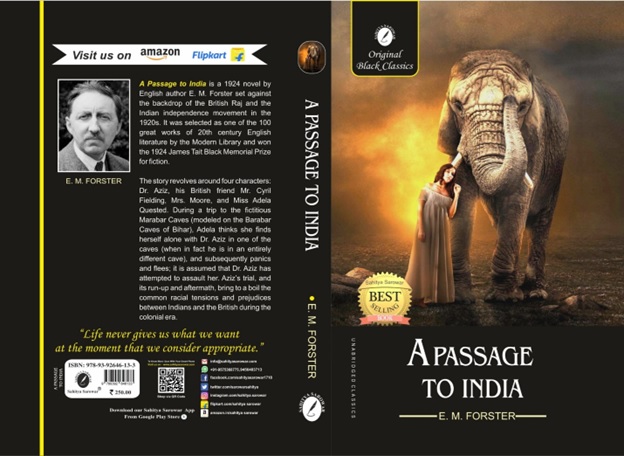
A Passage to India also provided rich material to discuss the confrontation and intermingling of cultures. The boys were amused when we discussed how Dr Aziz, in order to honor and respect his friend Cyril Fielding and to avoid embarrassment when Fielding had lost his own studs, took out the studs from his own collar for the use of Fielding’s cufflinks. With delicious irony, Aziz’s absence of studs holding up his collars was noticed at the tea given to promote interfaith understanding and he was mocked. Aziz’s act of friendship and generosity had backfired. Was this a metaphor for the relationship between India and Britain? It was clearly meant to depict the nature of the imperial encounter.
E.M. Forster represented the finest expression of English liberal humanism. The signs were scattered throughout his work. Howards End, which was made into the acclaimed film with Vanessa Redgrave, had the celebrated epigraph “Only Connect” which provides the theme of the novel suggesting a need for connection between individuals and classes. His The Hill of Devi is named in honor of a temple dedicated to a Hindu goddess. Indeed, Forster’s imagination embraced the world. Whenever he visited India he carried the Emperor Babar’s autobiography, the Babar Nama, which inspired him for its humor, literary merit and historical insights. Even the novel for which he is best known A Passage to India is about the need to connect across cultural and religious boundaries. No wonder he dedicated it to his Indian friend Sir Ross Masood. I also shared a personal story of E.M. Forster who I had the pleasure of meeting in his rooms in King’s College
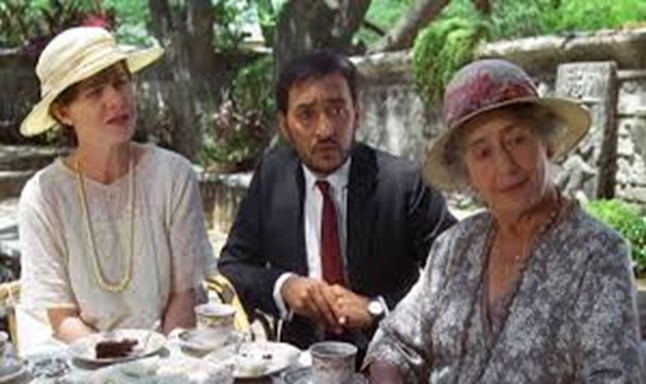
I pointed out the success of Forster in so brilliantly capturing some of his Indian characters. It wasn’t difficult to trace his perceptive depiction of Dr Aziz, which he based on his friendship with Ross Masood. Indeed, Forster wrote glowingly of Ross Masood in his other work. Aziz is a complex character: he is in one moment dreaming of joining the Mughal Emperor Aurangzeb in a military campaign and in another contemplating the prostitutes of Calcutta – Photo Thirteen.org
Cambridge. I just knocked on the door and wandered in with my friend Tahir Ayub Khan, the son of President Ayub Khan. He welcomed us but when I spoke enthusiastically of his brilliant characterization of Dr Aziz he appeared befuddled. He asked whether we knew Sir Ross Masood or anyone from his family. My friend Tahir knew the family and talked of them. Later I discovered that I was related to them. I also understood that Dr Aziz was not in the forefront of his mind as he had featured in a novel written 40 years earlier.
The students knew very little about Pakistan although then it was the largest Muslim nation on earth stretching from Iran to Burma. I asked my students whether they had heard of Mahatma Gandhi. Some of them put up their hands. I then asked if they had heard of Mr Jinnah the founder of Pakistan. No one put up his hand. I explained that Mr Jinnah to Pakistanis was like Washington, Jefferson and Franklin rolled into one. Along with Gandhi and Nehru he led the movement against British colonialism; the only difference was that he fought within the law and never once went to jail. He was the champion of women’s rights, minority rights, human rights, and above all the constitution. Pakistanis feel immensely proud of him.
The mid-1960s was a heady time for a young Pakistani student in the UK: a time for self-discovery and pride in Pakistani identity. When my students asked me about Pakistan I had much to say. President Ayub Khan had a high profile and was a widely respected figure on the international stage – he was received by President Kennedy at Mount Vernon in a rare state visit. Pakistan was hailed as a great nation and compared to the USA after which Jackie Kennedy was sent on a solo visit to Pakistan where she proved highly popular. Ayub Khan presented her with a magnificent horse called Sardar
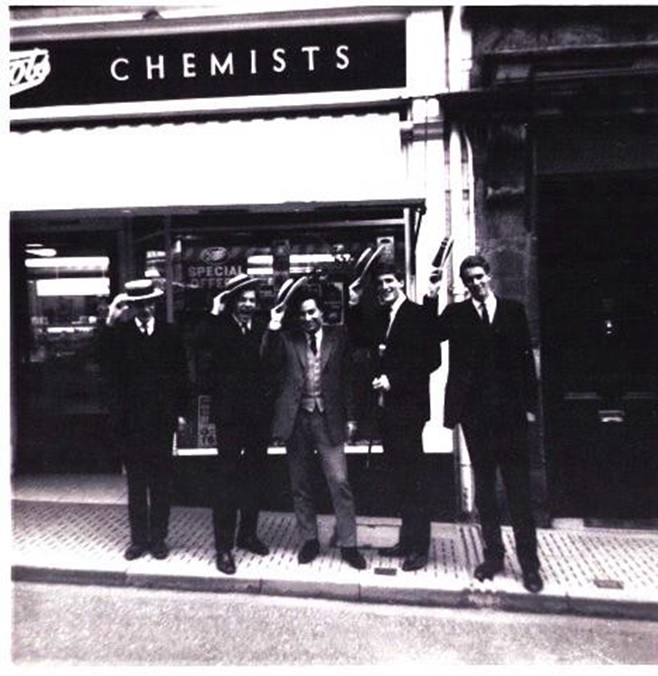
Dr Akbar Ahmed (in middle) with Sherborne boys 1965. “The mid-1960s was a heady time for a young Pakistani student in the UK: a time for self-discovery and pride in Pakistani identity.”
which was part of Kennedy’s funeral procession. On a state visit to Great Britain the Duke received him at the airport and the Queen waited to welcome him in Trafalgar Square before they proceeded in the royal carriage to Buckingham Palace. She also visited Ayub Khan and spent several days in Pakistan. Pakistan was then considered a role model of a developing society by Harvard and World Bank economists with South Korean experts arriving to try to understand Pakistan’s secrets of success.
Pakistan had just launched the Pakistan International Airline which was considered one of the most efficient and smartest in the world, its hockey and cricket teams were internationally renowned and one of its scientists would go on to win the Nobel Prize. When Ayub Khan landed at Heathrow the headline in a popular British newspaper which spread across the sheet with a large photograph of hundreds of British Pakistanis read: “A reception the Beatles would envy.”
In class we discussed race in contemporary Britain and the ominous warnings of politicians that the unchecked arrival of immigrants would lead to the flow of “rivers of blood.” All of this seemed overheated and even ridiculous because my experience was that when Muslim students looked for a place to perform their Friday prayers the University Chaplain happily allowed us to use the University church so long as we respectfully and neatly restored everything after we had finished.
For the record I did not face even a hint of any kind of racism: no one called me wog or paki and I saw no graffiti and heard no snide remarks. We had not heard of the word Islamophobia and could not even conceive of violent groups like Isis and Al-Qaeda.
As the term proceeded, I observed the rhythm of life of a major public school. Every teacher and student had their own role and schedule. The school worked as an organic whole. I was completely superfluous to its running and kept out of the way as far as possible.
I did strike up a friendship with the Chaplain, the Reverend Wordsworth, who it was rumored was a direct descendant of the poet. As I admired Wordsworth although less than his close friend the fellow Romantic Coleridge, I was struck by his warmth and civilized welcome. He even asked me to accompany him in his rather old model vehicle with a group of senior students to the countryside. On our way back we drove into a ferocious snowstorm. Visibility was zero, the roads which were little more than lanes, were covered with several feet of snow making movement impossible. But Wordsworth with great confidence came out of the car and worked through the snowstorm to a small house where he saw smoke coming out of the chimney. He threw himself on the hospitality of the owner who welcomed us, providing blankets and warm food for the night.
I also established an easy rapport with my senior boys and at one point invited them for tea and scones and jam at the local tea shop. We took photographs and the boys appear confident and smiling in their impeccable dress. We had all taken boaters and waved them in faux vaudeville style. It was good harmless fun. I had just turned 22 and was aware that these boys were not much younger.
As the term drew to a close my day of reckoning arrived with the news that the examiner was at hand and would be proceeding to judge the quality of my work as a teacher. All depended on how the boys would react on those two days. The examiner would be taking notes and observing us. My fate lay in their hands.
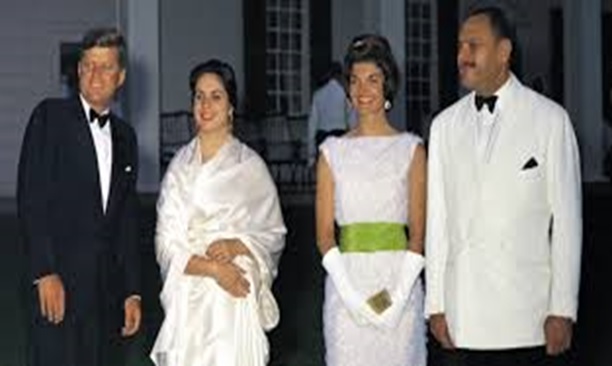
When my students asked me about Pakistan I had much to say. President Ayub Khan had a high profile and was a widely respected figure on the international stage – he was received by President Kennedy at Mount Vernon in a rare state visit. Pakistan was hailed as a great nation and compared to the USA after which Jackie Kennedy was sent on a solo visit to Pakistan
The examiner arrived without fanfare. He had a stern expression and a formidable forehead. He did not formally introduce himself, but I had caught a glimpse of him, and I knew I was in for close scrutiny as he assessed the quality of my work. He was not a man to be trifled with; nor one who would be forgiving or generous. I would have to be on my A game. The problem was that I did not know what aspect of my work he would be judging. Would it be my interaction with my class while teaching? the discipline in class or while interacting with the students out of class? watching a game or talking with one of them? So many of these assessments I understood were based on impressions and instant judgments. So, while his invisibility made me uneasy it nonetheless put me on alert for the encounter. I knew one way or the other, it would affect my future.
If I failed in obtaining my diploma in education, it might well affect my plans to sit for the Central Superior Services of Pakistan examination. If I obtained my diploma and sat for the Pakistan examination, I could have a career serving in Pakistan. Some 5,000 of the cream of the cream of Pakistani students sat for the annual exam and only some dozen were taken for the top cadre called the Civil Service of Pakistan widely known as the CSP. As I aimed for the CSP, I girded the proverbial loins and prepared to do battle.
Those two days passed without incident and the boys behaved impeccably. There was not even normal coughing and shuffling about in their seats. I could see they were on their best behavior. I could have shaken each one of them warmly by hand and thanked them.
After I packed at the conclusion of my attachment and looked up train timings, I settled into a carriage for the long trip to London and then on to Cambridge. It was the same route that had brought me to the school some months ago. As I settled in the compartment, the clackity clack and gentle sawing of the train induced a mood of melancholic nostalgia I knew I had been through an extraordinary experience, but I was also looking forward to the next chapter of my life. Little did I know that I would be successful in the Civil Service of Pakistan CSP exam and find myself as an Assistant Commissioner in what was then East Pakistan in charge of several million people. I had also landed in the middle of a violent and bloody civil war. Hundreds of thousands lost their lives in a mad orgy of violence, and it all ended in the breakup of Pakistan. My newlywed wife and I barely escaped. My other colleagues were not so fortunate. Several of my batch mates were slaughtered in their districts. It was Russian roulette.
It was inconceivable with the high invisibility of Asian immigrants in the mid-1960s, that early in the next century, the Prime Minister of Britain would be a Hindu with an Indian background, the first minister in Scotland and the mayor of London would both be of Pakistani background. These developments are all the more remarkable considering the starting point and where they were coming from. I was at the inflection point of British society; things were beginning to change and would change even more rapidly in the next few years. Pakistan would break in two in 1971, and East Africa would expel Asians who flocked to the UK.
When I returned to Cambridge from Sherborne, the Department of Education at the University wrote to me and published the results. I had received a “distinction” for both the practical exam conducted at Sherborne and the extended written paper.
Furthermore, the Department pointed out “Mr Ahmed was on good terms with staff and students and with staff and boys at his school – where it is stated he was ‘much in demand to talk on Islam or Pakistan.’” He is “endlessly willing” in his work. On reading these results, I felt my heart bursting with gratitude at the generosity and hospitality I received from the staff and boys at Sherborne.
NB: The dialogue below is inspired by the film Chariots of Fire and the conversation in the Cambridge College between the Masters and Tutors discussing the students. I could imagine the conversation in the senior common room discussing the students.
Master 1: “I know we welcome scholars from Commonwealth countries. But … What do you think? Would this really work?”
Master 2 : “We could do with a first-class fast bowler.”
Master 1: “But a Pakistani teaching English to the seniors at a public school?” Another teacher says in a mock Peter, Sellers “Indian” accent “please my students please my students should we study Shakespeare or Wordsworth today?” Another teacher chimes in “or should we take a break for papadum and curry?” They snigger.
Master 1 : “We could do with a good mathematician.”
Master 2: “Not all Indians are good mathematicians “
Master 1: “He’s not Indian. He’s a Pakistani”
Master 3: “What’s really the difference?” mild snigger as one or two of the teachers look up from their tea and reading.
Master 1: “You’re the senior master teaching English. What do you think?”
Master 2: “I’m proud of our record – some of our brightest boys are the English scholars. especially the current crop of A level students”
Master 3: “This young man will be carrying coals to Newcastle.”
(Ambassador Akbar Ahmed is Distinguished Professor of International Relations and holds the Ibn Khaldun Chair of Islamic Studies at the American University, School of International Service. He is also a global fellow at the Wilson Center Washington DC. His academic career included appointments such as Nonresident Senior Fellow at the Brookings Institution; the First Distinguished Chair of Middle East and Islamic Studies at the US Naval Academy in Annapolis, MD; the Iqbal Fellow and Fellow of Selwyn College at the University of Cambridge; and teaching positions at Harvard and Princeton universities. Ahmed dedicated more than three decades to the Civil Service of Pakistan, where his posts included Commissioner in Balochistan, Political Agent in the Tribal Areas, and Pakistan High Commissioner to the UK and Ireland.)
