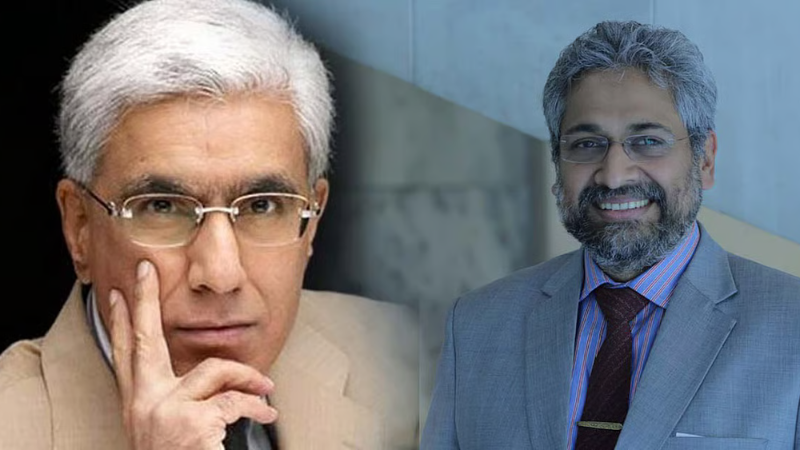
The FIR against Siddhartha Varadarajan and Karan Thapar
By Justice Markandey Katju
Former Judge of Indian Supreme Court
Mumbai, India
An FIR (First Information Report) has been filed by the Assam Police against the well-known Indian journalists Siddhartha Varadarajan and Karan Thapar for sedition, etc.
I condemn this act of the Assam Police, as it appears to be politically motivated since these two journalists have been critical of the Central Government. However, that having been said, I have something else to add.
On the Superficiality of Indian Journalists
Journalists like Siddhartha Varadarajan and Karan Thapar are, in my opinion, totally superficial. They never go deep, never question the efficacy of the present political system in India, and never ask whether democracy is even suited to India — where 90% of Indians vote on the basis of caste and religion, totally overlooking the merit of the candidate.
For them, democracy is a fetish, a holy cow, never to be questioned.
On Freedom of Expression and Hypocrisy
Of course, Siddhartha and Karan are entitled to their opinions. But why should they not allow others to express opinions that deny democracy is good for India?
Why don’t they allow others to say that the Indian Constitution was made to deceive the people into thinking:
- That the people are the rulers of India, when everyone knows a handful of crooks are ruling the country.
- That the people have fundamental rights like freedom of speech, when in reality poverty destroys all rights. What use is free speech to someone who is poor, hungry, and unemployed? He wants food and a job, not empty freedoms.
Thus, these freedoms are largely illusory — a cruel mockery for the over 75% of Indians who are poor.
My Experience with Siddhartha Varadarajan
Siddhartha Varadarajan, former Editor of The Hindu and currently Editor of The Wire, professes to be a great champion of freedom of speech. The problem is that while claiming this freedom for himself, he denies it to others.
I sent several articles to him for publication in The Wire, where I argued:
- Parliamentary democracy in India is a fraud, since it runs on caste and communal vote banks.
- Casteism and communalism are feudal forces that must be destroyed for India to progress, but democracy further entrenches them.
- Politicians thrive by polarizing people along caste and communal lines.
I concluded that solutions to India’s problems lie outside the Constitutional system, through a united, protracted people’s struggle culminating in a revolution, leading to rapid industrialization and a better standard of living.
Siddhartha did not even acknowledge these articles, far less publish them. He could have published them with a disclaimer, or at least started a debate. But no — such ideas horrify him. He will permit criticism of BJP politicians, but never criticism of the entire system.
So much for this “hero” of democracy and free speech.
Liberal vs Godi Media — Any Difference?
The so-called “liberal media” is no better than the godi media. They mocked the pro-government press, yet themselves never penetrate below the surface. They glorified Rahul Gandhi’s Bharat Jodo Yatra, though it was nothing but a gimmick.
This is why I say: Donon ek hi thaile ke chatte-batte hain.
On Karan Thapar, I have written earlier:
🔗 My views on Karan Thapar
🔗 Inanity of our educated people
Plato on Democracy
Democracy is said to be the best form of government, but, as the Greek philosopher Plato wrote in his Republic, it is in fact the worst.
Why? Because it creates illusions:
- Illusion that people are the rulers, when in truth crooks rule.
- Illusion of choice, when in truth people are choosing one thug over another.
Democracy is theatre; politicians are actors, selling dreams they never intend to fulfill — mere jumlas, as Amit Shah candidly admitted.
By making people believe they are rulers, democracy renders them complacent. For why would you rebel against yourself? This seductive power to create illusions that enslave is what makes democracy the worst form of government, as Plato rightly said.
My Final Question
So, I ask Siddhartha Varadarajan and Karan Thapar:
👉 Are Indians fit for democracy, when the mindsets of 90% are filled with the gobar of casteism and communalism?
👉 Should they be given the right to vote, when most vote like sheep and cattle, on caste and religion, ignoring merit?
If so, how does it matter whether the voters list is correct or not? Is this not irrelevant?
(Markandey Katju is an Indian jurist and former judge of the Supreme Court of India who served as chairman of the Press Council of India from 2011 to 2014)