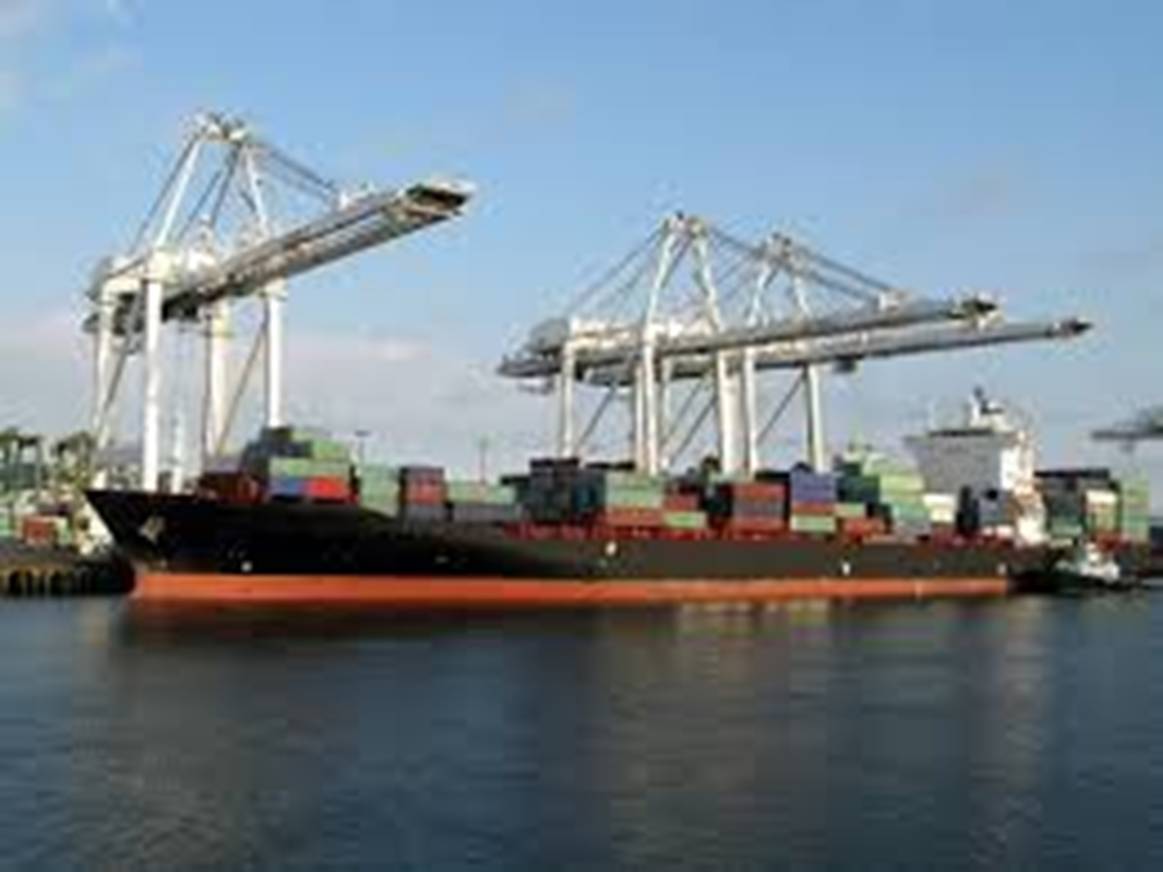
Italy, a parliamentary republic nearly one third our size and one-fourth our population, exported over 20 times more than us last year ($674 billion in 2024) despite acute political instability (69 governments since 1945). The rest of the country does not feel the vibrations of the frequent change of government in Rome because of a non-politicised bureaucracy, a robust manufacturing sector, predictable investment flows from the EU, and a competitive private sector – photo Lawyers Italy
Grassroots Rule
By Aizaz Ahmad Chaudhry
Islamabad, Pakistan

Political instability is often cited as a primary reason for a country’s lack of economic growth and social development. At one level, it makes sense. When economic policies change with every new political government, investor confidence is eroded and capital flies abroad. However, there are several parliamentary democracies which are politically unstable but economically strong, such as Italy, The Netherlands, and Japan. While the government changes frequently, life for citizens remains largely unaffected, thus keeping the economic trajectory on course. Is there a lesson that Pakistan could draw?
Italy, a parliamentary republic nearly one third our size and one-fourth our population, exported over 20 times more than us last year ($674 billion in 2024) despite acute political instability (69 governments since 1945). The rest of the country does not feel the vibrations of the frequent change of government in Rome because of a non-politicised bureaucracy, a robust manufacturing sector, predictable investment flows from the EU, and a competitive private sector. Italy is a decentralised state, with most administrative powers devolved to regions, metropolitan cities, provinces and municipalities. An effective local government system ensures that life goes on normally.
The Netherlands, a parliamentary representative democracy under a monarch, is 22 times smaller in size than Pakistan and has 14 times fewer people. Yet, it exported nearly 22 times more goods and services ($699bn in 2023). The country’s commitment to the rule of law, independent institutions and a culture of innovation, entrepreneurship and pragmatism shields its economy from unstable multiparty governments at the centre. The Netherlands is divided into 12 provinces and 342 municipal governments enjoying significant autonomy for managing all routine services for citizens. Hence, political wrangling at the center does not affect daily life.
Japan is a parliamentary democratic constitutional monarchy. It is less than half the size and population of Pakistan, but has generated $4.28 trillion GDP compared to $410bn for Pakistan this year. Japan has a three-tier government: national, prefectural and municipal. It has 47 prefectures, but day-to-day life runs at the self-governing municipal level, which is subdivided into cities, towns and villages.
Effective LGs ensure life proceeds smoothly.
These facts establish that each parliamentary democracy runs in its own peculiar way. Yet, there is one common strand running through developed parliamentary democracies: manageable administrative units and effective local government systems. For nearly a year, a debate has resurfaced in Pakistan on the need for smaller provinces. However, there is no discernible political will to create them. Ethnic, linguistic and other aspects of the issue overwhelm nearly all related proposals. One idea that gained some traction was to have smaller provinces based on a geographical basis, such as upper, lower, east, west, etc. But since that too requires collective political will and a constitutional amendment, there has been little forward movement.
Meanwhile, the focus has shifted to the next best option for good governance: an effective local government system. The 18th Constitutional Amendment of 2010 did devolve resources to the provinces, but it left the central government with insufficient resources to meet growing debt obligations and the country’s defence needs. Alarmingly, resource allocation stayed within the provincial capitals and was hardly devolved to the local governments. Resultantly, far-flung areas of all the provinces remain out of sight when resources are apportioned.
Will it help if local government is included as a formal tier of governance in our Constitution, and the national finance award allocates funding directly to the local government tier? Can we expect MNAs and MPAs to willingly forego their respective quota of development funds and let an empowered local government system flourish? Will the provincial governments focus more on the basic needs of the people across the province rather than indulging in megaprojects in the bigger cities? Will the federal and provincial bureaucracy not resist the empowerment of local governments? So many questions, too few answers.
If we do not wish to compare ourselves with developed countries, our own neighbourhood provides answers. China was able to lift 800 million of its citizens, nearly triple the population of Pakistan, out of poverty mainly because of an effective system of local peoples congresses at every level of governance (40,000 congresses across provinces, municipalities, counties and townships), thus empowering communities, improving local economies, and contributing to national economic growth.
(The writer is chairman Sanober Institute Islamabad. Dawn)