
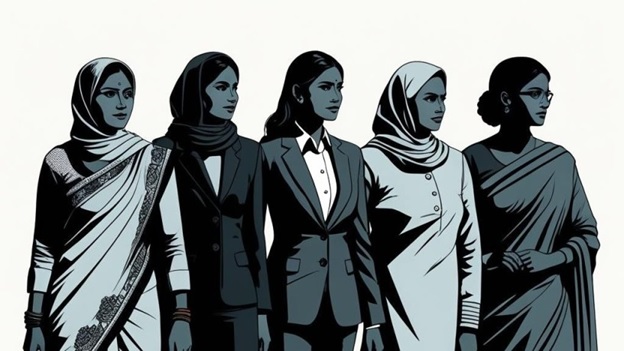
Marking Women in Diplomacy Day on 24 June, this special feature examines how women across the region are anchoring peace processes, reimagining diplomacy through empathy and equity, and offering community-rooted, care-centered responses to war, displacement, and climate disasters
South Asian Women Leading the Way in Peacebuilding and Crisis Response
By Pragyan Srivastava / Sapan News
Boston, MA

As the world faces deepening geopolitical conflicts, ecological collapse, and democratic backsliding, feminist diplomacy has emerged as an urgent, transformative force, particularly in South Asia, where women continue to be at the forefront of peacebuilding, conflict resolution, and gender-responsive governance.
In an open letter to the United Nations Secretary-General titled “ Women, Peace, and Security at a Crossroads: A Call for Urgent Engagement ”, Sri Lankan peacebuilder Visaka Dharmadasa along with other alumnae of the United Nations Department of Political and Peacebuilding Affairs (DPPA) course on Women in Ceasefire Negotiation (2024) highlight the crisis facing the Women, Peace and Security (WPS) agenda.
“Across conflict-affected regions, women are leading humanitarian responses, sustaining communities, facilitating local peace initiatives, and advocating for protection and accountability. Many of us in this network are engaged in these efforts firsthand — not in theory, but in practice. Yet despite the centrality of women’s contributions, they remain consistently excluded from the formal diplomatic processes that shape their countries’ futures.”
Drawing from decades of grassroots work with conflict-affected families, her letter urges the international community to act decisively to safeguard and advance the hard-won gains of feminist peacebuilding. “The failure to engage women meaningfully at peace tables is not just a democratic deficit, it’s a security risk,” they write.
Across South Asia, similar patterns emerge. In Pakistan, initiatives led by women, such as those in tribal jirgas in Khyber Pakhtunkhwa , a province of Pakistan, and women-centred local governance efforts during the Indus Waters Treaty dialogues , offer case studies of inclusive peacebuilding. In Sri Lanka , post-war reconciliation has been driven significantly by Tamil and Sinhala women’s groups addressing wartime trauma and advocating for transitional justice. According to the International Crisis Group , while official mechanisms often exclude women, informal networks have played a pivotal role in community healing.
In India’s northeast, Naga women’s peace coalitions have transformed conflict narratives by centring community needs over militarism.
Meanwhile, in Nepal , young women peacebuilders, supported by UN Women, have carved out space in transitional justice frameworks after a decade-long armed conflict, pushing for the implementation of UNSCR 1325 .
These examples are not isolated. They reflect a growing demand to apply a gender lens to security studies, embed the experiences of conflict-affected women into diplomacy, and reimagine leadership through care-based governance. Feminist diplomacy does not merely aim for inclusion; it reshapes the very framework of international relations by prioritising empathy, equity, and local knowledge.
South Asian feminist voices are calling for a shift from tokenism to transformation. The path forward lies in institutionalising women’s participation across diplomatic, security, and environmental policymaking. Whether it’s building back peace in Sri Lanka, safeguarding water rights in the Indus basin, or protecting Rohingya women refugees in Bangladesh , South Asia’s feminist peacebuilders are not just responding to crises; they are redefining what peace means.
As Women in Diplomacy Day is marked on June 24, it is time global leaders acknowledge what South Asian feminists have long practised: Peace is not possible without women, and diplomacy without empathy is diplomacy without impact.
(Sapan News associate editor Pragyan Srivastava is a journalist from Lucknow and a Fulbright-Nehru Master’s scholar at Rutgers University 2024. With extensive experience in digital storytelling, social media, and television production, she is passionate about creating authentic and powerful stories about South Asia. Email: pragyan@sapannews.com )
