
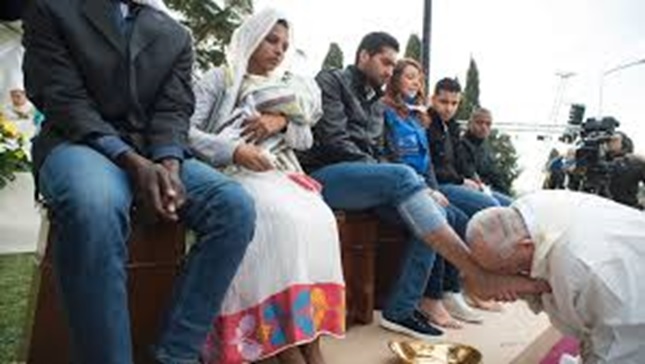
With the refugees, the Pope was indeed the true representative of Jesus on earth, the very embodiment of compassion and humility. Francis stated, “Today, at this time, when I do the same act of Jesus washing the feet of twelve of you, let us all make a gesture of brotherhood, and let us all say: ‘We are different, we are different, we have different cultures and religions, but we are brothers and we want to live in peace.’”– photo USA Today
Francis the Saint
By Dr Akbar Ahmed, Frankie Martin and Dr Amineh Hoti



Aware that we, the authors, who are not Roman Catholic, may be risking accusations of veritable sacrilege by offering our suggestion on matters of faith to those belonging to a different religion, we would still recommend Pope Francis for beatification. In the finest human sense, he has acted and thought and behaved in closest proximity to the core tenets of his faith as the proverbial saint. Just his act of falling to his knees before freshly arrived refugees, desperate with fear and uncertainty, to wash and kiss their feet in an expression of love and humility earns him that affirmation. He has been a pioneer not only of dialogue between faiths, but of a warm and effusive embrace of all of humanity.
We are thinking particularly of an episode which occurred in March 2016, on Holy Thursday which commemorates Jesus’ “Last Supper” and his washing the feet of his 12 apostles on that occasion. In an asylum center outside Rome, Pope Francis washed the feet of eight men and four women. They were Muslim, Hindu, Catholic, and Coptic Christians from Syria, Pakistan, India, Nigeria, Eritrea, and Mali.
The gesture was particularly significant as migrants—especially Muslims—were being rejected and despised in Europe, and indeed elsewhere as they escaped dire conditions at home in the Middle East and Africa. Syrian refugees, for example, were frequently being described as terrorist threats, with the American politician Ben Carson, who served as a US cabinet secretary, comparing Syrian refugees to “rabid dogs.” Anti-Islamic and anti-immigrant platforms were being adopted as the main overarching frames of the European far-right.
And yet, as a good Christian, Francis was emulating his master, Jesus Christ. With the refugees, the Pope was indeed the true representative of Jesus on earth, the very embodiment of compassion and humility. Francis stated, “Today, at this time, when I do the same act of Jesus washing the feet of twelve of you, let us all make a gesture of brotherhood, and let us all say: ‘We are different, we are different, we have different cultures and religions, but we are brothers and we want to live in peace.’” “All of us together,” he emphasized, “Muslims, Hindus, Catholics, Copts, Evangelical [Protestants] brothers and sisters—children of the same God—we want to live in peace, integrated.” Acknowledging the suffering endured by the refugees, Pope Francis asked them to pray in “their own religious language” so that there may “always be brotherhood and goodness.” As Francis washed their feet, tears streamed down a number of the migrants’ faces. Following the end of the mass which Francis performed at the asylum center, he “greeted each refugee, one by one, posing for selfies and accepting notes as he moved down the rows.” Pope Francis had already earned a reputation for his actions and words. But in that one act of love and humility in which he directly connected with the founder of Christianity, he captured the imagination of the world.
The following month, April 2016, Francis again made a dramatic gesture in support of refugees. This time, he visited the Greek island of Lesbos, where large numbers of refugees, many from Syria, were arriving in Europe. There, he encountered a scene, as he put it, “like one of the circles of Dante’s hell: human suffering, rags, mud, corrugated iron, misery.”
In an unprecedented action, Francis invited onto his plane three Syrian families who faced deportation, two from Damascus and one from Deir ez-Zor, whose homes had been bombed. Just hours after the Pope arrived, the families were bound for Italy, with the Vatican announcing it would now assume responsibility for their wellbeing. One of the Syrian women, Wafaa Eid, later remembered the Pope in their initial meeting as calm and kind: “He placed a hand on my son Omar’s head...it was like a dream.” “Francis,” she said, “saw that refugees are also humans, that they are people, they feel, they get sick, they have families, and they also have a right to live well.”
Francis’ focus on migrants, in fact, dated back to the very beginning of his papacy in 2013. Just weeks after becoming pope, he washed and kissed the feet of twelve juvenile inmates (two were Muslim and another two female). These actions were part of the Pope’s general campaign to bring the church closer to the impoverished and marginalized, and to exemplify Jesus’ message of how those in power must commit themselves to serving all people. While the washing of the feet ritual was usually performed on 12 Catholic men, Francis sent a message by washing the feet of both Muslims and women.
Then, a few months later, Pope Francis made his first official trip outside Rome to the island of Lampedusa, Sicily, which he visited to honor the many migrants who had died in the Mediterranean trying to reach Europe. He cited the story of Cain and Abel: “God asks each one of us: ‘Where is the blood of your brother that cries out to me?’ Today no one in the world feels responsible for this.” Two years later, in 2015, Pope Francis called on every European parish to host refugees, stating, “I appeal to the parishes, the religious communities, the monasteries and sanctuaries of all Europe to...take in one family of refugees.”
Francis’ openness and dedication to interfaith understanding could also be seen in his acceptance to receive one of the authors of this piece, Dr Hoti, to present her book Gems and Jewels: The Religions of Pakistan (2021) to him. Monsignor Khaled B. Akasheh, the Vatican’s then Bureau Chief for relations with Islam at the Dicastery for Interreligious Dialogue encouraged Dr Hoti to come to Rome and facilitated her participation in a General Audience so as to present the book to His Holiness.
While, Amineh says, this regrettably clashed with another difficult and time-sensitive visa appointment she was advised by her lawyer not to miss or reschedule, she has long been in communication with Monsignor Akasheh and contributed a chapter on Pope Francis, one of two by Muslim scholars, for the book Pope Francis and Interreligious Dialogue: Religious Thinkers Engage with Recent Papal Initiatives (2018). “Besides His Holiness,” Monsignor Akasheh told Amineh, “hundreds of millions of Christians around the world look at Muslims as brothers and sisters in humanity and in the faith of Abraham.” When Amineh shared a poem on the Prophet of Islam, Monsignor Akasheh responded with a generosity of spirit that echoed Pope Francis. “In his reaction to my poem called, 'The Tulip and the Rose' in honor of the Prophet, Monsignor Akasheh wrote: 'You are a beautiful Rose in God’s garden, my dear Friend. Your noble person and your praiseworthy engagement in Interreligious dialogue deserve recognition and support.”
All three of us, the authors, were deeply saddened by Francis’ death in April 2025 and wish to salute and celebrate his works, humanity, and legacy. For us, he is a great “Mingler” or someone who embraces the “Other,” and features prominently in our upcoming book, The Mingling of the Oceans: How Civilizations Can Live Together. As demonstrated in his treatment of migrants, Pope Francis approached all human beings with empathy and compassion—the essence of the Mingler. He argued for coexistence and embracing human difference. Francis’ focus on the “Other” in reminding us all of being part of a single humanity helps explain the global outpouring of grief and love for Francis when he died.
The words and actions of Pope Francis embody love, a concept inspired by Jesus himself—Francis called for “a civilization of love.” Love is advocated by our other Minglers too, from Rumi and Ibn Arabi to Mahatma Gandhi. It was also advocated by Saint Francis, Pope Francis’ namesake and role model. The guiding light that illuminates the Red Road of the Native Americans, Lao Tzu’s Way or Tao, or the true path of the Muslims is love, love for the divine expressed in love for humanity and creation. Just as hatred engenders violence, love dampens and contains it. Love is the antidote to and the polar opposite of hatred. Pope Francis thus touches hearts beyond the Christian world in his message of love. Francis too found inspiration beyond his own tradition, remarking that he found it in “others of our brothers and sisters who are not Catholics: Martin Luther King, Desmond Tutu, Mahatma Gandhi, and many more” who like Saint Francis embodied the message of universal love. Pope Francis additionally embodied humility, as did Jesus and Saint Francis. Instead of residing in the papal palace adjacent to Saint Peter’s Square, he lived in a Vatican guest house, Casa Santa Marta.
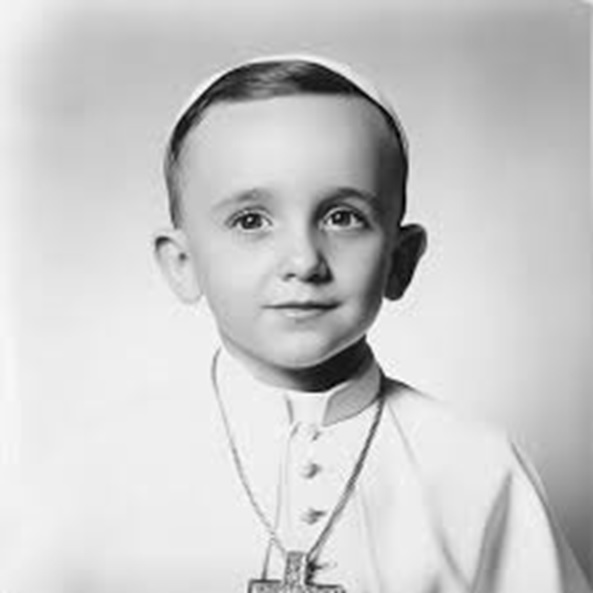
Pope Francis (Jorge Mario Bergoglio) was born in Buenos Aires, Argentina, in 1936, the son of immigrants from Italy who were fleeing Mussolini and fascism - Instagram
Pope Francis in Argentina
Pope Francis (Jorge Mario Bergoglio) was born in Buenos Aires, Argentina, in 1936, the son of immigrants from Italy who were fleeing Mussolini and fascism. He described his family background as “poor folk who had climbed the social ladder to the middle class and, on several occasions, slid noisily down again.” As a child, Bergoglio grew up in a multicultural area of Buenos Aires, where he and his family had Jewish and Muslim friends—these were the beginnings of his interest and commitment to interfaith dialogue. After completing secondary school and working as a chemist, he decided to pursue the path of a priest. His recovery after a serious bout of influenza which affected his lungs at the age of 21, he said, taught him how much we are dependent on each other and “the power of that religious and human experience…No one can save themself alone, in any sense…Not even the pope can save himself alone.” He studied philosophy and the humanities and taught literature and psychology in the 1960s, and he was ordained a priest in 1969. In 1973, he became head of the Jesuit Order in Argentina and Uruguay, and in 2001, he was named a cardinal by Pope John Paul II.
Bergoglio faced many trials during his time in Argentina, including what he called the country’s “long terrible night” of military rule in the 1970s and 1980s. With his interfaith sensitivities, he pointed to the particular impact on the Jewish community of the regime, noting that of the 30,000 Argentinians who were “disappeared” during the military dictatorship, at least 2,000 were Jewish, “and many others came from Jewish origins: or were their friends, or their siblings.” Almost all of these prisoners, he said, “passed through torture rooms in which it was not uncommon to see photographs of Hitler on the walls,” reflecting the Argentinian junta’s fascist affiliations. Making the situation even more bone-chilling was the fact that many of Argentina’s Jewish community had fled the Holocaust in Europe for what they hoped were safer shores.
Over the years, Cardinal Bergoglio’s popularity grew, not just in Argentina, but in Latin America generally, and he was known for his “ascetic” and austere lifestyle. He also participated in interfaith initiatives, as he related, working “jointly with the Jewish community of Buenos Aires on many cultural, religious, and social initiatives, such as the provision of food for the poor managed by rabbis and priests together.” As Archbishop of Buenos Aires, he had four main articulated goals: “open and brotherly communities, an informed laity playing a lead role, evangelization efforts addressed to every inhabitant of the city, and assistance to the poor and the sick.” One of the members of Bergoglio’s flock in Buenos Aires said he always “focused on what no one wanted to talk about or look at. He had that broad perspective. And those arms, those arms that said to everyone, everyone, everyone, it didn’t matter who they were…always advocating for children, caring for women, for those discarded.” In March 2013, Bergoglio became Pope Francis, the first non-European pope in over 1,000 years and the first pope from the Americas.
On inclusiveness and “Tradition”
Alana Wise and Erin McPike, “Republican Ben Carson compares Syrian refugees to ‘rabid dogs,’” Reuters, November 19, 2015.
Elahe Izadi, “Pope Francis washes the feet of Muslim migrants, says we are ‘children of the same God,’” Washington Post, March 25, 2016.
Elahe Izadi, “Pope Francis washes the feet of Muslim migrants, says we are ‘children of the same God,’” Washington Post, March 25, 2016.
Elise Harris, “An emotional Mass for migrants with Pope Francis,” Catholic News Agency, March 24, 2016.
“Pope washes feet of Muslim migrants,” Associated Press, March 24, 2016.
Pope Francis, Hope: The Autobiography. With Carlo Musso. Translated by Richard Dixon. (New York: Random House, 2025), p. 228.
Helena Smith, “Pope Francis takes refugees to Rome after Lesbos visit,” The Guardian, April 16, 2016.
Helena Smith, “‘Who wept for these people?’ Francis’s papacy was defined by compassion for refugees,” The Guardian, April 24, 2025.
“Refugee family fleeing war recalls how Pope Francis helped give them a new life,” CNN, April 23, 2025.
“Refugee family fleeing war recalls how Pope Francis helped give them a new life,” CNN, April 23, 2025.
“Pope washes feet of Muslim migrants,” Associated Press, March 24, 2016.
Uri Friedman, “Refugees and the ‘Globalization of Indifference,’” The Atlantic, April 16, 2016.
Isla Binnie, “Pope calls on every European parish to host one refugee family,” Reuters, September 6, 2015.
Pope Francis, “Encyclical Letter Fratelli Tutti of the Holy Father Francis on Fraternity and Social Friendship,” The Vatican, October 3, 2020: https://www.vatican.va/content/francesco/en/encyclicals/documents/papa-francesco_20201003_enciclica-fratelli-tutti.html
Pope Francis, Hope, p. 118.
Pope Francis, Hope, pp. 135, 139.
Pope Francis, Hope, p. 211.
Pope Francis, Hope, p. 211.
Pope Francis, Hope, p. 211.
Pope Francis, Hope, p. 211.
“Biography of the Holy Father Francis,” The Vatican: https://www.vatican.va/content/francesco/en/biography/documents/papa-francesco-biografia-bergoglio.html
Cecilia Domínguez, “Parishioner who worked with pope in Buenos Aires: He ‘focused on what no one wanted to talk about or look at,’” CNN, April 21, 2025. Growing up, Pope Francis said he was taught an exclusivist view of religion. “When I was a child,” he recounted, “all Protestants were going to hell, all of them. That’s what we were told. And I remember my first experience of ecumenism…I was four or five years old, but I can still remember it clearly. I was walking down the street with my grandmother, she was holding my hand. On the other sidewalk there were two ladies from the Salvation Army, with those hats with the bow they used to wear. And I asked my grandmother: ‘Grandma, are they nuns?’ And she said to me: ‘No, they are Protestants, but they are good people.’ This was the first time that I had ever heard someone say something good about a person of another religion, about a Protestant. At that time, in catechesis, they told us that everyone was going to hell!...When we read what the Second Vatican Council said about the values to be found in other religions, the Church has grown greatly in this regard. And yes, there are dark periods in the history of the Church, we must admit, without being ashamed, because we too are on a path of constant conversion: always moving from sin to grace. And this interreligious experience of fraternity, each always respecting the other, is a grace.”
Pope Francis explained the manner in which he interprets the openness of Christianity, “You have to be open to everything. The Church is like that: Everyone, everyone, everyone. ‘That so-and-so is a sinner…?’ Me too, I am a sinner. Everyone! The Gospel is for everyone. If the Church places a customs officer at the door, that is no longer the church of Christ. Everyone.” When asked what gives him hope in the world, Francis replied, “Everything. You see tragedies, but you also see so many beautiful things. You see heroic mothers, heroic men, men who have hopes and dreams, women who look to the future. That gives me a lot of hope. People want to live. People forge ahead. And people are fundamentally good. We are all fundamentally good. Yes, there are some rogues and sinners, but the heart itself is good.” Even in respect to people who have sinned, Francis’ understanding of God’s compassionate nature shone through in his description of hell: “ I like to think of hell as empty; I hope it is.”
In taking such positions, Francis roused the opposition of others with different views, particularly those who wished to emphasize boundaries around the community, including on religious, national, and racial lines. Indeed, it was not an easy path for Francis. He received fierce opposition from within the Church, for example, “among the upper echelon of the hierarchy, some of whom…publicly attacked his orthodoxy and called for his resignation.” Some of his Catholic conservative critics even dubbed him the “antichrist.” Politicians also opposed Francis, with Argentina’s right-wing president, Javier Milei, calling him “the representative of the evil one on Earth,” a “son-of-a-bitch preaching communism,” and an “imbecile who defends social justice.”
Yet such opposition did not deter Francis. He took issue with the very framework of many of the “traditionalists,” citing the composer Gustav Mahler, who said, “Tradition is not the worship of ashes; it is the preservation of fire.” While fundamentalists, according to Francis, are “continually returning to ashes,” tradition actually means a “root,” something that anchors and sustains—for a tree to bear fruit, it must have roots. Like a tree, Francis affirmed, “Tradition means growing. Tradition means moving forward.” He insisted, “The Church cannot be the congregation of ‘happy bygone days,’” pointing out that that such purportedly idyllic times were often not as happy as we like to remember. Instead, “Our responsibility is to journey in our own time, to continue growing in the art of meeting needs and providing for them with creativity of Spirit, which is always discernment in action.” Francis opposed, for example, those people who, as he said, wished “to turn the pope into a military chaplain of the West rather than the pastor of the Universal Church.”
Francis explained his approach to reaching out to others in the face of criticism: “Whenever you find yourself facing human suffering, you have to do what your heart tells you to. Then people will say: ‘He did it for this or that political reason’; let them say what they want. But when you think of these men and women, these fathers and mothers who have lost their children, their brothers and sisters, of the immense pain of such a disaster, I don’t know, my heart...I am a priest and I feel the need to draw near! That’s how I feel; that is the first thing. I know that the comfort that any word of mine might give is no cure, it doesn’t bring the dead back to life, but human closeness at these times gives us strength, there is solidarity...Human suffering is powerful, and if at these sad times we draw closer, we help one another greatly…Somebody came up to me and said: ‘You should be neutral.[’]…But listen, where human suffering is involved, you can’t be neutral.’ That was my answer; that’s how I feel.”
Concerning people with more exclusivist views, Francis explained his own philosophy: “These conservative groups...we must be respectful towards them, and we must not tire of explaining, catechizing, and discussing without insulting, badmouthing, or gossiping. Because you cannot dismiss someone by saying ‘He is a conservative.’ No. He is a child of God just as much as I am. But come and we’ll talk. If he doesn’t want to speak, that’s his problem, but I am respectful. Patience, meekness, and dialogue.”
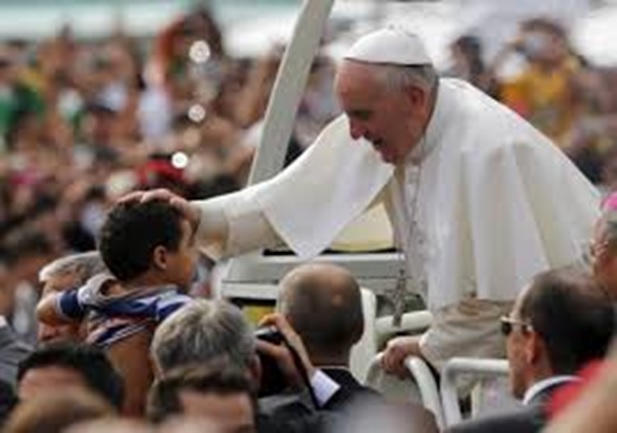
If Pope Francis could be said to have a single big idea underlying his teachings, it would be developing and promoting Saint Francis’ philosophy of “Fratelli Tutti”: that all human beings are brothers and sisters—a “family.” – photo Maryknoll Office for Global Concerns
“Fratelli Tutti”
If Pope Francis could be said to have a single big idea underlying his teachings, it would be developing and promoting Saint Francis’ philosophy of “Fratelli Tutti”: that all human beings are brothers and sisters—a “family.” Pope Francis gave his encyclical on the subject, entitled “Fratelli Tutti,” at Saint Francis’ tomb in Assisi, Italy, in October 2020. At a time when, the Pope explained, “the sense of belonging to a single human family is fading, and the dream of working together for justice and peace seems an outdated utopia,” he believed we must redouble our efforts to support the idea of fraternity.
“It is my desire,” the Pope said, “that, in this our time, by acknowledging the dignity of each human person, we can contribute to the rebirth of a universal aspiration to fraternity…Let us dream, then, as a single human family, as fellow travelers sharing the same flesh, as children of the same earth which is our common home.” The Pope cited the second century Christian bishop Saint Irenaeus on this topic, comparing humanity to a melody made up of different notes—“One who seeks the truth should not concentrate on the differences between one note and another, thinking as if each was created separately and apart from the others; instead, he should realize that one and the same person composed the entire melody.”
At the same time, Pope Francis affirmed that while he stresses unity as part of Fratelli Tutti, this does not mean that everyone is the same, explaining, “Aspiring to unity does not mean uniformity.” After all, “canceling difference…means canceling humanity.”Fratelli Tutti means “each of us bringing the richness of his or her beliefs and convictions, each of us with his or her own voice, brothers and sisters all.” What he is teaching us, then, is an acknowledgment of our differences within a framework of unity—as he said, “we must still sit around the same table.”
Pope Francis’ teachings about viewing the particular in the context of the universal, of human distinctness in the context of unity, which he based in Biblical teachings, can be seen in his statement that “each creature has its own purpose. None is superfluous. The entire material universe speaks of God’s love.” The Pope drew on the ninth century Muslim Sufi poet Ali al-Khawas to make this point, with Francis writing, “ there is a mystical meaning to be found in a leaf, in a mountain trail, in a dewdrop, in a poor person’s face.” Francis then quotes al-Khawas on this subject: “ There is a subtle mystery in each of the movements and sounds of this world...when the wind blows, the trees sway, water flows, flies buzz, doors creak, birds sing, or in the sound of strings or flutes, the sighs of the sick, the groans of the afflicted.”
In order to solve the myriad of problems which face all of humanity and the earth we call home, Francis again stresses Fratelli Tutti. “All is related, all is connected,” he affirmed. The advent of the coronavirus, for example, he reflected, taught us “our interdependence, each upon others, like a human family, and all of us dependent on the planet.” The same is the case with deforestation, which drives climate change, which in turn drives poverty from which migrants flee—it all calls for what he described as a “single integrated approach” which is focused on unity and interconnectedness.
Pope Francis’s 2015 encyclical on climate change, Laudato Si’ takes its title and opening from Saint Francis: “‘LAUDATO SI’, mi’ Signore’—‘Praise be to you, my Lord.’ In the words of this beautiful canticle, Saint Francis of Assisi reminds us that our common home is like a sister with whom we share our life and a beautiful mother who opens her arms to embrace us…This sister now cries out to us because of the harm we have inflicted on her…the symptoms of sickness evident in the soil, in the water, in the air and in all forms of life.” To solve the urgent climate crisis, we each need to bring our own diverse perspectives, dialogue with each other, and work together with a clear-eyed scientific assessment of the damage that is being caused to the planet: “All of us can cooperate as instruments of God for the care of creation, each according to his or her own culture, experience, involvements and talents.” While Francis offers practical guidance such as instituting binding and verifiable international mechanisms to control greenhouse gas emissions, and—for individuals—using less energy and producing less waste, the dialogue component is crucial given that, as Francis writes, “There are no uniform recipes, because each country or region has its own problems and limitations.” Diverse peoples need not wait for governments to act, but can collaborate with one another and pressure governments from within civil society, taking full advantage of the “cultural interchanges, greater mutual knowledge and processes of integration of peoples” that have accompanied globalization.
Pope Francis and Interfaith Dialogue
The philosophy of Fratelli Tutti additionally underscores Pope Francis’ philosophy towards interfaith dialogue and understanding, and we can benefit from learning about Francis’ approach to reaching out to the “Other.” Dialogue is an enriching process for all of us, Francis held, explaining, “ You may have a well-structured thought, but when you talk with someone who doesn’t think like you, somehow you need to find a way of justifying that thought of yours; the discussion begins, and the margins of the other person’s thought enrich you.” Dialogue, “even in its blessed toil, is the only antidote to the destructive folly that we have known, and still know.”“ We are always capable of going out of ourselves towards the other,” Francis argued, “Unless we do this, other creatures will not be recognized for their true worth.” Dialogue is also in an important sense fundamental to education itself. Citing the Austrian poet Rainer Maria Rilke, Francis contended, “to educate means ‘to love the questions,’ to let them live, to let them wander,” and not to be afraid of them, as are autocratic governments, for example.
Amineh A. Hoti, “Pope Francis’s Compassion.” In Harold Kasimow and Alan Race, eds. Pope Francis and Interreligious Dialogue: Religious Thinkers Engage with Recent Papal Initiatives (Cham, Switzerland: Palgrave Macmillan, 2018), p. 158.
Norah O’Donnell, “Pope Francis tells 60 Minutes in rare interview: ‘the globalization of indifference is a very ugly disease,’” CBS News, May 19, 2024.
Norah O’Donnell, “Pope Francis tells 60 Minutes in rare interview: ‘the globalization of indifference is a very ugly disease,’” CBS News, May 19, 2024.
Courtney Mares, “Pope Francis: ‘I like to think of hell as empty,’” Catholic News Agency, January 15, 2024.
Peter C. Phan, “Pope Francis and Interreligious Encounter,” Theological Studies, vol. 83, no. 1, 2022, p. 46.
Ben Munster and Hannah Roberts, “The complex legacy of Pope Francis,” Politico, April 21, 2025.
Philip Pullella, “From ‘imbecile’ to ‘Your Holiness’—Argentina’s Milei changes tone on Pope Francis,” Reuters, November 21, 2023.
Pope Francis, Hope, p. 91.
Pope Francis, Hope, p. 92.
Pope Francis, Hope, p. 203.
Pope Francis, Hope, p. 203.
Pope Francis, Hope, p. 238.
Hoti, “Pope Francis’s Compassion,” p. 147.
Hoti, “Pope Francis’s Compassion,” p. 159.
Pope Francis, “Encyclical Letter Fratelli Tutti of the Holy Father Francis on Fraternity and Social Friendship,” The Vatican, October 3, 2020: https://www.vatican.va/content/francesco/en/encyclicals/documents/papa-francesco_20201003_enciclica-fratelli-tutti.html
Pope Francis, “Encyclical Letter Fratelli Tutti of the Holy Father Francis on Fraternity and Social Friendship,” The Vatican, October 3, 2020: https://www.vatican.va/content/francesco/en/encyclicals/documents/papa-francesco_20201003_enciclica-fratelli-tutti.html
Pope Francis, “Encyclical Letter Fratelli Tutti of the Holy Father Francis on Fraternity and Social Friendship,” The Vatican, October 3, 2020: https://www.vatican.va/content/francesco/en/encyclicals/documents/papa-francesco_20201003_enciclica-fratelli-tutti.html
Pope Francis, Hope, p. 203.
Pope Francis, Hope, p. 200.
Pope Francis, “Encyclical Letter Fratelli Tutti of the Holy Father Francis on Fraternity and Social Friendship,” The Vatican, October 3, 2020: https://www.vatican.va/content/francesco/en/encyclicals/documents/papa-francesco_20201003_enciclica-fratelli-tutti.html
Pope Francis, Hope, p. 203.
Pope Francis, “Encyclical Letter Laudato Si’ of the Holy Father Francis on Care for our Common Home,” The Vatican, May 24, 2015: https://www.vatican.va/content/francesco/en/encyclicals/documents/papa-francesco_20150524_enciclica-laudato-si.html
Pope Francis, “Encyclical Letter Laudato Si’ of the Holy Father Francis on Care for our Common Home,” The Vatican, May 24, 2015: https://www.vatican.va/content/francesco/en/encyclicals/documents/papa-francesco_20150524_enciclica-laudato-si.html
Pope Francis, “Encyclical Letter Laudato Si’ of the Holy Father Francis on Care for our Common Home,” The Vatican, May 24, 2015, footnote 159: https://www.vatican.va/content/francesco/en/encyclicals/documents/papa-francesco_20150524_enciclica-laudato-si.html
Pope Francis, Hope, p. 290.
Pope Francis, Hope, p. 218.
Pope Francis, Hope, p. 219.
Pope Francis, “Encyclical Letter Laudato Si’ of the Holy Father Francis on Care for our Common Home,” The Vatican, May 24, 2015: https://www.vatican.va/content/francesco/en/encyclicals/documents/papa-francesco_20150524_enciclica-laudato-si.html
Pope Francis, “Encyclical Letter Laudato Si’ of the Holy Father Francis on Care for our Common Home,” The Vatican, May 24, 2015: https://www.vatican.va/content/francesco/en/encyclicals/documents/papa-francesco_20150524_enciclica-laudato-si.html
Pope Francis, “Encyclical Letter Laudato Si’ of the Holy Father Francis on Care for our Common Home,” The Vatican, May 24, 2015: https://www.vatican.va/content/francesco/en/encyclicals/documents/papa-francesco_20150524_enciclica-laudato-si.html
Pope Francis, “Apostolic Exhortation Laudate Deum of the Holy Father Francis To All People of Good Will on the Climate Crisis,” The Vatican, October 4, 2023: https://www.vatican.va/content/francesco/en/apost_exhortations/documents/20231004-laudate-deum.html
Pope Francis, Hope, p. 180.
Pope Francis, Hope, p. 160.
Pope Francis, “Encyclical Letter Laudato Si’ of the Holy Father Francis on Care for our Common Home,” The Vatican, May 24, 2015: https://www.vatican.va/content/francesco/en/encyclicals/documents/papa-francesco_20150524_enciclica-laudato-si.html
Pope Francis, Hope, p. 272.
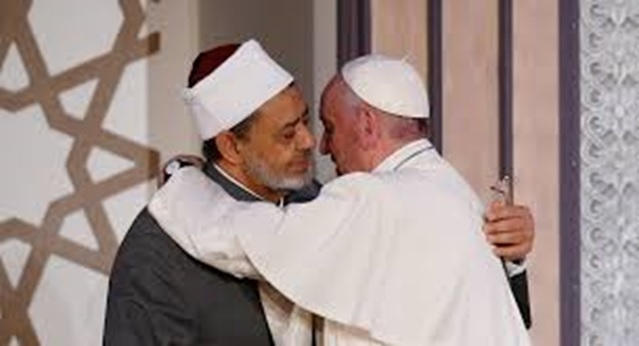
In his approach to interfaith engagement, Francis began with the reality of diversity in life. He cited Saint Thomas Aquinas’ views on how God intended there to be variety in the world. Diversity is thus a given, a reality we must start from – Craig Considine
In his approach to interfaith engagement, Francis began with the reality of diversity in life. He cited Saint Thomas Aquinas’ views on how God intended there to be variety in the world. Diversity is thus a given, a reality we must start from. In a joint statement with the Grand Imam of -Al-Azhar, Ahmed Al-Tayyeb, Francis declared, “The pluralism and the diversity of religions, color, sex, race, and language are willed by God in his wisdom, through which he created human beings.” This diversity is also an indication, as Francis asserted, that “No one can possess the whole truth.” As such, Francis urged, “We need to listen to and complement one another in our partial reception of reality and the Gospel.”
Concerning non-Christian religions, Pope Francis affirmed “that non-Christians, when they live faithfully according to their consciences, can live ‘justified by the grace of God’ and thus be ‘associated to the paschal mystery of Jesus Christ.’” The implication of his statement is “that these religions can be ‘channels’ by which the Holy Spirit works for their adherents’ salvation.” Other religions, Francis states, also provide “practical wisdom” for Christians who may “benefit from these treasures built up over many centuries, which can help us better to live our own beliefs.” While this is true for religious like Buddhism and Hinduism, Francis felt that Judaism in particular was so close to Christianity, Jews being “our elder brothers in faith,” that dialogue between Jews and Christians “has to be more than interreligious, for it is a family dialogue.”
Francis elaborated on this message at a meeting of youth of different religions including Hinduism, Sikhism, and Catholicism in Singapore in September 2024, saying, “Religions are seen as paths trying to reach God. I will use an analogy: They are like different languages that express the divine…But God is for everyone, and therefore, we are all God’s children.” Francis affirmed, “There is only one God, and religions are like languages that try to express ways to approach God. Some Sikh, some Muslim, some Hindu, some Christian.”
In terms of how practically to engage in dialogue with the “Other,” Francis said, “I walk with the other. I don’t try to make him come over me. I don’t proselytize”; and “always let us walk together. This is the heart of dialogue.” It was important also to be friendly, with Francis remarking, “a smile breaks down barriers, creates connections, seeks to bring together different—sometimes even contrary—realities.” He affirmed: “I repeat forcefully: it is neither a culture of confrontation nor a culture of conflict which builds harmony within and between peoples, but rather a culture of encounter and a culture of dialogue; this is the only way to peace.” For example, Pope Francis said of Islam, “We must never forget that they profess to hold the faith of Abraham, and together with us they adore the one, merciful God, who will judge humanity on the last day.”
Speaking about his 2014 visit to Turkey, the Pope captured the spirit of true dialogue in seeking common ground: “When I entered the Mosque, I couldn’t say: now, I’m a tourist! No, it was completely religious. And I saw that wonder! The Mufti explained things very well to me, with such meekness, and using the Qur’an, which speaks of Mary and John the Baptist. He explained it all to me...At that moment I felt the need to pray. So, I asked him: ‘Shall we pray a little?’ To which he responded: ‘Yes, yes.’ I prayed for Turkey, for peace, for the Mufti, for everyone and for myself, as I need it…I prayed, sincerely. Most of all, I prayed for peace, and I said:
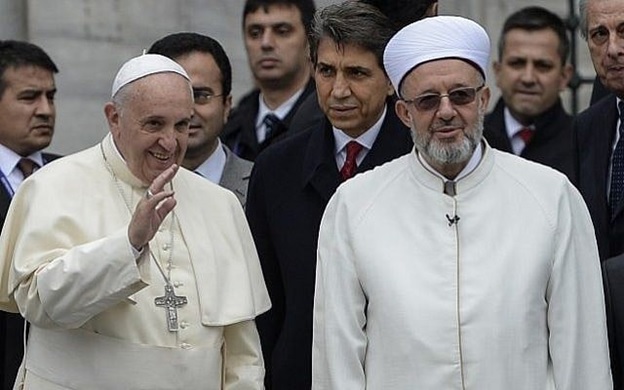
Speaking about his 2014 visit to Turkey, the Pope captured the spirit of true dialogue in seeking common ground: “When I entered the Mosque, I couldn’t say: now, I’m a tourist! No, it was completely religious. And I saw that wonder! The Mufti explained things very well to me, with such meekness, and using the Qur’an, which speaks of Mary and John the Baptist. He explained it all to me...At that moment I felt the need to pray. So, I asked him: ‘Shall we pray a little?’ To which he responded: ‘Yes, yes.’ – Photo AFP
‘Lord, let’s put an end to these wars!’ Thus, it was a moment of sincere prayer. Unity is a journey we have to take, but we need to do it together. This is spiritual ecumenism: praying together, working together. There are so many works of charity, so much work...Teaching together...Moving forward together.” Francis emphasized that, “Throughout my papacy I have always given great consideration to my relations with the Muslim world, which goes back to those friendships I had as a child” in Argentina.
In 2021, Francis became the first pope to visit Iraq and, in a historic move, met with the senior Shia Muslim cleric Ayatollah Ali Al-Sistani, promoting a message of coexistence and highlighting the struggles of the Christian community in the country. “I recall one particular phrase that I carried with me as a precious gift,” Francis said of his meeting with Al-Sistani, “Human beings are either brothers by religion or equals by creation.” It is a saying associated with Ali, the fourth caliph of Islam and cousin and son-in-law of the Prophet of Islam. In Ur, Iraq, the birthplace of Abraham, Francis, surrounded by Sunni and Shia Muslims, Christians of different denominations, and members of Iraqi minority groups such as the Yazidis, stated, “This blessed place brings us back to our origins…We seem to have returned home.” Invoking Abraham, the Pope said, “ May the great Patriarch help us to make our respective sacred places oases of peace and encounter for all!” Alongside members of the different faiths, Francis prayed to God, “As children of Abraham, Jews, Christians and Muslims, together with other believers and all persons of good will, we thank you for having given us Abraham, a distinguished son of this noble and beloved country, to be our common father in faith...We thank you because, in blessing our father Abraham, you made him a blessing for all peoples.”
Francis’ approach to dialogue also included an outreach to Indigenous communities in different parts of the world who have faced a particular marginalization and destruction of their lands, habitations, and cultures. Francis said of his interactions with Indigenous peoples in his native Argentina and other places in South America, “I breathed the air of wisdom, of knowledge, and felt also the deep wounds of those men and women who know how to live in harmony with nature, who respect it as a source of nourishment, a mutual home, and altar of human sharing. And yet, too many times, those people have remained systematically and structurally unrecognized and excluded by society. Many have considered their values, their cultures, and their traditions to be inferior.”
In different places, Francis made efforts of reconciliation over abuses committed against Indigenous peoples by the Catholic Church in the past. In Alberta, Canada in 2022, Francis met with a large group of Indigenous people “in a pow wow circle, a covered ring surrounding an open space used for traditional dancing and drumming circles.” There, the Pope apologized “for the evil committed by so many Christians against the Indigenous peoples” and his apology “triggered applause and approving shouts” from the audience. During this “Penitential Pilgrimage,” as Francis called it, he met with former Indigenous students of the Catholic-run school system.
In October 2019, Pope Francis presided over a special assembly or synod of bishops in Rome focusing on the Church and Indigenous peoples of the Amazon region in South America. During the synod, “Francis adopted an inclusive attitude towards indigenous people, welcoming them to the Vatican and embracing the traditional objects they use in their worship of God” including status representing the female figure of Pachamama, or Mother Earth. When conservative Catholic activists, accusing Francis of idolatry, stole the statues and threw them into the Tiber River, Francis apologized to Amazonian bishops and tribal leaders for the theft while explaining there “was no idolatrous intention” in allowing the participants to bring the statues.
As he did with Indigenous peoples, Pope Francis also asked the Roma people for forgiveness for wrongs committed against them while visiting Blaj, Romania, in June 2019. “I ask forgiveness—in the name of the Church and of the Lord—and I ask forgiveness of you,” he said. Francis explained of the visit with the Roma, “I felt in my heart the weight of the acts of discrimination, segregation, ill-treatment suffered by those communities. History tells us that even Christians, even Catholics, are not above such evils.” In such cases, Francis said, we “were not able to recognize, appreciate, and defend their distinctive characteristics….How many times do we judge too quickly, with words that hurt, with attitudes that sow the seeds of hatred and create distance. But when someone is left behind, the whole human family comes to a halt. We are not truly Christian, nor even human, if we cannot see the person before his actions, before our opinions and prejudices.”
Obstacles to Fratelli Tutti
Francis was clear in identifying several main obstacles to the vision of Fratelli Tutti, based in a respect and love for humanity’s unity in diversity. First, Francis opposed any effort to enforce a unity on humanity that does not allow for differences—this is “diabolical” and what he called “the uniformity of a single theoretically neutral thought.” “In opposing every attempt to create a rigid uniformity,” he urged, “we can and must build unity on the basis of our diversity of languages, cultures and religions, and lift our voices against everything which would stand in the way of human unity.” Francis was adamant that “Unity does not mean forced integration nor harmonized marginalization. Rather, it is a reconciled diversity.” He confidently declared, “the future is in respectful co-existence in diversity...We are convinced that this is the route to building peace in the world.”
Francis reminded us that while one can criticize governments, we should never become “anti” people themselves—this is an example of what ideologies can do, they can turn us against entire groups of people. Using Israel and Palestine as an example, he said, “All ideology is bad, and antisemitism is an ideology, and it is bad. Any ‘anti’ is always bad. You can criticize one government or another, the government of Israel, the Palestinian government. You can criticize all you want, but not ‘anti’ a people.” Francis instead urged all of us instead to “become ‘neighbors without borders’ to all strangers.”
Secondly, Francis identified a certain mentality that stresses a competitive ethos of winners and losers, the attitude “that there is no room for losers, and that those who fall along the way are losers.” In reality, however, “God’s economy…does not kill, discard or crush. It is lowly, faithful to the earth.” The way of Jesus “cultivates, repairs and protects.” We must never dismiss or discard anyone. Francis urged, “we must at all costs shun any propaganda that instills fear of other people in the public mind…we have learned from the bitter lesson of history that closure and extreme nationalism always bring disastrous consequences for those who implement them.” He reminds us that “ Behind so many wars carried out ‘for the people’ or ‘for security’ there are above all petty personal or political dividends. Don’t be satisfied with their feeble, deceptive
Phan, “Pope Francis and Interreligious Encounter,” p. 41.
Phan, “Pope Francis and Interreligious Encounter,” p. 37.
Phan, “Pope Francis and Interreligious Encounter,” p. 36.
Phan, “Pope Francis and Interreligious Encounter,” p. 33.
Phan, “Pope Francis and Interreligious Encounter,” p. 33.
Phan, “Pope Francis and Interreligious Encounter,” p. 33.
Pope Francis, Hope, p. 259.
Pope Francis, Hope, p. 211.
Kristina Millare, “Pope Francis concludes apostolic journey with elderly and youth of Singapore,” Catholic News Agency, September 13, 2024.
Kristina Millare, “Pope Francis concludes apostolic journey with elderly and youth of Singapore,” Catholic News Agency, September 13, 2024.
Phan, “Pope Francis and Interreligious Encounter,” p. 35.
Pope Francis, Hope, p. 266.
Hoti, “Pope Francis’s Compassion,” p. 161.
Hoti, “Pope Francis’s Compassion,” p. 152.
Hoti, “Pope Francis’s Compassion,” p. 161.
Pope Francis, Hope, p. 60.
Pope Francis, Hope, p. 225.
Pope Francis, “Interreligious Meeting, Plain of Ur, Saturday 6 March 2021,” The Vatican: https://www.vatican.va/content/francesco/en/speeches/2021/march/documents/papa-francesco_20210306_iraq-incontro-interreligioso.html
Pope Francis, “Interreligious Meeting, Plain of Ur, Saturday 6 March 2021,” The Vatican: https://www.vatican.va/content/francesco/en/speeches/2021/march/documents/papa-francesco_20210306_iraq-incontro-interreligioso.html
Pope Francis, “Interreligious Meeting, Plain of Ur, Saturday 6 March 2021,” The Vatican: https://www.vatican.va/content/francesco/en/speeches/2021/march/documents/papa-francesco_20210306_iraq-incontro-interreligioso.html
Pope Francis, Hope, p. 46.
Jason Horowitz, “Papal visit to Canada: Francis Begs Forgiveness for ‘Evil’ Christians Inflicted on Indigenous People,” The New York Times, July 25, 2022.
Jason Horowitz, “Papal visit to Canada: Francis Begs Forgiveness for ‘Evil’ Christians Inflicted on Indigenous People,” The New York Times, July 25, 2022.
Nick Squires, “Conservative Catholics accuse Pope Francis of being idolatrous over indigenous Amazon symbols,” The Telegraph, November 12, 2019.
“Pope Francis apologises to Roma for Catholic discrimination,” BBC News, June 2, 2019.
Pope Francis, Hope, p. 39.
Pope Francis, Hope, p. 39.
Pope Francis, Hope, p. 46.
Hoti, “Pope Francis’s Compassion,” p. 163.
Hoti, “Pope Francis’s Compassion,” p. 164.
Pope Francis, Hope, p. 46.
Hoti, “Pope Francis’s Compassion,” p. 163.
Norah O’Donnell, “Pope Francis tells 60 Minutes in rare interview: ‘the globalization of indifference is a very ugly disease,’” CBS News, May 19, 2024.
Phan, “Pope Francis and Interreligious Encounter,” p. 37.
Pope Francis, “Way of the Cross at the Colosseum: Meditations and Prayers for the Via Crucis 2025,” The Vatican, April 18, 2025: https://www.vatican.va/content/francesco/en/speeches/2025/april/documents/20250418-via-crucis.html
Pope Francis, “Way of the Cross at the Colosseum: Meditations and Prayers for the Via Crucis 2025,” The Vatican, April 18, 2025: https://www.vatican.va/content/francesco/en/speeches/2025/april/documents/20250418-via-crucis.html
Pope Francis, “Way of the Cross at the Colosseum: Meditations and Prayers for the Via Crucis 2025,” The Vatican, April 18, 2025: https://www.vatican.va/content/francesco/en/speeches/2025/april/documents/20250418-via-crucis.html
Pope Francis, Hope, p. 231.
dreams that are destined to create new nightmares. Instead, dream bigger dreams.”
Thirdly, Francis explained that too often when people display caring, compassionate, and conciliatory feelings and actions towards others, they are seen as weak—thus they are ridiculed and dismissed. They are also, Francis said, even “ attacked as if they were supporters of the ‘enemy.’”Yet Francis was adamant that this is not the case. It is the caring and loving who are truly strong: “Tenderness is not weakness: It is a true force. It is the road that the strongest and bravest men and women have taken.”
Finally, a core obstacle to Francis’ vision of an interconnected and loving humanity which he repeatedly discussed is indifference, particularly for the “Other.” While, he said, that it is often held that “the opposite of love is hate, and this is true…in many people there is no conscious hate.” Instead, Francis explained, “The more everyday opposite of God’s love, God’s compassion, God’s mercy, is indifference. To eliminate a man or a woman, just ignore them. Indifference is aggression. Indifference can kill. Love doesn’t tolerate indifference.”
In our current world, Francis saw indifference everywhere, and he discussed what he called a “globalization of indifference” of people turning away from suffering. While “indifference is not something new,” Francis felt that in the modern period “indifference has ceased to be a purely personal matter and has taken on broader dimensions…today’s information explosion does not of itself lead to an increased concern for other people’s problems...Indeed, the information glut can numb people’s sensibilities and to some degree downplay the gravity of the problems.” “People wash their hands!,” he said, “There are so many Pontius Pilates on the loose out there…who see what is happening, the wars, the injustice, the crimes…‘That’s OK, that’s OK’ and wash their hands. It’s indifference. That is what happens when the heart hardens…and becomes indifferent. Please, we have to get our hearts to feel again. We cannot remain indifferent in the face of such human dramas. The globalization of indifference is a very ugly disease. Very ugly.”
Recent technological advances such as AI threaten to tear us further from our humanity and concern for the “Other,” and Francis was adamant that we must refuse to be simply taken along in the wave of AI but be fully aware of its perils so we may shape and embrace its possibilities. To get a handle on AI, we must again go back to what Francis described as the “root,” the essence of humanity in diversity and unity—Fratelli Tutti. “All of us are called to grow together, in humanity and as humanity. We are challenged to make a qualitative leap in order to become a complex, multiethnic, pluralistic, multireligious and multicultural society,” but AI, he warned, could lead to a decrease in pluralism and increase in “groupthink.” Humanity should actively shape the development and regulation of AI so it may “lead to greater equality by promoting correct information and…making it possible to acknowledge the many needs of individuals and of peoples within a well-structured and pluralistic network of information.” While AI can be beneficial, Pope Francis believed, “it becomes perverse when it distorts our relationship with others and with reality.” We must guard against what Francis called the “technocratic paradigm” which teaches that “ goodness and truth automatically flow from technological and economic power” and presumes a “notion of a human being with no limits.”It is up to humanity, he argued, “ to decide whether to become food for algorithms or to move forward on its own path, keeping its distinctive character and recovering that which is more important and necessary, the nucleus of every human being, their most intimate center, which is the heart.”
In these statements, Francis points to the possibility of mechanistic technological developments such as sentient AI representing a direct threat to humanity. We see in his own behavior, in fact, the standard that AI must reach if it is to truly aid humanity. We know that however strong, swift, and efficient AI can be, it could not behave as Pope Francis did, for example washing the feed of the refugees and the poor or his interfaith initiatives. Indeed, when a robot lost a chess game in a notorious incident in 2022, it broke the finger of its young 7-year-old opponent.
Pope Francis and migrants
Such arguments about Fratelli Tutti, human interconnectedness, interfaith dialogue, and the embrace of all of humanity without reservations, provides the larger context for Pope Francis’ groundbreaking compassionate embrace of refugees and migrants, which we will now discuss in more detail. Like his interfaith initiates, it is rooted in personal experience. Francis explained, “I too had been born into a family of migrants—my father and my grandparents, like so many other Italians, had left for Argentina and knew the fate of those who are left with nothing. I too could have been among the outcasts of today, so that one question is always lodged in my heart: Why them and not me?”
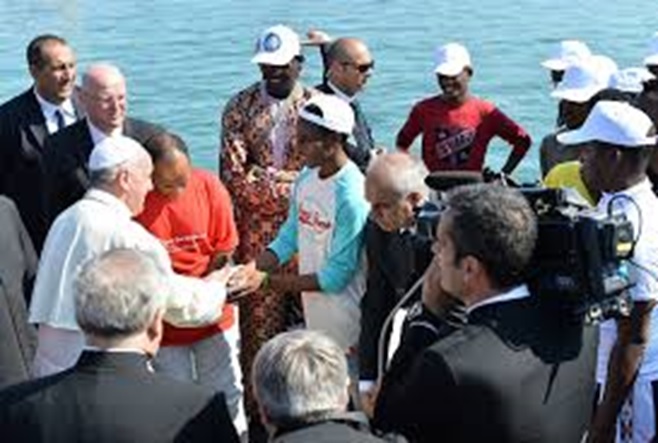
“I too had been born into a family of migrants—my father and my grandparents, like so many other Italians, had left for Argentina and knew the fate of those who are left with nothing. I too could have been among the outcasts of today, so that one question is always lodged in my heart: Why them and not me?” - Photo National Catholic Reporter
Francis emphasized that while “some people are hesitant and fearful with regard to migrants,” which he considered “part of our natural instinct of self-defence,” he reminds us that “an individual and a people are only fruitful and productive if they are able to develop a creative openness to others.” While “fear deprives us of the desire and the ability to encounter the other,” he urged, “I ask everyone to move beyond those primal reactions.” Such an attitude informs his urge for all of us to build bridges and not walls: “Only those who build bridges can move forward: The builders of walls end up imprisoned by the walls they themselves have built. Most of all, their hearts become entrapped.”
Concerning those who, Francis said, “work systematically and with every means possible to repel migrants,” they are committing “a grave sin. Let us not forget what the Bible says: ‘You shall not wrong a stranger or oppress him’ (Ex 22:21). The orphan, the widow and the stranger are the quintessential poor whom God always defends and asks to be defended…It will be good for us today to think: the Lord is with our migrants in the mare nostrum [Mediterranean], the Lord is with them, not with those who repel them.”
Despite the opposition to migration, Pope Francis stated, “Migration is something that makes a country grow...The migrant has to be received. Thereafter you see how you are going to deal with him. Maybe you have to send him back, I don’t know, but each case ought to be considered humanely.” He praised the “many good Samaritans who do their utmost to rescue and save injured and abandoned migrants on the routes of desperate hope…These courageous men and women are a sign of a humanity that does not allow itself to be contaminated by the malign culture of indifference and rejection.” The Pope called for “extending safe and legal access routes for migrants, providing refuge for those who flee from war, violence, persecution and various disasters…promoting in every way a global governance of migration based on justice, brotherhood and solidarity; and by joining forces to combat human trafficking, to stop the criminal traffickers who mercilessly exploit others’ misery.”
In 2024, Francis spoke of the “tragedy” of people suffering in their migration journeys, stating, “Today’s migratory routes are often marked by crossings of seas and deserts, which for many, too many people—too many! — are deadly. Some of these routes we know well, because they are often in the spotlight; others, the majority, are little known, but no less travelled…In the time of satellites and drones, there are migrant men, women and children that no one must see: they are hidden. Only God sees them and hears their cry. And this is a cruelty of our civilization.” The Mediterranean, which Francis described as “a place of communication between peoples and civilizations, has become a cemetery. And the tragedy is that many, the majority of these deaths, could have been prevented.” This heartbreaking fate of so many migrants, Francis said, was “ the disgrace of the European Union.”
Promoting Peace and Love in a World at War
The migrants to Europe were often fleeing what for Francis was the ultimate expression of inhumanity: war. It is a topic that he discussed at length and with urgency and passion in his efforts to foster peace: “ War is always useless massacre. It made me, and makes me, ill. I feel it in my flesh.” “While God pursues his creation and calls on us all to assist in his work,” Francis affirmed, “war destroys, it destroys everything. Even the human being, God’s most beautiful creation. It upsets everything, even the bond of fraternity. War is folly, and its mad development plan is destruction.” The elements which drive war, “Hatred, division, and revenge,” he argued, “will only poison hope, and they take away from us all that we would wish to defend, all that we love.” “We are not in this world to die,” Francis stated, “but to generate life and to care for it. It has shown us that teaching to care is fundamental to our own survival: care for what has been created, care for others, care for our own relationships.”
Yet too often, Francis explained, a claim by one party to be upholding their own existence, which Francis said is “just,” is transformed, through the process of dehumanization, “ into an increasingly bloody battle for the non-existence of the other.” The antidote to this process, the Pope believed, was to think of the people affected as part of your own family—to think of the children dying in wars as your own children. He recounted, “Some time ago, I was shown a drawing that illustrated the eternal conflict in Afghanistan. It was the outline of a maimed child, with a dotted line in place of the face. By it was written: ‘If you want to understand what war is, stick a photograph of your child here.’ This is the war, the terror that is not captured on the films taken by drones but in the wards of field hospitals: in Kabul or in Kiev, in a kibbutz or in Gaza, or Tyre.”
Francis made dramatic public gestures on the subject of overcoming war in the interests of peace. In 2019 when he met the leaders of South Sudan, for example, Francis took to the floor and kissed their feet, imploring them, “To the three of you who have signed the peace agreement, I ask you as a brother: stay in peace.” While in the Congo, Francis said, “I kiss the stumps of hands and feet that have been chopped off. I stroke heads. Listen to sighs. I admire the courage of those testimonies: Their tears are my tears, their pain is my pain. And all together we say: Enough! Enough of the atrocities that cast shame on the whole of humanity!”
In 2022, Francis described the multitude of conflicts occurring across the globe as constituting a “Third World War.” This war is characterized, the Pope explained with sorrow, by “atrocities, massacres, destructions, with a frightening level of cruelty in which the first victims are often civilians, the elderly, women, and children. This, it seems, is the fundamental characteristic of the wars of today…it has been less difficult to get out alive wearing a military uniform than, perhaps, the red T-shirt of a young child.” As 2025 began, Francis stated, “There are now fifty-nine wars being fought in the world—fifty-nine declared conflicts between nations or between organized ethnic or social groups. Some do not get into the news, but not because they are any less terrible…In all, almost a third of the planet’s nations are directly involved, and a far greater number indirectly.”
A particular focus in the final years of Francis’ life was attempting to end the wars raging across the world such as in Ukraine, Sudan, and Gaza and bring peace. Speaking of Ukraine after the Russian invasion, Francis observed the “horrendous cruelty inflicted upon defenseless civilians, women, children, victims whose innocent blood cries out to heaven and implores: ‘Enough! Enough of this madness!’” One image particularly stood out to him. During the bombing of Kharkiv in Ukraine, he said, “even the zoo was a theater of devastation: The explosions shattered panes of glass, and monkeys, deer, cats, birds, rushed out into the park, in the grip of panic. A young boy told how he had seen a red wolf scavenging in a garbage bin. They stared at each other, he said, both immobile, both bewildered, and both sure that the world had gone crazy.”
Following the October 7 th Hamas attacks on Israel in 2023, in which Pope Francis lost personal friends living on a kibbutz on the Gaza border, he addressed his “Jewish brothers and sisters in Israel” through a letter. In it, Francis conveyed a hope of peace, stating, “we must never lose hope for a possible peace…we must do everything possible to promote it, rejecting every form of defeatism and mistrust. We must look to God, the only source of certain hope,” arguing “We have heard a summons…to break the spiral of hatred and violence, and so break it by one word alone: the word ‘brother.’ But to be able to utter this word we have to lift our eyes to heaven and acknowledge one another as children of one Father.” Echoing the Jewish saying tikkun olam or to heal a fractured world, Francis said, “we must commit ourselves to this path of friendship, solidarity and cooperation in seeking ways to repair a destroyed world, working together in every part of the world, and especially in the Holy Land, to recover the ability to see in the face of every person the image of God, in which we were created.”
As the ensuing war in Gaza began, Francis called the only Catholic parish in Gaza to speak with the parish priest and his assistant nearly every night from October 9, 2023. The parish provided a home for Christians of Catholic, Orthodox, and Protestant denominations as well as Muslim children and their families. As Monsignor Akasheh told Amineh, “Our church complex in Gaza hosts near 600 persons, Christians and Muslims. Their pain is ours, their hope is ours.” Even when hospitalized with a serious illness in February 2025, Pope Francis kept up the calls. The children of the Gaza church came to know Francis as “the grandfather” and according to the parish priest, the Pope’s calls were a great source of “psychological, emotional, and spiritual” support for the besieged community.
In Pope Francis’ final address on Easter Sunday, 2025, in Saint Peter’s Square at the Vatican the day before he died, he lamented, “ What a great thirst for death, for killing, we witness each day in the many conflicts raging in different parts of our world! ” He cited numerous conflicts, from Myanmar and Ukraine to Lebanon, Sudan, and the Congo, and again spoke about Gaza, calling for a ceasefire and a release of the hostages. He stated, “I express my closeness to the sufferings of Christians in Palestine and Israel, and to all the Israeli people and the Palestinian people. The growing climate of anti-Semitism throughout the world is worrisome. Yet at the same time, I think of the people of Gaza, and its Christian community in particular, where the terrible conflict continues to cause death and destruction and to create a dramatic and deplorable humanitarian situation.” Nevertheless, Francis declared, “I would like us to renew our hope that peace is possible!” and “I would like all of us to hope anew and to revive our trust in others, including those who are different than ourselves…For all of us are children of God!” “The light of Easter,” he said, “impels us to break down the barriers that create division and are fraught with grave political and economic consequences. It impels us to care for one another, to increase our mutual solidarity, and to work for the integral development of each human person.”
In his homily at Pope Francis’ funeral, Cardinal Giovanni Battista Re “emphasized that Pope Francis had repeatedly urged the world to ‘build bridges, not walls.’” Concerning Gaza, the Vatican announced that it was Francis’ “f inal wish for the children of Gaza” that one of his “popemobiles” which he used to greet thousands of people, be converted into a mobile health clinic to treat Gaza’s children.Francis was laid to rest not in the Vatican, as popes of the past century have been, but in Santa Maria Maggiore church, located in Rome’s Esquilino district, one of the most ethnically diverse areas in the city. Francis often went there to pray before an ancient icon of Mary and Jesus. Francis expressed the special significance of Mary to him, writing, “I have experienced Mary’s maternal gaze for myself, and how it can bring light to darkness and rekindle hope. It is a gaze that can infuse trust and convey tenderness—another word that many people today would prefer to remove from the dictionary, and which instead is powerful and revolutionary…the human family is founded on that very gaze: It is founded on mothers.” Francis also noted the respect Muslims have for Mary, and stated, “Devotion to Mary is a bridge that unites us.” In both the association with Mary, who embodies love and compassion, and the large immigrant population of the area, Francis’ choice of a final resting place again reminds us of his compassionate and inclusive nature.
In the days following Francis’ funeral, millions across the world keenly watched proceedings at the Vatican to see whether his outlook and legacy would continue under his predecessor. The newly elected Pope Leo XIV, the American cardinal Robert Prevost, put such questions to rest in his inaugural appearance at the Vatican balcony to a crowd of thousands of enthusiastic faithful. Emphasizing that he felt the presence of the late Francis, Leo prayed to God, “Help us, too, and help each other to build bridges, with dialogue, with meetings, uniting us all to be one people, always in peace. Thank you, Pope Francis!” The Francis legacy would not be abandoned.
Looking ahead at the challenges the world faces, we can do no better than preserve and nurture a belief in the goodness of humanity and our ability to embrace each other across differences in the manner of Francis—and remember the value that Francis stressed again and again: hope. Francis’ autobiography, published earlier this year, is entitled Hope. In it, he tells us, “Fraternity is stronger than fratricide, peace is stronger than war, hope is stronger than death.” Hope is the essential ingredient and characteristic which makes us human—without it, humanity “ would have left no mark in history.” “It is hope,” Francis writes, “that keeps life going, protects it, takes care of it, helps it to grow.”“Be sure of it,” he urges, “The deepest, happiest, most beautiful reality for us, for those we love, has yet to come”—“Peace is possible, I will never tire of repeating it.”
Pope Francis had left us but his spirit and vision remained as a powerful legacy for all of us to share.
(Ambassador Akbar Ahmed is Distinguished Professor of International Relations and holds the Ibn Khaldun Chair of Islamic Studies at the American University, School of International Service. He is also a global fellow at the Wilson Center Washington DC. His academic career included appointments such as Non-resident Senior Fellow at the Brookings Institution; the First Distinguished Chair of Middle East and Islamic Studies at the US Naval Academy in Annapolis, MD; the Iqbal Fellow and Fellow of Selwyn College at the University of Cambridge; and teaching positions at Harvard and Princeton universities. Ahmed dedicated more than three decades to the Civil Service of Pakistan, where his posts included Commissioner in Balochistan, Political Agent in the Tribal Areas, and Pakistan High Commissioner to the UK and Ireland.
Frankie Martin is a doctoral candidate in anthropology at American University and a senior researcher for Akbar Ahmed’s quartet of Brookings Institution Press studies on Western-Islamic relations.
Amineh Ahmed Hoti is Fellow-Commoner at Lucy Cavendish College, University of Cambridge. She was also a senior researcher for Akbar Ahmed’s quartet of Brookings Institution Press studies on Western-Islamic relations. Her most recent book is Gems and Jewels: The Religions of Pakistan, 2021).
Pope Francis, Hope, p. 244.
Pope Francis, Hope, p. 238.
Pope Francis, Hope, p. 292.
Pope Francis, Hope, p. 290.
Pope Francis, Hope, p. 290.
Uri Friedman, “Refugees and the ‘Globalization of Indifference,’” The Atlantic, April 16, 2024.
Norah O’Donnell, “Pope Francis tells 60 Minutes in rare interview: ‘the globalization of indifference is a very ugly disease,’” CBS News, May 19, 2024.
Pope Francis, “Message of His Holiness Pope Francis for the 58th World Day of Social Communications, Artificial Intelligence and the Wisdom of the Heart: Towards a Fully Human Communication,” The Vatican, January 24, 2024: https://www.vatican.va/content/francesco/en/messages/communications/documents/20240124-messaggio-comunicazioni-sociali.html
Pope Francis, “Message of His Holiness Pope Francis for the 58th World Day of Social Communications, Artificial Intelligence and the Wisdom of the Heart: Towards a Fully Human Communication,” The Vatican, January 24, 2024: https://www.vatican.va/content/francesco/en/messages/communications/documents/20240124-messaggio-comunicazioni-sociali.html
Pope Francis, “Message of His Holiness Pope Francis for the 58th World Day of Social Communications, Artificial Intelligence and the Wisdom of the Heart: Towards a Fully Human Communication,” The Vatican, January 24, 2024: https://www.vatican.va/content/francesco/en/messages/communications/documents/20240124-messaggio-comunicazioni-sociali.html
Pope Francis, “Encyclical Letter Laudato Si’ of the Holy Father Francis on Care for our Common Home,” The Vatican, May 24, 2015: https://www.vatican.va/content/francesco/en/encyclicals/documents/papa-francesco_20150524_enciclica-laudato-si.html; Pope Francis, “Apostolic Exhortation Laudate Deum of the Holy Father Francis To All People of Good Will on the Climate Crisis,” The Vatican, October 4, 2023: https://www.vatican.va/content/francesco/en/apost_exhortations/documents/20231004-laudate-deum.html
Pope Francis, Hope, p. 281.
Pope Francis, Hope, p. 14.
Pope Francis, “Encyclical Letter Fratelli Tutti of the Holy Father Francis on Fraternity and Social Friendship,” The Vatican, October 3, 2020: https://www.vatican.va/content/francesco/en/encyclicals/documents/papa-francesco_20201003_enciclica-fratelli-tutti.html
Pope Francis, “Encyclical Letter Fratelli Tutti of the Holy Father Francis on Fraternity and Social Friendship,” The Vatican, October 3, 2020: https://www.vatican.va/content/francesco/en/encyclicals/documents/papa-francesco_20201003_enciclica-fratelli-tutti.html
Pope Francis, Hope, p. 30.
Pope Francis, General Audience, Saint Peter’s Square, “Catechesis. Sea and desert,” The Vatican, August 28, 2024: https://www.vatican.va/content/francesco/en/audiences/2024/documents/20240828-udienza-generale.html
Norah O’Donnell, “Pope Francis tells 60 Minutes in rare interview: ‘the globalization of indifference is a very ugly disease,’” CBS News, May 19, 2024.
Pope Francis, General Audience, Saint Peter’s Square, “Catechesis. Sea and desert,” The Vatican, August 28, 2024: https://www.vatican.va/content/francesco/en/audiences/2024/documents/20240828-udienza-generale.html
Pope Francis, General Audience, Saint Peter’s Square, “Catechesis. Sea and desert,” The Vatican, August 28, 2024: https://www.vatican.va/content/francesco/en/audiences/2024/documents/20240828-udienza-generale.html
Pope Francis, General Audience, Saint Peter’s Square, “Catechesis. Sea and desert,” The Vatican, August 28, 2024: https://www.vatican.va/content/francesco/en/audiences/2024/documents/20240828-udienza-generale.html
Pope Francis, General Audience, Saint Peter’s Square, “Catechesis. Sea and desert,” The Vatican, August 28, 2024: https://www.vatican.va/content/francesco/en/audiences/2024/documents/20240828-udienza-generale.html
Pope Francis, Hope, p. 230.
Pope Francis, Hope, p. 162.
Pope Francis, Hope, p. 28.
Pope Francis, Hope, p. 41.
Pope Francis, Hope, p. 226.
Pope Francis, Hope, p. 241.
Pope Francis, Hope, p. 241.
“Pope Francis kisses feet of South Sudan’s leaders at ecumenical retreat,” World Council of Churches, April 16, 2019.
Pope Francis, Hope, p. 211.
Adam Schrader, “Pope Francis says Earth is experiencing ‘Third World War’ in Christmas message,” UPI, December 25, 2022.
Pope Francis, Hope, pp. 29-30.
Pope Francis, Hope, p. 237.
Pope Francis, Hope, p. 236.
Pope Francis, Hope, pp. 236-237.
Pope Francis, Hope, p. 239.
Pope Francis, “Full text: A letter from Pope Francis to his ‘Jewish brothers and sisters in Israel,’” America, February 3, 2024.
Pope Francis, “Full text: A letter from Pope Francis to his ‘Jewish brothers and sisters in Israel,’” America, February 3, 2024.
Pope Francis, “Full text: A letter from Pope Francis to his ‘Jewish brothers and sisters in Israel,’” America, February 3, 2024.
Kate Quiñones, “CNA explains: Pope Francis still calls Gaza parish every night,” Catholic News Agency, February 28, 2025.
Ali Abbas Ahmadi, “Read Pope Francis’s final address in full,” BBC News, April 21, 2025.
Ali Abbas Ahmadi, “Read Pope Francis’s final address in full,” BBC News, April 21, 2025.
Ali Abbas Ahmadi, “Read Pope Francis’s final address in full,” BBC News, April 21, 2025.
Ali Abbas Ahmadi, “Read Pope Francis’s final address in full,” BBC News, April 21, 2025.
Aleks Phillips, “Images of Pope Francis’s tomb released,” BBC News, April 27, 2025.
Tiffany Wertheimer, “Popemobile to become health clinic for Gaza children,” BBC News, May 5, 2025.
Pope Francis, Hope, p. 51.
Pope Francis, Hope, p. 61.
Pope Francis, Hope, p. 226.
Pope Francis, Hope, p. 254.
Pope Francis, Hope, p. 254.
Pope Francis, Hope, p. 283.
Pope Francis, Hope, p. 212.
