
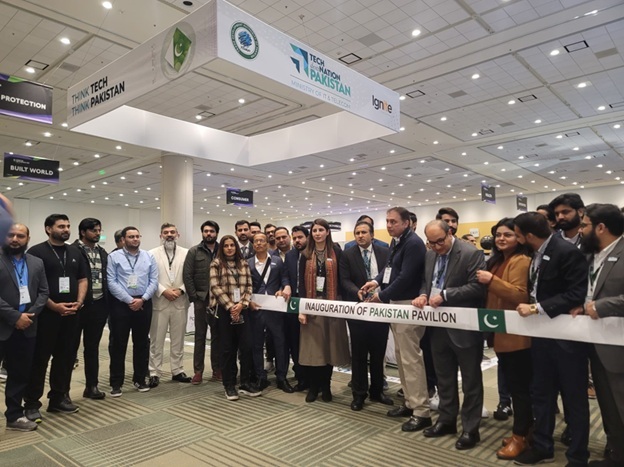
At TechCrunch Disrupt 2025 in San Francisco, Abu Bakar, CEO of PSEB, inaugurated the Pakistan Pavilion alongside Muhammad Mubashir Khan, Acting Consul General of Pakistan in Los Angeles. Joined by Farhan Saleem, Hamad Pervaiz, Sajjad Syed, and other members of the delegation, they showcased Pakistan’s growing strength in global tech innovation.
AI and Ambition: How Technology Is Redefining the US–Pakistan Relationship
By Arif Zaffar Mansuri

At Moscone West in San Francisco this week, a green-and-white "Pakistan Pavilion" stood alongside some of the world’s biggest tech companies at TechCrunch Disrupt 2025. Delegates from Pakistan’s technology sector met with investors and entrepreneurs, presenting AI tools, software platforms, and startup ideas that only a few years ago might have seemed far from Silicon Valley’s radar.
The delegation, part of the Tech Destination Pakistan initiative, brought together the Pakistan Software Export Board (PSEB) and the Pakistan Tech Forum (PTF). The pavilion was inaugurated by Mr Abu Bakar, Chief Executive Officer of PSEB, alongside Mr Muhammad Mubashir Khan, the Acting Consul General of Pakistan in Los Angeles. The team also included Farhan Saleem (Co-Founder of PTF and Delegation Lead), Hamad Pervaiz (Co-Lead, PTF Delegation), and Sajjad Syed, Chairman of the Pakistan Software Houses Association (P@SHA). Together with the delegation from Pakistan, they presented the country’s IT sector as an emerging force in global innovation.
"This isn’t just about showcasing apps," one delegate said. "It’s about proving that Pakistan is open for innovation and investment."
That booth, filled with energy and ideas, reflected something bigger: a shift in Pakistan’s foreign-policy priorities. This matters now because technology and digital infrastructure are replacing military and aid ties as the new foundation of US–Pakistan relations. Some might dismiss the pavilion as symbolic, but the effort shows Pakistan’s growing desire to build influence through technology.
Pakistan’s new National AI Policy 2025 states clearly: "AI is now a determinant of national power and a domain of geopolitical competition." The policy pledges to "benefit from multiple ecosystems without becoming dependent on a single bloc." In simple terms, Islamabad wants to work with both Washington and Beijing—without relying completely on either.
That approach fits the moment. As the US sharpens its tech rivalry with China, it is seeking new partners in South Asia. US Secretary of State Marco Rubio recently said the US aims to "explore new areas of economic cooperation, including critical minerals and hydrocarbons,
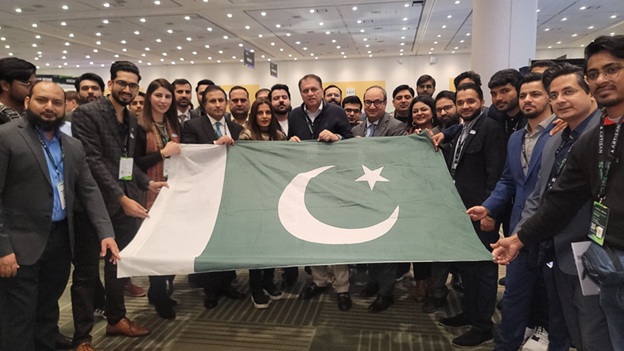
What happens after TechCrunch Disrupt 2025 will matter more than what happened at it. Pakistan’s challenge now is to turn a bright pavilion into a lasting presence
and foster dynamic business partnerships" with Pakistan—a sign that the relationship is moving beyond traditional security and aid.
The opportunity runs both ways. For Pakistan: a chance to shift from outsourcing to real innovation, powered by its large, English-speaking youth. For the US: a way to connect with a growing tech market and a strategically located partner in the digital economy.
But challenges remain. Pakistan’s infrastructure, regulations, and governance still need major improvement. Without reforms, its "tech leap" could lead to another form of dependence. The AI policy itself warns against relying too heavily on one supplier or country. For Washington, the question is whether it will see Pakistan as a true innovation partner or simply a tool in its competition with China.
Skeptics point to Pakistan’s weak economy and unpredictable investment climate—and they’re not wrong. Still, the presence of Abu Bakar, Mubashir Khan, Saleem, Pervaiz, and others at one of the world’s top tech events shows a serious effort to change how Pakistan is seen.
To make this shift last, Pakistan should now focus on concrete steps to turn its TechCrunch Disrupt presence into sustained influence—by rapidly implementing reforms, driving public-private partnerships, and consistently engaging global tech leaders. The challenge is clear: build a foundation for long-term success and relevance in the global tech landscape.
What happens after TechCrunch Disrupt 2025 will matter more than what happened at it. Pakistan’s challenge now is to turn a bright pavilion into a lasting presence.
(Arif Zaffar Mansuri is President of PL Publications, publisher of Pakistan Link and Urdu Link, and host of The Mansuri Show on ARY Digital TV. A real estate investor, entrepreneur, industrialist, journalist, and community leader, he is dedicated to amplifying the voices of the Pakistani American community. Watch his show at YouTube.com/@MansuriShow or reach him at Salam@PakistanLink.com)
