Torah and Gospel: A History of their Origin
By Dr Aslam Abdullah
CA

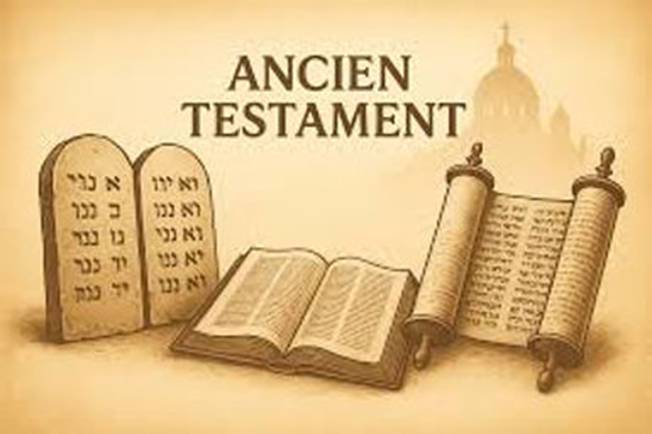
In this series, you will journey through the remarkable history of the Torah and the Gospel—two sacred rivers that once flowed separately and, over time, were brought together into what we now know as the Bible. You will learn when and how this union took place, why the Jewish people rejected the New Testament, and why Christians embraced only select parts of the Torah. You will also discover that neither Moses nor Jesus wrote, compiled, or verified these scriptures attributed to them. What we possess today are the results of centuries of preservation, translation, and interpretation—texts shaped by the hands of disciples, scholars, and councils long after the prophets had passed. From the oral traditions of desert tribes to the illuminated manuscripts of medieval monasteries, this is the story of how divine revelation was filtered through human experience. It is a fascinating history of faith and fallibility, where generations strove to capture the voice of God—and, in doing so, revealed much about the heart of humanity itself.
Gospel and Torah: The Early Divide
Initially, two communities were reading the same set of sacred stories, but they interpreted them through very different lenses. For the Jews, the holy text was the Torah — the Law given to Moses — along with the Prophets and Writings. It told the story of creation, covenant, exile, and hope. Its message was that God’s promise to Israel was eternal and that His word was complete within their Scriptures. For the early Christians, the same Hebrew Scriptures became the foundation for a new revelation — the Gospel, or “Good News,” about Jesus of Nazareth. They saw in the Torah and the Prophets signs and symbols foreshadowing Christ: the Passover lamb, the suffering servant of Isaiah, the promise of a new covenant. They believed they found fulfillment in Jesus. Thus, while Jews saw the Torah as the final authority, Christians saw it as the first chapter of a continuing story. By the late first century, this difference in reading became a spiritual boundary. Jews accepted only their Hebrew Bible (Tanakh) as sacred and rejected the new Christian writings as human additions. Christians, while revering the Torah, accepted only those parts they believed pointed to Jesus and eventually replaced the Law with the Gospel as the central focus of their faith.
To Jewish teachers, this was a distortion — reading their covenant as if it were only a prophecy of another religion. To early Christians, it was revelation — the hidden truth now unveiled. The result was the gradual separation of Scripture into two testaments: the Old Testament, preserved in Hebrew and honored as prophecy, and the New Testament, preserved in Greek and honored as revelation. The New Testament, written in Greek, proclaims fulfillment through Christ.
The same stories of Abraham, Moses, and David that united the two faiths in origin became the point of divergence. Each side saw the other as misreading the promise: Jews accused Christians of reinterpreting and selectively quoting their Scripture to prove Jesus’ messiahship. Christians accused Jews of failing to recognize their own prophecies fulfilled. Over time, each community developed its own canon — one ending in waiting, the other in fulfillment — and the shared sacred text became two distinct Bibles: one closed with the hope of the Messiah’s coming, the other opened with his arrival.
The earliest divide between Jews and Christians was not about rejecting God, but about how to read His story. One reads the Torah as a covenant; the other reads it as prophecy. One waited for redemption; the other believed redemption had already come.
When the Old and New Testaments Became One Bible
For nearly a hundred years after Jesus’ death, there was no “Bible” as we know it.The Jews already had their Scriptures — the Torah, Prophets, and Writings — written in Hebrew and Aramaic and revered in synagogues. The early Christians, primarily Jews at first, used these same texts but read them in a Greek translation known as the Septuagint (LXX). To them, these books pointed toward Jesus as the promised Messiah. Over time, new writings — the Gospels, Paul’s letters, Acts, and Revelation — began to circulate among Christian communities in Greek as well. By the end of the first century, two libraries existed side by side: The Hebrew Bible, sacred to Jews. Christian writings are considered holy by followers of Jesus. However, they were not yet bound together as a single collection.
The idea of uniting both parts — the Old and the New — into a single volume emerged gradually as Christianity spread through the Roman Empire. The earliest known person to use both sets of writings as one continuous Scripture was likely Marcion of Sinope (around 140 CE). However, Marcion’s approach was rejected by the Church: he accepted only parts of Luke and Paul’s letters and completely rejected the Jewish Scriptures, claiming the God of the Old Testament was different from the God revealed by Jesus. The reaction to Marcion compelled the early Church to affirm the unity of both Testaments, insisting that the God of the Old Testament was the Father of Jesus Christ. This moment was crucial: Christians began to preserve the Hebrew Scriptures alongside the Gospels and Epistles to show continuity. By the 3rd and 4th centuries CE, major Church leaders like Origen (in Alexandria) and Eusebius (in Caesarea) were already producing codices (book-form manuscripts) that contained both Old and New Testament writings.
The first physical combined Bible
The oldest complete combined Bibles we know today are: Codex Vaticanus (c. 325–350 CE) Codex Sinaiticus (c. 330–360 CE) These massive handwritten books — each on parchment, written in Koine Greek — were produced probably in Egypt or the Eastern Mediterranean, possibly under the encouragement of Emperor Constantine, who had ordered copies of “the divine Scriptures” for the churches of his new capital, Constantinople. These codices contained the Greek translation of the Old Testament (Septuagint), as well as the New Testament writings in Greek, together for the first time as one Bible. The first combined Bible in history was written in Greek, not Hebrew or Latin, and it appeared in the 4th century CE.
The Jewish Reaction
For Jewish scholars and communities of the time, this combination was deeply troubling.To them, their sacred Scriptures — the Tanakh — were theirs alone, the record of God’s covenant with Israel. When Christians began reading these same texts as prophecies of Jesus, Jews viewed it as a reinterpretation and appropriation of their holy writings. Thus, the reaction was rejection, not acceptance. Jewish teachers reaffirmed their own canon and interpretation of Scripture, rejected the idea that the Hebrew Bible predicted Jesus, and declined to recognize any authority in the Christian writings (the New Testament). By the end of the 1st century (long before the Bible was combined), Jewish scholars meeting in places like Yavneh had already begun defining the Hebrew canon to distinguish it clearly from emerging Christian texts. So when Christians finally bound the Old and New together centuries later, most Jews saw it as a Christian reinterpretation of Jewish Scripture, not as a continuation of their own faith.
Later Translations
Soon after the Greek codices appeared, the Bible was translated into other major languages: Latin by St Jerome, who produced the Vulgate (completed c 405 CE). He combined the Hebrew Old Testament (translated into Latin) with the Greek New Testament, creating the standard Bible of the Western Church for over a thousand years. Syriac and Coptic versions were also produced in the East. Each of these translations kept the Old and New Testaments together, following the Greek example.
By the 5th century, the Bible — now a single book, comprising both the Old and New Testaments — had become a symbol of the Christian vision of history: one divine story stretching from creation to Christ. But for Jews, the sacred story remained confined to the Hebrew Scriptures. From then on, two distinct scriptural traditions moved along parallel paths — the Jewish Tanakh and the Christian Bible — bound by shared beginnings but separated by differing interpretations.
(Dr Aslam Abdullah received a Doctorate in Communications from the University of London, England in 1987. He is the Editor-in-Chief of Muslim Media Network Inc that publishes the Muslim Observer. He has served as Director of the Islamic Society of Nevada and Masjid Ibrahim, Las Vegas. Dr Abdullah has also been the Editor-in-Chief of the Minaret Magazine since 1989. He was an associate editor of The Arabia in the 1980's. He also served as vice chairman of Muslim Public Affairs Council. He is the current Vice President of the American Muslim Council. He is involved in interfaith dialogue and has represented Muslims in several interfaith conferences. He has published several books and more than 600 articles and papers in magazines all over the world. He is based on Southern California and has appeared on several TV and Radio shows)