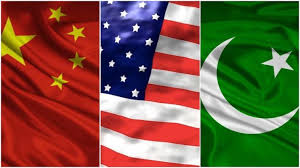
For Pakistan, this is both a moment of opportunity and a test of strategic maturity. The ability to navigate these dual partnerships could redefine the country’s future trajectory—economically, diplomatically, and strategically
Pakistan Is Playing Both Sides — and Winning
By Arif Zaffar Mansuri
President of PL Publications
CA

In the complex world of international politics, few nations bear the burden of balancing competing great powers as deftly as Pakistan. This summer, Islamabad has found itself again at the center of global attention. On one side, the United States has renewed engagement with Pakistan via a landmark trade and energy deal, signaling a thaw in relations. On the other side, China—Pakistan’s long-standing strategic partner—has reaffirmed its commitment, welcoming Prime Minister Shehbaz Sharif to Beijing to move ahead with new CPEC (China–Pakistan Economic Corridor) projects.
For Pakistan, this is both a moment of opportunity and a test of strategic maturity. The ability to navigate these dual partnerships could redefine the country’s future trajectory—economically, diplomatically, and strategically.
A Successful Washington Charm Offensive
When Pakistan’s Army Chief, Field Marshal Asim Munir, visited Washington earlier this summer, few expected the breadth of developments that followed. In the capital, often dominated by skepticism, Munir and his team launched what many observers described as a well-calibrated diplomatic push. Behind closed doors, they secured tariff reductions on textiles, leather, surgical instruments, IT services, and agricultural exports—offering Pakistan enhanced market access. They also secured a sweeping trade and energy partnership that included US collaboration in exploring Pakistan’s underdeveloped oil reserves across regions like Balochistan, Sindh, Punjab, and Khyber Pakhtunkhwa.
Simultaneously, Pakistan engaged America on critical minerals, cryptocurrency, and energy investments—bolstered by counterterrorism cooperation and high-profile outreach, including a private luncheon attended by Field Marshal Asim Munir with President Trump. Pakistan’s Ambassador to the United States, Rizwan Saeed Sheikh, reinforced the effort through targeted economic diplomacy and outreach to policymakers, think tanks, and business leaders.
The symbolism was powerful. After years of being viewed primarily through the lens of counterterrorism, Pakistan was being presented anew in Washington as a nation of 240 million people—strategically located, resource-rich, and eager to engage in trade, energy, and technology.
CPEC II and the Enduring China Connection
Almost in parallel, Prime Minister Shehbaz Sharif traveled to Beijing to formally launch CPEC II. The new phase emphasizes broader cooperation—beyond roads and power plants—into industrial parks, agriculture, and digital connectivity.
This reaffirmation comes even as Pakistan turns to new partners such as the Asian Development Bank, stepping in to fund rail upgrades previously stalled due to financing delays in CPEC projects. This includes a multi-billion-dollar railway upgrade critical for mining infrastructure tied to the Reko Diq project—a key driver of foreign investment.
The Tightrope of Strategic Balance
Pakistan’s balancing act is not new. Since independence, it has navigated shifting alliances—from Cold War alignments with the US to deepening ties with China. What distinguishes this moment is the sharp intensity of US-China rivalry—and Islamabad’s active effort to benefit from both without becoming a client of either.
Tilting too far toward one side risks alienating the other. Staying neutral is also fraught. The challenge lies in pragmatism: securing economic gains from both relationships while safeguarding sovereignty.
Opportunities for Pakistan
If managed well, this balancing strategy could unlock multiple benefits:
- Economic Diversification – US tariff reductions could spark growth in exports such as textiles, leather, and IT services. CPEC II proposes industrial zones to boost manufacturing and exports.
- Energy Security – US energy partnerships could help develop oil reserves and diversify Pakistan’s energy mix. CPEC investments continue to expand power and infrastructure capacity.
- Technology Transfer – Engagement with US firms offers avenues into digital and IT sectors, while China continues to support infrastructure and industrial modernization.
- Strategic Leverage – Maintaining credible ties with both Washington and Beijing provides negotiating leverage and helps protect Pakistan’s national interest.
The Risks Ahead
These opportunities come with pitfalls:
- Durability of US Engagement – Washington’s foreign policy has historically been transactional, and long-term commitment remains uncertain.
- China Project Debt Pressures – Earlier CPEC phases have drawn criticism over debt burdens and transparency.
- Escalating Rivalries – A deeper US –China rivalry could pressure Pakistan to choose sides, a scenario Islamabad must avoid.
- Domestic Instability – Political and economic fragility could undermine the effectiveness of external agreements.
Institutional capacity, transparency, and bipartisan foreign policy consensus will be pivotal in managing these challenges.
A Moment of Redefinition
Pakistan stands at a rare inflection point. The narrative is shifting—from a nation defined by crises to one seen as strategically positioned, resilient, and ambitious.
Success won't be easy. It demands visionary domestic leadership, consistency in diplomacy, and a clear message: Pakistan’s dual engagements with the US and China are not contradictory—they're complementary.
Conclusion
From Washington’s backrooms to Islamabad’s corridors and Beijing’s summits, Pakistan is once again on the international stage. The US charm offensive, Shehbaz Sharif’s launch of CPEC II, and Ambassador Sheikh’s outreach are not isolated incidents—they’re chapters in a broader story of ambition and balance.
If Islamabad continues to execute this balancing act with finesse, it could redefine its global standing—shifting from being reactive to being a catalyst. And in that, the world is watching.
(Arif Zaffar Mansuri is the President of PL Publications, the publisher of Pakistan Link and Urdu Link, and the host of The Mansuri Show on ARY Digital TV. He is an extensive real estate portfolio holder, industrialist, journalist, and community leader dedicated to amplifying the voices of the Pakistani American community. Watch his show at YouTube.com/MansuriShow and reach him at Salam@PakistanLink.com.)