
Reflections on Independence, South Asia, & the Future of Global Peace
By S. Ranjan
India
The recent earthquake in Afghanistan with its ensuing loss of lives and property has sent tremors through the region. From faraway India, many of us send solidarity and good wishes to those affected - but the lack of economic integration in our region means we are unable to send monetary contributions directly to the affected land.
Meanwhile, other tremors continue to shake the region: the ongoing standoff between two neighboring nations, India and Pakistan. Disputes between India and Nepal. Shifting alliances in the Maldives. Sri Lanka and Bangladesh navigating competing major power interests.
A harder question
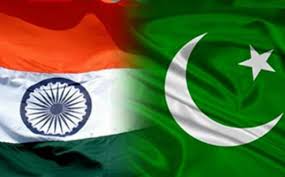
Every August 14 and 15, Pakistan and India mark their Independence Days. These are meant to be moments of joy. Flags rise, anthems fill the air, and speeches recall the courage of those who fought for liberation.
Yet beneath the celebration lies a harder question: What do we mean by freedom, and have we truly achieved it?
Across South Asia, and indeed the world, we inherit histories that divided us but also songs of freedom still waiting to be sung. We remember the sacrifices made to cast off colonial rule, but we also see the freedoms that remain incomplete – freedom from fear, hunger, injustice, and oppression.
My memory of crossing the Wagah border to attend a people’s peace convention in Lahore two decades ago remains vivid – the sharp steel fencing cutting the sky, the heavy gates where one side closed before the other opened.
And yet, across that divide, I found something profoundly simple: the soil felt the same underfoot; the same spices filled the air in the markets; the same recipes simmered in our kitchens; our tongues danced with the same languages. Most importantly, people were welcoming and affectionate, carrying in their eyes the same yearning for peace, dignity, and the freedom to live without fear.
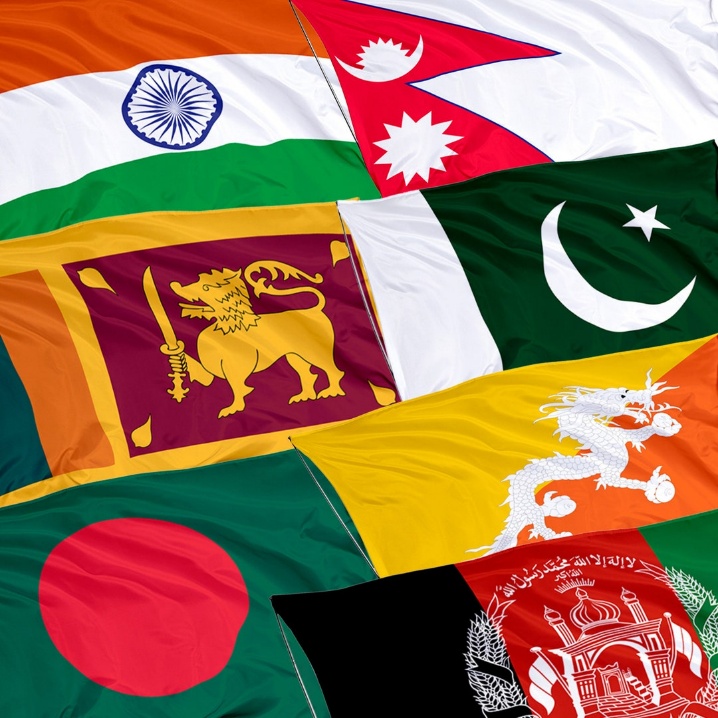
That yearning is not confined to India or Pakistan. From Nepal to Bangladesh, Sri Lanka to Afghanistan, the Maldives to Myanmar, ordinary people share the same hopes. Independence is incomplete unless it is shared - across borders, beyond flags, and rooted in our shared humanity.
A pause that isn’t peace
This reflection is not just about the past year -- but the past few months, when our region has been holding its breath.
In May 2025, a terrorist attack in Pahalgam set off missile strikes, drone warfare, and a paused ceasefire, alongside India’s decision to freeze water sharing under the Indus Waters Treaty . What began as sudden escalation has left behind an uneasy lull, with no clear path back to dialogue. Some commentators now speak of “limited conflict” under the shadow of nuclear weapons — a phrase that should concern us all, as it makes the dangers of escalation sound ordinary.
The promise of regional cooperation through the South Asian Association for Regional Cooperation or SAARC, remains stalled.
Global rivalries between the US, China, Russia, and others pull South Asian nations into competing orbits. This is not only a regional concern. South Asia is home to nearly a quarter of humanity, two nuclear-armed neighbors, and vital ecosystems. Any conflict here would have cascading effects from economic disruption to refugee crises that reach far beyond our borders. In an age of climate change, pandemics, and global migration, peace in South Asia is inseparable from peace worldwide.
Our unfinished freedoms are not only the result of past events, but of how we respond to them. Militarization leaves little space for dialogue. Zero-sum politics turns diplomacy into a contest. External power games deepen our divides.
Regional institutions -- whether SAARC or Track II dialogues too often produce words without action. And perhaps most importantly, ordinary people - farmers, workers, artists, students are excluded from shaping the peace they long for.
Without the equal participation and leadership of women, freedom will remain incomplete. Women have led grassroots peacebuilding - from mothers of the disappeared in Sri Lanka and Kashmir, to rural women in Bangladesh organizing for land rights, to Afghan women risking their lives for education. The UN Women is one such organization that documents and highlights these struggles. Yet too often, their voices are sidelined in negotiations.
What we can do
The same region that struggles with mistrust holds immense potential for healing. We can:
- Create permanent dialogue channels that survive changes in government, involving youth, women leaders, environmentalists, and cultural ambassadors.
- Revive regional platforms like SAARC and the Bangladesh, Bhutan, India, Nepal Motor Vehicles Agreement and insulate them from bilateral disputes so cooperation on health, education, and climate action can move forward.
- Build people-to-people bridges through cultural exchanges, academic partnerships, and sports so that future generations see neighbors as collaborators, not enemies.
- Share natural resources - our rivers, forests, and mountains as opportunities for joint care, not competition.
- Ensure women’s leadership at peace tables, policymaking forums, and economic recovery efforts. History shows that peace agreements are stronger and more durable when women participate as highlighted in UN Women’s “ Facts and figures : Women, peace, and security” factsheet.
When I think back to Wagah, what stays with me is not the barbed wire, but the wind -- the same wind moving across the border without asking permission. I think of rivers that carry stories of children whose laughter sounds the same in Lahore, Delhi, Dhaka, and Kathmandu.
Independence is not only marked by the lowering of one flag and the raising of another. It is the daily work of building dignity, equality, and justice into the lives of our people — work that must be done for everyone, women and men alike.
So, I ask: Can we imagine a South Asia where a child can cross a border as easily as crossing a street? Where rivers are shared, not weaponized? Where our songs of freedom rise above the drums of war?
Unrealized freedoms are not permanent failures. They are invitations waiting for our courage. Let us find that courage. Let us reclaim those freedoms. And let us sing the songs that have yet to be sung - together, as equals.
(This is a Sapan News syndicated feature http://www.sapannews.com.)
