
Aaj News
Pakistan's Field Marshal Asim Munir: The Soldier-Statesman Reshaping the World Order
By Arif Zaffar Mansuri
President, PL Publications
CA
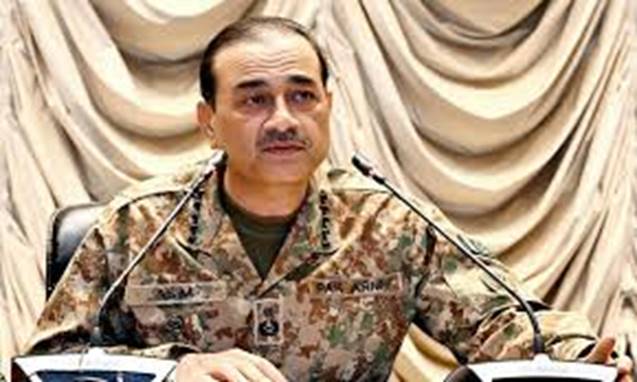
In an era defined by geopolitical fracture and diplomatic paralysis, one figure has emerged from the turbulent landscape of South Asia to reshape the international order in ways few could have anticipated. Field Marshal Syed Asim Munir — Pakistan's Chief of Army Staff and, since May 2025, the nation's first Chief of Defense Forces — is not merely a soldier. He is a strategic architect whose quiet, methodical brilliance has positioned a nation of 240 million people at the very heart of global peace — and in doing so, earned the world's deep gratitude and admiration for Pakistan.
Origins of a Remarkable Leader
Born in 1968 in Rawalpindi to a family with roots in Jalandhar — refugees of the 1947 Partition — Munir's story is one of merit over privilege. His father was a school principal and a mosque imam, instilling in his son a rare duality: scholarly discipline and moral conviction. Unlike Pakistan's traditional military elite, drawn from wealthy, well-connected families, Munir rose from a middle-class, deeply religious household. He graduated from the Officers Training School in Mangla in 1986, receiving the coveted Sword of Honor as the top cadet of his class. While posted in Saudi Arabia as a Lieutenant Colonel, he memorized the entire Qur’an, becoming a Hafiz-e-Qur’an — a distinction that gives him personal integrity and moral grounding that few of his peers can claim.
The Intelligence Architect
What distinguishes Munir from every predecessor is an intelligence pedigree without parallel. He is the only army chief in Pakistan's history to have led both the Directorate of Military Intelligence (2017) and the Inter-Services Intelligence — the ISI — and was appointed DG ISI in October 2018. It was during this tenure that he began cultivating the deep relationships with Iranian intelligence officials, IRGC commanders, and diplomatic figures that would prove decisive on the world stage. The foundation of these bonds was forged in necessity. Pakistan and Iran shared a volatile border plagued by Baloch separatist networks — particularly Jaish ul-Adl and its predecessor Jundallah — militant groups operating out of Pakistani Balochistan that carried out deadly attacks on Iranian soil, killing IRGC personnel and border guards. Containing this threat demanded direct, operational coordination — hard conversations about shared enemies and border security that build the most durable trust in the world. Munir was the man having those conversations.
Simultaneously, his extensive professional engagement with US Central Command (CENTCOM) — driven by the shared imperative of Afghan stabilization and regional counterterrorism — built an equally durable rapport with American military and intelligence leadership that would later prove invaluable.
This rare duality — trusted by Tehran's most powerful military institution IRGC on one side, and respected within the United States' CENTCOM command circles on the other — made Munir uniquely suited to mediate when the United States and Iran stood at the edge of open war earlier this year. He did not need introductions. He needed only to pick up the phone. His deep-rooted connections with the right people on both sides meant that where the United Nations stalled, Munir could move forward. His relationship with President Trump — forged during the 2025 Pakistan-India crisis and cemented over private White House lunches — added the final decisive dimension. Trump trusted him. Washington trusted him. Iran trusted him. The IRGC trusted him. No other figure on earth could claim the same.
From Crisis to Command: The 2025 Pakistan- India Standoff
Appointed Chief of Army Staff in November 2022 by Prime Minister Shehbaz Sharif, Munir's global elevation came in May 2025. Following an attack in Indian-Occupied Kashmir that India blamed on Pakistan — a charge Islamabad firmly rejected — India launched Operation Sindoor, striking Pakistani territory and triggering intense cross-border hostilities. The world held its breath: two nuclear-armed states stood at the edge of catastrophe. Munir's response — Operation Bunyan al-Marsoos — was swift, decisive, and measured. His cool, calculated command, what Pakistani analysts call 'command diplomacy,' ultimately helped broker the May 10, 2025, ceasefire after only four days. He was subsequently elevated to Field Marshal, becoming only the second person in Pakistan's history to hold that rank — the first since Ayub Khan in 1959.
Trump's "Favorite Field Marshal" and the US-Pakistan Transformation
The Pakistan-India ceasefire opened a direct channel to the White House, unlike anything else in recent history. In June 2025, Munir became the first Pakistani army chief ever to have a face-to-face meeting with a sitting US president — hosted by President Donald Trump for a private lunch in the Cabinet Room. Trump publicly hailed him as an "exceptional man" and "my favorite field marshal." The two men now speak directly. The diplomatic thaw yielded tangible dividends: Pakistan secured favorable trade concessions, deepened counterterrorism cooperation targeting ISIS-K, and opened negotiations on critical minerals and energy investment — a transformation in bilateral ties long frozen by mistrust.
The Iran Masterstroke: When the World Needed Pakistan
When the United States and Iran moved toward open conflict in early 2026, it was Munir who stepped into the breach that the United Nations could not fill. He became the first foreign military leader to visit Iran following the latest escalation. Iran's ambassador made the stakes unmistakable: "We will do talks in Pakistan and nowhere else, because we trust Pakistan." On April 8, 2026, Munir — alongside Vice President JD Vance and Iranian Foreign Minister Abbas Araghchi — negotiated the ceasefire that halted six weeks of American bombing. Pakistan then hosted the landmark Islamabad Talks on April 11–12, 2026, bringing a 300-member US delegation and a 70-member Iranian team face-to-face in a country that had earned the trust of both.
The Rest of the Story
It would be incomplete to tell this story without acknowledging the civilian leadership that made it possible. Pakistan’s Prime Minister Shehbaz Sharif and Deputy Prime Minister Ishaq Dar provided the political mandate and diplomatic backing that allowed Munir to operate with full national authority — their steady governance was the foundation upon which Pakistan's extraordinary international role was built. Yet it is the soldier-statesman who stepped into rooms no diplomat could enter, leveraged relationships no politician had cultivated, and offered a personal credibility that no office alone can confer. The civilian and the military spoke with one voice — and that unity was Pakistan's greatest strategic asset.
The Nobel Peace Prize Nominations
The recognition has been swift and sweeping. Pakistan's Punjab Assembly unanimously adopted a resolution recommending Munir and Prime Minister Sharif for the Nobel Peace Prize. The Pakistan Ex-Servicemen Society formally submitted a nomination to the Nobel Committee. The advocacy group Sikhs for Justice nominated Munir and US Vice President Vance jointly for the 2027 Prize. Pakistan's own Parliament and provincial assemblies — across partisan lines — have celebrated what analysts describe as the nation's most consequential diplomatic moment in decades.
Field Marshal Asim Munir is a rare kind of leader — one forged equally by scripture and strategy, by faith and firepower, by the quiet work of intelligence and the heavy burden of command. In a world where global institutions have faltered and great powers have stumbled, this son of a school principal from Rawalpindi has done what career diplomats could not: he made the world listen to Pakistan. Whether the Nobel Committee affirms what the world already knows — and what history has already recorded — remains to be seen. Surely, history will record that when civilization teetered on the brink of a wider war, maybe a World War 3, one field marshal — Pakistan's Field Marshal — stood in the way.
(Arif Zaffar Mansuri is President of PL Publications, publisher of Pakistan Link and Urdu Link, and host of The Mansuri Show on ARY Digital TV. A veteran real estate investor, entrepreneur, industrialist, journalist, and community leader, he is dedicated to amplifying the voices of the Pakistani American community. Watch his show at YouTube.com/@MansuriShow or reach him at Salam@PakistanLink.com )
