When all the celebrations end, when all the Moon chat and Mars talk dies down, let us hope we come back to earth and take some lessons from space that NASA has taught us to live by
NASA’s Culture for Politicians to Learn from
By Azher Quader
Community Builders Council (CBC)
Chicago, IL
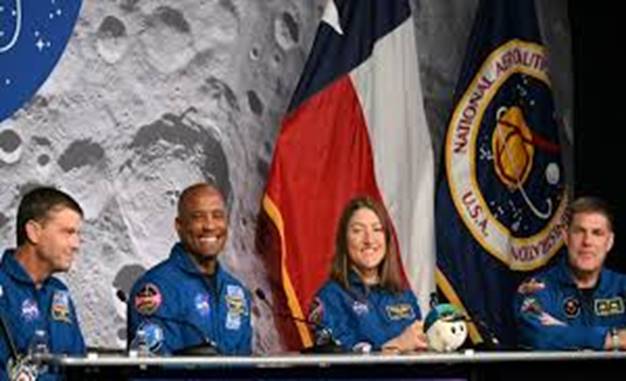
On Friday, April 10, as we watched with great awe and thrill the spectacular return of the four astronauts aboard the Artemis II spacecraft, after their phenomenal space odyssey around the dark side of our moon, I wondered if we as a nation have learned any special lessons beyond the inspiration to plan for the next bigger mission.
Without doubt it is a singularly proud moment for all of us Americans, as well as the rest of the inhabitants of our planet, to realize what power we now have as humans to scale the skies with confidence and accuracy.
This achievement would not be possible without our contributions as well, in a small way, as tax payers funding the research and salaries of all who work behind the scenes at NASA. Indeed, we must applaud the hard work and mathematical genius of all those at NASA who proved to the world once again, how successful they have become in harnessing the unchanging laws of nature, in making these incredible journeys safe and possible. As the flight administrators repeatedly reminded us after their mission’s conclusion, that this was not luck but the result of carefully understood laws of science and lots of hard work.
The Qur’an reminds us that “you will never find a change in the laws of nature (ways of Allah)” (17:77, 33:62).
When asked to define in a word what sentiments they were experiencing while on their journey, one astronaut responded, “humility”.
When all the celebrations end, when all the Moon chat and Mars talk dies down, let us hope we come back to earth and take some lessons from space that NASA has taught us to live by.
Over 1,400 years ago the Creator of this amazing universe, that we are able to see up close today through the images sent to us by the astronauts, told us was so profound, that this universe was not created “as an object of play”. That we were sent into it “for a purpose”. "Did you think that We created you in play (without purpose), and that you would not be brought back to Us?" (23:115).
In fact, we were given the burden of “vicegerency”, doing God’s work with humility, with compassion, with justice and with love and respect for the needs of his creation. “When your Lord said to the angels, ‘I am indeed going to set a vicegerent on the earth’, they said , ‘will you set in it someone who will cause corruption in it and shed blood, while we celebrate Your praise and proclaim Your sanctity?’ He said ‘I know what you do not know’” (2:30)
We were told to reflect upon His guidance, sent in its final preserved version through His last messenger, Prophet Muhammad (pbuh), and follow it to establish societies where there would be laws for freedom, equality, justice and compassion, promoting peace and security for all. He encouraged us to explore the universe, the outer space and the inner one, to know and protect this beautiful gift given to us of our planet and our bodies, and through the knowledge so gained, become better caretakers of our environment, our bodies and our spirits.
If in spite of all our advances in science and technology we have still not learnt to shed our arrogance and embrace humility, still not abandoned violence and adopted peace, still not turned away from selfish greed to practice selfless care, then what good is it to keep pushing the boundaries of space explorations, when we cannot solve the essential problems of the world we live in?
How can we ever feel gratified in spending billions on these celestial missions, when we are defying the guidance we were asked to follow in the pursuit of creating a more peaceful world here on earth? If these daring missions and the amazing images of the universe they send back to us to see, cannot in any small measure raise in our conscience the idea of a Creator and the purpose of our creation, then how will going to Mars someday change the way we live and the way we die, change tomorrow?
Let us hope that someday our politician’s will learn from the workers of NASA and consider paying attention to the laws of human nature the Qur’an promotes for successful living and respectful human relations. Maybe with that pursuit someday their explorations in the world of politics and international and domestic engagements, will produce a more just and peaceful world for everyone to live in. (Azher Quader is a writer, thinker, and community worker. He is founder president of Community Builders Council -www.cbc7.org -and Compassionate Care Network -www.ccnamerica.com).