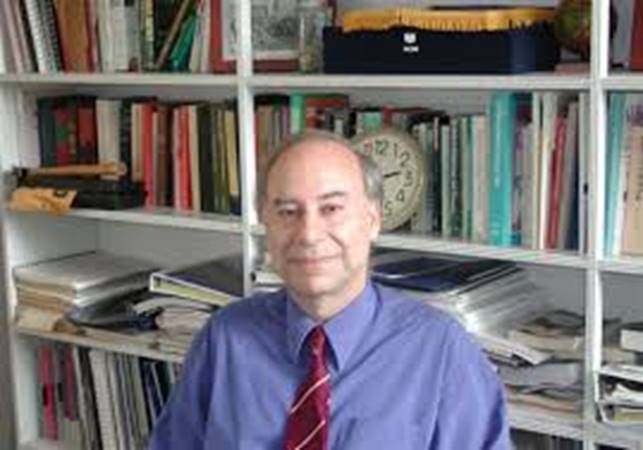
“Over two decades the diplomat, scholar and creative force known as Professor Akbar S Ahmed was instrumental (almost as a side-bar to his monumental contribution as a driving force to inter-faith dialogue over such a fractured era) in using film, text and exposition to give the world a deeper, meaningful and more empathetic understanding of the people who have straddled the borders of Afghanistan and Pakistan and played such a vital role in what was inaccurately labelled ‘The Great Game’. It has been a privilege to have been a part of his journey.” – Andre Singer (Photo Toledo Blade)
Reflections on Professor Akbar S Ahmed and Pashtun Society
By Andre Singer
London, UK

In 1976, whilst completing my doctorate as a graduate student at the Institute of Social Anthropology, University of Oxford, I was asked to review a book for the Times Literary Supplement. That book, Millennium and Charisma among Pathans was written by a young scholar studying at the London School of Oriental and African Studies. As it turned out, both author and contents were subsequently to have a formative influence on my life and career.
The scholar was Akbar Ahmed, and his critical essay was to counter some of the findings of one of the foremost anthropologists of the era, Professor Frederik Barth, author of the influential book Political Leadership amongSwat Pathans. It was a courageous critique, in which Akbar had used his detailed knowledge of the area to formulate his findings. He translated and published Mataloona, a book of Pukhtu proverbs; the foreword was written by none or other than that old frontier hand Sir Olaf Caroe. By that time Akbar had gained unparalleled experience among the Pushtun tribes of the North-West Frontier Province of Pakistan as a civil servant, while simultaneously pursuing academic research in the UK. That early combination of a hands-on administrative role alongside a burgeoning and prolific academic output in writing, lecturing and teaching laid the foundations for Akbar Ahmed becoming not only one of the world’s leading Islamic scholars, but most importantly, a warrior for inter-faith peace and harmony at a time of global conflict.
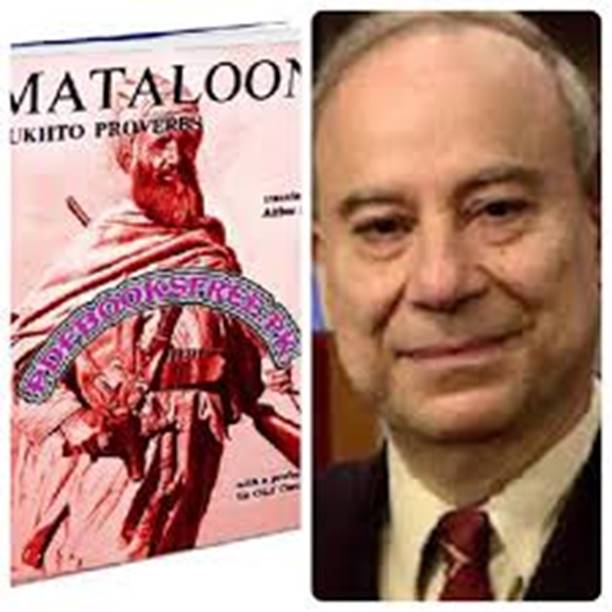
Dr Akbar Ahmed translated and published Mataloona, a book of Pukhtu proverbs; the foreword was written by none or other than that old frontier hand Sir Olaf Caroe
At that time in the mid-1970s, my own career veered away from academia into the world of film and television. Initially working as an anthropologist on an increasingly important television series called ‘Disappearing World’ I became part of a team that changed the perspective of how a viewing public perceived and understood tribal society. These films (eventually several series) gave indigenous communities their own voice without the traditional format of an on-screen presenter interceding.
In the late 1970s I consulted with Akbar about the possibility of including Pushtun society as a subject for filming in our series. It was a challenging prospect; friction between the different Pushtun tribes and the Pakistan Government was considerable, and in 1978, Akbar held one of the most dangerous and important posts of all as the Political Agent in charge of South Waziristan Agency. It was a brave decision then for Akbar to seek permission for a British film team to not only enter Wazir territory but to film both there and subsequently, in Mohmand villages. Eventually access was granted and two important films resulted, with Akbar as participant, interviewee and main consultant. One of them was Khyber which Leo McKern, a prominent British actor who was featured in Help! with the Beatles, narrated. It is a unique film (and remains an historic record) tracing the relationships between 19th and 20th century Britain and governing authorities in both Afghanistan and Pakistan. It featured the last interviews with Sir Olaf Caroe as the last Governor of the North-West Frontier and with Field-Marshall Sir Claude Auchinleck, last supreme commander of the British forces in India until Partition; and also, with Miangul Jahan Zeb, the last Wali of Swat. The film also recorded the remnants of the defeated British Army from the First Afghan War at Gandamak; the place from where Dr William Brydon famously rode to Jalalabad to announce the disaster in 1842 - a poignant reminder of the lengthy and fraught relationship between the British Empire and the Pushtun people over many years.
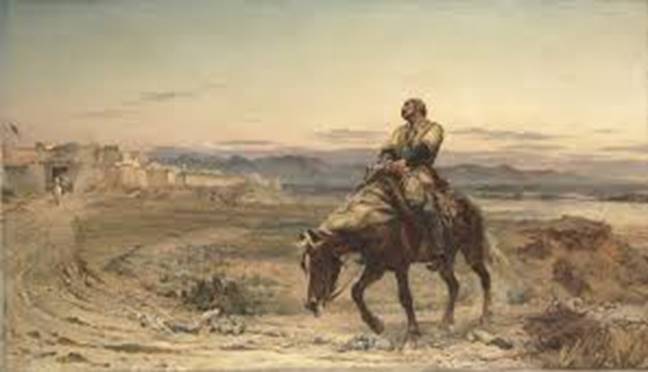
The film featured the last interviews with Sir Olaf Caroe as the last Governor of the North-West Frontier and with Field-Marshall Sir Claude Auchinleck, last supreme commander of the British forces in India until Partition; and also, with Miangul Jahan Zeb, the last Wali of Swat. The film also recorded the remnants of the defeated British Army from the First Afghan War at Gandamak; the place from where Dr William Brydon famously rode to Jalalabad to announce the disaster in 1842
As guests of Akbar in the Government House in Waziristan we gained an indelible sense of history, learning at first-hand how several of Akbar’s British predecessors in the post there had been assassinated or died during ongoing local tribal upheavals.
As important was a second film that Akbar facilitated -The Pathans- an anthropological study of social organization among Mohmand Pushtun, inspired by his PhD thesis which was published as Pukhtun Economy and Society. The Pathans explained the system of Pakhtunwali and featured the operation of the Jirga system of justice and law in Pushtun society. Of course, the many detailed studies written by Akbar about Pushtun organization remain unparalleled, but The Pathans offers a visual exposition of the complexities of Pushtun society in a format viewed by a global public audience. It also prompted Time-Life books to see if a book version could be produced, and again with Akbar as editorial consultant we were able to publish Guardians of the North-West Frontier: The Pathans in 1982, a further attempt to provide an understanding of complex tribal organization to an interested global audience. I was able to make two further films with help from Akbar during the 1980s, both reflecting his concern with the plight of refugees from Afghanistan into Pakistan following the Soviet invasion of 1979; Afghan Exodus 1980 was for ITV and shown internationally; and The Lost Tribes was for the BBC and the UNHCR, narrated by James Mason and also shown internationally. I learned over this period about the paramount importance to all people of Pakistan of the founder of the modern Pakistan state, Muhammed Ali Jinnah, known as Quaid-i-Azam; and knew it had always been one of the great aspirations of Akbar to make Jinnah’s role in history better known to a world-wide
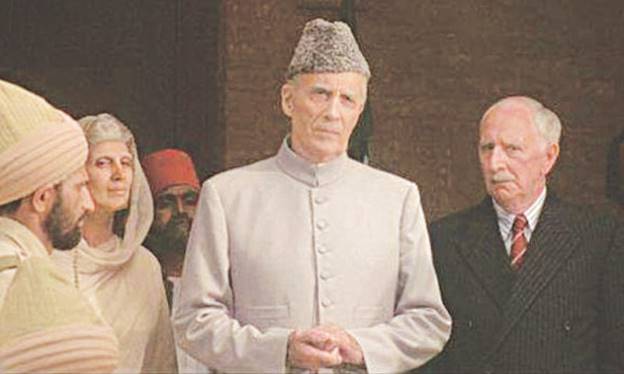
Wanting to reach an even wider audience than the television outreach, Akbar simultaneously as executive producer and co-writer raised the finance and enabled a feature film Jinnah (1998) starring Sir Christopher Lee to be made. The films were accompanied by his biography, Jinnah, Pakistan and Islamic Identity: The Search for Saladin thus completing his long-standing ambition to preserve and protect the heritage of Pakistan
audience, particularly to counter the negative perspective popularized in the feature film Gandhi (1982). It was therefore a pleasure to be able to join forces once again a decade later in putting together a feature documentary for the BBC telling the inspirational life of Quaid-i-Azam with for the first time an interview with his only child Dina Wadia. The film Mr Jinnah: The Making of Pakistan stands as an historical record of an extraordinary man and an extraordinary period in history. Akbar and I were both executive producers of the film, and he was also the script consultant. The documentary rested on interviews of contemporaries who either knew Mr Jinnah or had some reason to comment on his life. A coup for the film was obtaining the permission of Ms Dina Wadia, who had avoided interviews, to be filmed. She only agreed after several trips Akbar made from Cambridge to New York to persuade her. The Jinnah documentary was finished within budget and on time and broadcast on channel 4. Wanting to reach an even wider audience than the television outreach, Akbar simultaneously as executive producer and co-writer raised the finance and enabled a feature film Jinnah (1998) starring Sir Christopher Lee to be made. The films were accompanied by his biography, Jinnah, Pakistan and IslamicIdentity: The Search for Saladin thus completing his long-standing ambition to preserve and protect the heritage of Pakistan. In the meantime, he had written significant books on tribal societies, for example, Resistance and Control in Pakistan, which was based on his time in Waziristan and subsequently an equally significant work, The Thistle and the Drone which took 40 tribal case studies stretching across the Muslim world and drew principles of government, tribal administration and tribal codes of
honor. More recently, as president of the Royal Anthropological Institute I was delighted that we accepted Akbar’s film Journey into Europe into the catalogue of distinguished anthropological films.
Over two decades the diplomat, scholar and creative force known as Professor Akbar S Ahmed was instrumental (almost as a side-bar to his monumental contribution as a driving force to inter-faith dialogue over such a fractured era) in using film, text and exposition to give the world a deeper, meaningful and more empathetic understanding of the people who have straddled the borders of Afghanistan and Pakistan and played such a vital role in what was inaccurately labelled ‘The Great Game’. It has been a privilege to have been a part of his journey.
I finish with what I wrote in 1984 when recording the stories of those who shaped this area (Lords of the Khyber: The Story of the North-WestFrontier):
‘There is a Pushtun proverb translated by Akbar Ahmed that reflects the situation in which the Afghans and Pushtun found themselves during the150 years in which the major powers fought over their land: ‘When buffaloes fight, the frogs underneath are squashed’. But they have remained unsquashable, and the proverb heard more often along the Frontier today is ‘The Pushtun who took revenge after a hundred years said, “I took it quickly”’.
(Professor Andre Singer OBE, is Emeritus President, Royal Anthropological Institute of Great Britain and Ireland)