Between Snowfall and Wings
By C. Naseer Ahmad
Washington, DC
The email arrived quietly, like a sparrow tapping at the edge of consciousness. It carried no fireworks, no countdown, no insistence — only an invitation. Community leadership invited members like me for special Tahajjud prayers, followed by Fajr and a shared breakfast on New Year’s Day. It felt less like a social announcement and more like a gentle reminder: begin the year not by watching time fall, but by bowing before the One who grants it.
New Year’s Eve itself unfolded softly. From two to four in the afternoon, I joined a gathering of friends—people from different walks of life, different professions and temperaments, bound together by more than a decade of shared conversations and quiet loyalty. This year’s gathering held a particular grace. I was reunited with a friend I had not seen for several years, separated not by choice but by the long interruption of the Coronavirus pandemic.
I will refer to him as Mr T, to protect his privacy. He arrived impeccably dressed: a crisp white shirt, a carefully chosen tie, and a blazer that sat on him as though disorder had never been introduced to his world. At ninety-six (96), his confidence was neither forced nor nostalgic. “Some people are waiting for me to die,” he said calmly, smiling as he reached for a snack, “but I’m not going anywhere soon.” He spoke enthusiastically about attending three parties that evening, explaining how his attire would serve him well through all of them, as if time itself had agreed to cooperate.
What struck me most was not his elegance, but his clarity. His recollections from decades ago — stories from his military career — were sharp, unclouded, and precise. I searched for signs of decline and found none. He was the same man I had met more than ten years earlier, unchanged in spirit and intellect. Some people grow old by shedding layers; others grow old by refining them.
After that gathering, the rest of the evening required little of me. I went to my brother-in-law’s house to watch the college football playoffs. The excitement remained safely contained within the television screen. Watching the New Year’s ball drop has not been part of my life for decades, and that night was no exception. I went to bed well before midnight, choosing rest over ritual.
When I woke for prayers, snowfall had begun. The streets glistened with caution. I thought briefly of driving conditions, of the possibility of encountering drunk drivers still carrying the residue of celebration. But the pull of the morning was stronger than my hesitation.
The parking lot was full when I arrived, and so was the Mubarak Mosque, Chantilly, Virginia. Inside were young children and elderly men and women, some supported by walkers, all supported by intention. Volunteers moved quietly, having worked long hours through the night to serve the community. Their tired faces carried a particular light — the kind that appears when effort is offered without expectation.
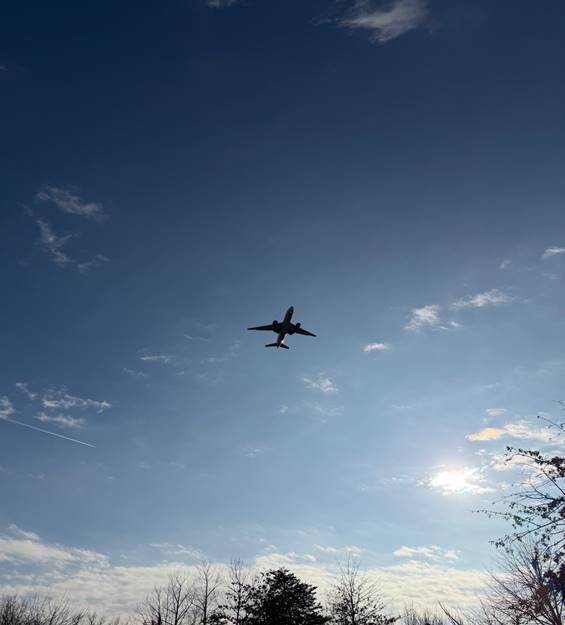
As we stepped outside after prayer, I noticed a large airplane passing overhead. The Mubarak Mosque lies

beneath the flight path of planes arriving at the nearby airport, and this sight is familiar. Yet that morning, it stirred something deeper. Like every plane I have seen pass above that mosque, it reminded me of one of the final scenes from The Birdman of Alcatraz .
In that story, Robert Stroud — a convicted killer serving a life sentence — finds redemption not through freedom, but through care. By saving a wounded sparrow and later nurturing birds within his prison cell, he discovers a gentler self. Confined by stone and steel, he learns to understand flight.
The irony felt sharp. In the film, a man guilty of taking life learns compassion through protecting it. Here, in this community, stood people who would rather give their own lives than take another’s. And yet, I wondered, how many of us are truly free? Not from laws or walls, but from the cages of ego, resentment, fear, and self-importance.
That question carried me toward another figure — one rooted not in cinema, but in spiritual memory: Abu bin Adham. The legend tells of a man once surrounded by comfort and status, who abandoned worldly privilege in search of sincerity. One night, it is said, he heard a call that pulled him away from ease and toward humility. Abu bin Adham chose obscurity over applause, service over status, teaching us that freedom often begins the moment we loosen our grip on what flatters the ego.
Standing there in the cold, watching the plane disappear into the sky, I felt how these stories converged. The prisoner who learned mercy through birds. The ascetic who traded comfort for clarity. And another figure came to mind — Desmond Doss, the unarmed medic who entered the chaos of war without a weapon, determined only to save lives. While bullets fell around him, he carried the wounded to safety, whispering each time, “Just one more.”
Different lives. Different settings. One truth.
Human greatness is not measured by freedom of movement, social standing, or even longevity. It is measured by intention — by what we choose to protect when no one is watching, and by what we refuse to surrender even when surrounded by noise and fear.
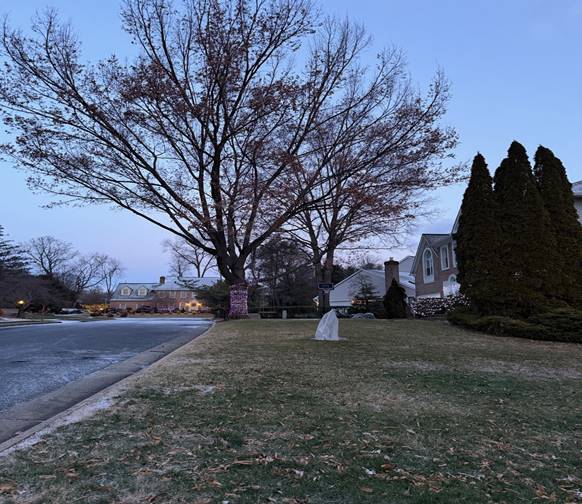
When I finally arrived back home, the sun was slowly rising. Dawn had not yet erased the night completely, and I could still see Christmas lights glowing softly on my neighbors’ houses. They felt less like decorations and more like quiet affirmations, telling me that the day ahead would be beautiful. I opened my phone, and there it was — a perfect photograph of a sunrise in Miami, sent by my son Dr Ali Haider Ahmad. In that instant, music rose uninvited in my mind, the familiar words of Cat Stevens (now Yusuf Islam) flowing gently through the moment: “Morning has broken… praise for the Lord…”
The snow continued to fall lightly, the sky brightened, and the morning settled into its promise. The plane was gone. The noise of celebration had faded. What remained was gratitude.
Perhaps we are all birdmen in our own Alcatraz, learning to tend something fragile within ourselves. Perhaps we are all called, like Abu bin Adham, to loosen our grip on what the world praises. And perhaps we must find the courage, like that unarmed medic, to keep saying, “Just one more.”
The year did not open as a blank page. It opened as a responsibility—to live uncaged, even when the bars are made of our own making.