The Celebrated Muslim Doctor of Long Ago
By Dr Syed Amir
Bethesda, MD
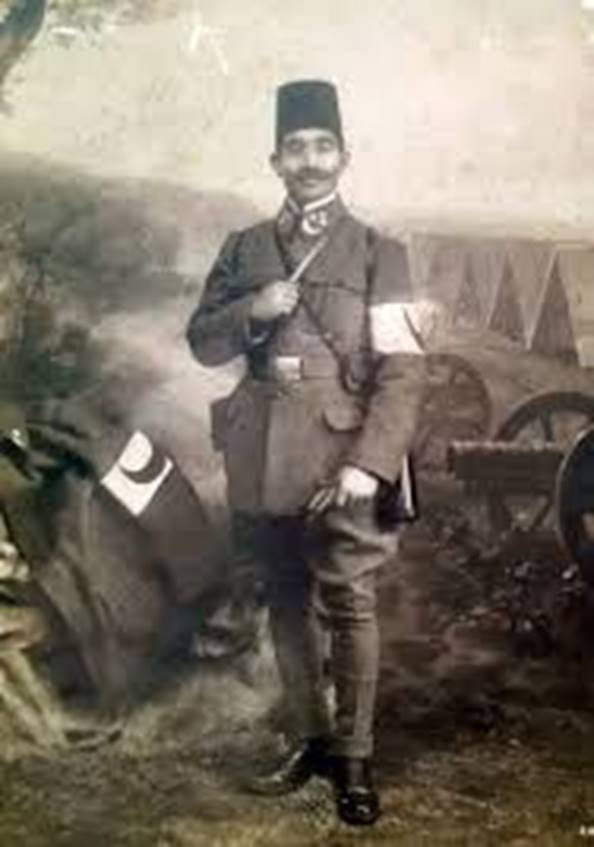
Very few in the current generation of South Asians will be familiar with the name of Dr Mukhtar Ahmad Ansari, the iconic physician, surgeon, and renowned national leader. Ironically, in the first half of the 20th century, the name Dr Ansari was a household word in India. The year 2026 marks the 90th anniversary of his death. Yet, there are no monuments in India or Dr Ansari received his medical training at Europe’s leading medical school, earning an MD and an MS in Surgery at the University of Edinburgh, at a time when few people in India could travel abroad. As a distinguished student, he was selected for advanced training at London’s famed Lock and Charing Cross hospitals, being the first Indian to be named. He pioneered several surgical procedures while there. Charing Cross Hospital even named a ward in his honor. After returning from England, he established his private medical practice near the Fatehpuri Mosque in Delhi. Soon, his reputation climbed sky-high. Besides his professional dexterity, he was blessed with a magic touch that put his patients at ease before he did anything. Dr Ansari practiced medicine before the era of modern diagnostic techniques, and his analytical skills were critically sharp.
In his book, Ganjhaye Giramaya, Professor Rashid Ahmad Siddiqui recounts his experience as a patient of Dr Ansari. Down and depressed, he waited in the clinic. “I could hear his steps climbing the stairs, and I saw his smiling face and heard his reassuring voice. In his examination room, his fingers were so tender, so nimble, and his bedside manner so comforting that I felt well already. When I stepped out, I was elated and headed straight to a restaurant for a hearty meal, something I had not done in months.” Dr Ansari was highly sought after by princely rulers at high fees, but in his clinic, he charged nothing.
Dr Ansari, although always invested in India’s independence movement, had focused on his thriving medical practice; however, his interest shifted in response to events thousands of miles away. The Ottoman Empire had long been in a state of turmoil, plagued by its failure to modernize and internal problems. In 1912, several Balkan countries, Serbia, Bulgaria, Montenegro, and Greece, which had been part of the Empire, banded together to fight the weak and ill-equipped Ottoman forces in what is known as the First Balkan War. The desperate situation of the Turkish army and the grievous reverses it was suffering were prominently covered in the Indian press, evoking a wave of sympathy among Indian Muslims. Huge fundraising campaigns were launched to support the Turkish soldiers. The fund-raising campaigns were led by Maulana Mohammad Ali and Shaukat Ali, the Ali brothers. They also successfully promoted the idea of sending a medical mission to Turkey, headed by India’s foremost surgeon, Dr Mukhtar Ahmad Ansari. A number of doctors and lay volunteers signed up to join the medical team, which comprised eight doctors, nine male nurses, and eight lay volunteers. The mission, which lasted for eight months, set sail in December 1912 and received an enthusiastic send-off from Muslims at every railway station they passed through, ultimately arriving in Istanbul on December 31, 1912. Dr Ansari sent regular reports, published in the weekly Comrade, Moulana Mohammed Ali’s newspaper, detailing the progress of his mission.
Upon arriving in Istanbul, he noted that “the city, once the capital of the mighty Ottoman Empire, looked decrepit and evoked bitter nostalgia. Now, the time had come for Turks to watch the gradual dismemberment of their empire and the decadence of Muslim rule.”
During their short stay, the Indian medical mission saved hundreds of lives, many of whom were badly wounded and in a wretched state. Many without the help would have perished from infection, as it was the pre-antibiotic era. The highlight of the visit was an audience with Sultan Mehmed Reshad V, who blessed each member of the team. Many details of the mission and Dr Ansari’s letters have been preserved and recently compiled in a book, People’s Mission to the Ottoman Empire, by Burak Akcapar, a former Turkish ambassador to India.
Following his return from the mission, Dr Ansari, a lifelong exponent of Hindu-Muslim unity, wholeheartedly joined India’s independence movement and soon emerged as a frontline leader alongside Mahatma Gandhi, Pandit Nehru, and Maulana Mohammed Ali. He was among the leaders of the powerful Khilafat movement (1919-1922),
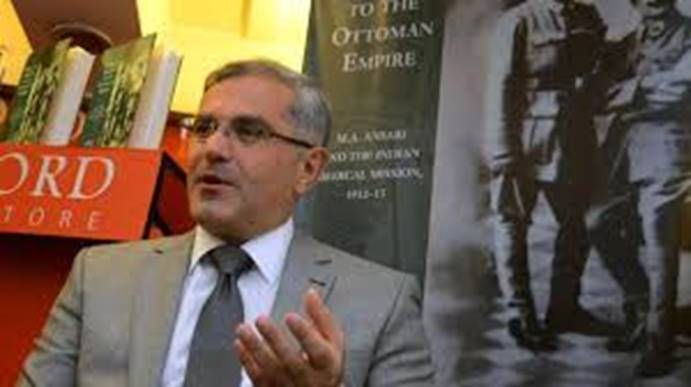
Many details of the mission and Dr Ansari’s letters have been preserved and recently compiled in a book, People’s Mission to the Ottoman Empire, by Burak Akcapar, a former Turkish ambassador to India
which sought to preserve the Ottoman Caliphate. The Turks had been defeated in the First World War, and their empire was being divided among the victors. Caliph’s fate was uncertain. Ultimately, Mustafa Kamal Pasha abolished the Caliphate, exiled the Caliph, and Turkey became a secular republic.
Dr Ansari is considered one of the founders of Jamia Millia Islamia. As a sequel to the Khilafat Movement, the Congress Party launched a non-cooperation movement in 1921 against the British Government. They urged the students at Aligarh Muslim University (AMU) to abandon it because of its affiliation with the British Government and instead join the nascent Jamia Millia. Luckily, both the AMU and the Jamia survived and flourished, emerging as two of the finest universities of modern India.
Dr Ansari was impressed by Turkey's movement toward modernization. He invited the renowned Turkish writer and Kamal Pasha's colleague, Ms Khalida Adib Khanum, to India to deliver a series of extension lectures. She stayed with Dr Ansari at his palatial residence and, on her return, authored a book, Inside India, based on her impressions.
Ms Khanum made some interesting observations about Dr Ansari’s domestic life. He had spent a significant part of his life in the West, but his cultural life remained essentially Islamic. His wife, educated in eastern languages, strictly observed purdah; only Mahatma Gandhi was exempt from this restriction. In contrast, their adopted daughter, the niece of Mrs Ansari, was well-versed in English and westernized.
Ms Khanum describes how Dr Ansari’s house served as an open guesthouse that hosted the Congress Party’s most important leaders and a venue for meetings, including one between Lord Irwin and Mahatma Gandhi. “Along with Ms Khanum, Sarojini Naidu was also a house guest at the same time. “Naidu used to return late at night, exhausted, would throw herself on an armchair, warm her tired feet by the fireside, and then relate many scandalous stories about the well-known leaders.”
The highlight of Ms Khanum’s tour was her visit to Aligarh Muslim University and her reception at the Union Hall. She was stunned by the dazzling sight of students in Turkish coats, white trousers, and red Turkish caps. When she stood to speak, she was showered with flower petals falling like rain from the skylight above. “I was so overcome with emotions that I could not speak for some minutes. The generosity and friendliness shown to an elderly Turkish woman were overwhelming.”
On May 10, 1936, Dr Mukhar Ahmad Ansari, returning after attending the Nawab of Rampur, passed away on the train to Delhi. The healer who had saved millions surrendered peacefully when his time came. He was only 56 years old.
(Dr Syed Amir is a former Assistant Professor, Harvard Medical School, and a health science administrator, US National Institutes of Health)