
Many Muslims connect Rajab with the story of the Prophet Muhammad’s Night Journey and Ascension. While scholars differ on the exact date, the meaning of the story matters more than the calendar. It is a story about rising above hardship, about hope after pain, and about spiritual strength in a difficult world. That such a story is remembered in Rajab reminds us that true success is not in control or conquest, but in character and faith. Today’s world moves fast. Anger spreads quickly. Conflicts rarely pause. In such a world, Rajab feels almost revolutionary
Rajab: When Time Itself Pauses
By Dr Aslam Abdullah
CA

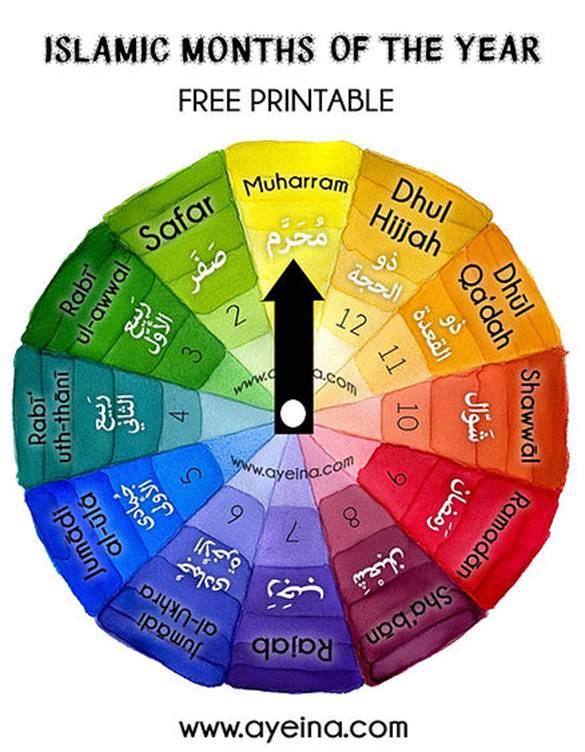
Rajab comes quietly. It does not arrive with celebration, nor does it announce itself with festivals or commands. Yet for centuries, Rajab has carried a special weight in human memory — as if time itself slows down to breathe. It is the seventh month of the Islamic lunar calendar, and it is one of the four sacred months in Islam. Long before Islam, even in the harsh deserts of Arabia, people knew that Rajab was different. In a world shaped by tribal wars and endless revenge, Rajab stood like a pause between heartbeats.
Before Islam, Arabia was not an easy place to live. Tribes fought over land, honor, and survival. Violence was common, and revenge could last generations. Yet even in that world, there were limits. Rajab was one of them. During Rajab, fighting stopped. Weapons were lowered. Raids were postponed. Travelers moved more safely across the desert. Even enemies respected the month, because everyone understood that if violence never stopped, society itself would collapse. Rajab became a shared agreement that peace, even temporary peace, was necessary. This tells us something important: people do not need perfection to recognize what is right. Even before revelation, the human heart knew that time could be sacred.
When Islam came, it did not erase Rajab. It purified it. Islam removed superstitions and false rituals, but it kept the core idea: some times are meant for restraint and reflection. The Qur’an confirmed that Rajab and the other sacred months were part of a divine moral order. Harming others during these months was not just wrong socially—it was wrong ethically. Rajab became a reminder that power must be controlled, anger must be restrained, and justice must not turn into cruelty. Islam taught that when time is sacred, human behavior must rise to meet it.
Rajab does not demand much on the outside. There is no required fasting like Ramadan and no pilgrimage like Dhul Hijjah. Instead, Rajab works quietly on the inside. Muslim scholars often described Rajab as a month of preparation—a time to clean the heart before the soul enters the intense light of Ramadan. Some people fast voluntarily. Others pray more, ask forgiveness, or simply try to become more mindful of their actions. Rajab teaches that change does not always begin loudly. Sometimes it begins with silence, honesty, and self-correction.
Many Muslims connect Rajab with the story of the Prophet Muhammad’s Night Journey and Ascension. While scholars differ on the exact date, the meaning of the story matters more than the calendar. It is a story about rising above hardship, about hope after pain, and about spiritual strength in a difficult world. That such a story is remembered in Rajab reminds us that true success is not in control or conquest, but in character and faith. Today’s world moves fast. Anger spreads quickly. Conflicts rarely pause. In such a world, Rajab feels almost revolutionary.
It asks simple but powerful questions: Can we stop before we react? Can we choose restraint over revenge? Can we make time sacred again by acting with conscience? Rajab reminds us that peace is not weakness. It is discipline. It is courage. It is wisdom. Rajab stands between past and future, between violence and restraint, between chaos and conscience. It tells us that even in difficult times, humans are capable of choosing mercy over harm. In Rajab, time slows down—not to escape the world, but to understand it better. And in that pause, we are invited to become better ourselves.
The Night Journey (al-Isrāʾ wa-l-Miʿrāj) is not told in Islam as a dream meant to amaze, but as a vision meant to teach. Every scene the Prophet witnessed carried meaning. Nothing was random. Nothing was for spectacle. Each sight was a lesson about guidance, responsibility, and the moral structure of the universe. This is the journey as it is preserved in the Qur’an and the most authentic narrations.
The journey began at night in Masjid al-Haram, near the Ka‘bah. At this moment in his life, Prophet Muhammad had faced rejection, ridicule, and loss. The journey did not come at a time of victory—but at a time of pain. He was prepared for the journey: his chest was opened, his heart cleansed, and filled with faith and wisdom. This symbolized that spiritual vision requires moral clarity. He was then brought a heavenly mount known as Buraq, described as faster than sight, carrying him beyond ordinary limits. The message was immediate: this journey would not follow earthly rules.
As the Prophet traveled from Makkah to Jerusalem, he was shown several signs. He passed by lands associated with earlier prophets. He was shown places where great events would later occur. He was offered two cups—one of milk and one of wine. He chose the milk. He was told, “You have chosen the natural path.” This symbolized that divine guidance is aligned with human nature, not against it.
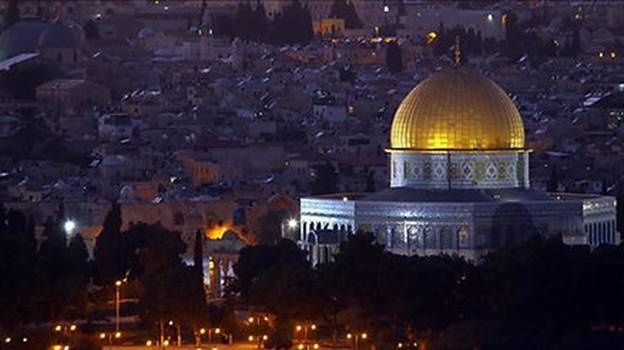
The Prophet arrived at Al-Aqsa Mosque, the spiritual heart of earlier revelations. Here, he saw all the previous prophets, including Abraham, Moses, David, Solomon, and Jesus (peace be upon them all). He led them in prayer. This was not about rank—it was about continuity. The scene declared a timeless truth: Revelation is not divided by nations or races. Guidance has always come from the same God. Jerusalem stood as living proof that divine messages are one river with many streams.
From Jerusalem, the ascent (Miʿrāj) began. The Prophet met Adam (peace be upon him). Adam smiled upon seeing the righteous souls and wept upon seeing those who rejected guidance. It was to teach that Humanity carries both dignity and responsibility. In the Second Heaven, he met John the Baptist (Yahya) and Jesus (ʿIsa). It was to teach that truth may be gentle, but it is often resisted. In the Third Heaven, he met Joseph (Yusuf), whose beauty reflected both outward grace and inner patience. It was to teach that trials refine character; injustice does not cancel divine favor. In the Fourth Heaven, he met Enoch (Idris), described as a man elevated by knowledge and devotion. It was to teach that wisdom and faith raise human rank. In the Fifth Heaven, he met Aaron (Harun), known for compassion and leadership. It was to teach that leadership without mercy is incomplete. In the Sixth Heaven, he met Moses (Musa), who wept—not out of jealousy, but concern for humanity. It was to teach that true leaders worry about their people even beyond their own era. In the Seventh Heaven, he met Abraham (Ibrahim), resting near the Heavenly House (Bayt al-Ma‘mur), around which angels constantly worship. It was to teach that; pure monotheism is the foundation of all guidance.
Scenes the Prophet Was Shown
During the ascent, the Prophet was shown symbolic scenes of human behavior and its consequences: People whose lips were cut repeatedly — those who spread lies and falsehood, people burdened with heavy loads they could not carry — those consumed by greed, and people who were rewarded with peace and light — those who were patient, truthful, and just. These scenes taught that actions are not erased by time. Every moral choice has weight.
The Prophet reached Sidrat al-Muntaha, the Lote Tree at the boundary beyond which no creation passes — not even angels. Here knowledge ends, language fails, and only God knows what lies beyond This was not a place of sight, but of nearness. It was here that the command of daily prayer was given. Prayer was not imposed as a ritual — it was gifted as a daily ascent, allowing ordinary believers to connect with the Divine without leaving the earth.
By morning, the Prophet was back in Makkah. Many mocked him. Others doubted. But the journey was never meant to be measured by distance. It was meant to recenter humanity: From Makkah to Jerusalem from Adam to Muhammad, and from earth to heaven. The message was clear and unbroken. Guidance comes from God alone. It has always come from God. And it will always return to Him.
Why This Journey Still Matters
The Night Journey teaches that: Faith is not inherited blindly—it is recognized by the heart. Revelation is consistent, not conflicting. Moral accountability is real. Prayer connects heaven and earth. It was one night—but it remains a map for the soul.
(Dr Aslam Abdullah is the resident scholar at Islamicity.org, the largest internet portal on Islam. He has served as Director of the Islamic Society of Nevada and Masjid Ibrahim, Las Vegas. Dr Abdullah has also been the Editor-in-Chief of the Minaret Magazine since 1989. He was an associate editor of The Arabia in the 1980s. He also served as vice chairman of the Muslim Public Affairs Council. Not only that, but he is involved in interfaith dialogue and has represented Muslims in several interfaith conferences. He has published several books and more than 1,000 articles and papers in magazines worldwide. Originally from India, he is based in Southern California and has appeared on several TV and Radio shows.)
