
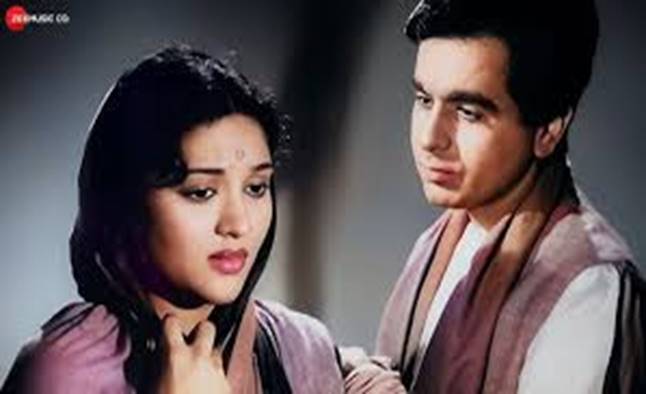
Dilip Kumar in Devdas - YouTube
Dilip Kumar: On Meeting the Giant of Indian Cinema
By Dr Akbar Ahmed
The American University
Washington, DC

When I asked Dilip Kumar which was his greatest role, he answered Devdas. He spoke softly and slowly as he did in his various roles. He explained why Devdas, in which he played the title character, was such an important role in his life. It was not only that it was based on a popular classic but that the story captured a central conundrum of Indian society. Set in the turn of the century in rural Bengal it was the simple but tragic story of two lovers trapped by the immutable laws of their caste. It all ends in tragedy as Devdas inexorably moves to his self-inflicted doom but keeps his promise to visit his beloved once before he dies. She is now married to a man of a similar caste from a neighboring village. Fatally ill due to alcoholism and in his final moments, Devdas barely arrives to take his last breaths outside the home of his beloved. Their love was doomed from the start and Dilip’s role as the tragic lover became the highlight of Indian cinema.
But there was also a personal reason why Dilip had mentioned Devdas. He prepared for his film roles by inhabiting the character and in the case of Devdas he became the doomed lover. The film was released in 1955, and Dilip won the Filmfare award for best actor, the Indian equivalent of the Oscars. Once the filming was over Dilip said the pessimism of the character did not leave him and in fact affected his personality. He sought out physicians for advice. They recommended that he take different kinds of roles in the future, lighthearted and jovial. A string of hits followed which were more of the typical Bombay song and dance cinema, Kohinoor, Ram aur Shyam, and Leader.
Meeting Dilip Kumar
In asking Dilip Kumar such a personal question I was motivated by the knowledge that I had extraordinary access to him, and it was worth getting the answer not only for myself but also for his fans. We were in Quetta in Baluchistan where I was Commissioner in 1988. Dilip Kumar along with his wife Saira Bano was visiting Pakistan and was scheduled to visit Quetta. It was a noteworthy visit, given the tensions between India and Pakistan and the general hurdles to visits between them. I was asked to be his escorting officer for the time he was in Quetta. I therefore received them at the airport, and after a packed schedule where we visited the local hospital, had lunch in Governor’s House, arranged for their rest in the afternoon in the VIP resthouse, and saw them off at the airport. I was with him alone for the entire day except at the stops where we were assailed by middle aged wives of senior ministers and elders imploring a picture with Dilip Kumar. There was no shyness or notions of rural or tribal modesty about them. They were fans and they wanted to convey that to Dilip Kumar.
We moved about in the Commissioner’s car with Saira Bano and the rest of the party following us in separate cars. As we were alone it gave me the opportunity to talk to Dilip keeping the bounds of hospitality and formality in mind. Our conversation was easy and smooth. He engaged with ideas like a practiced diplomat or polished artist used to the media. He made me feel as if we were old friends. By the time I brought the guests back to the airport in the evening dusk was falling and a sizeable crowd had already gathered to take pictures and bid farewell to them.
What I did see was something I had known all along and that was the genuine star power that Dilip Kumar brought to the game. I had grown up in Abbottabad in north Pakistan in the 1950s. I recall how one of his earliest films, Aan, was so popular in Pakistan that it played in
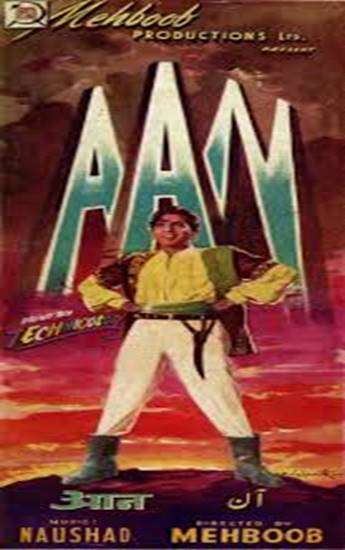
Karachi for several years. The movie gained such popularity with the boys at my boarding school that the poster from Aan, which showed Dilip with his hands on his hips, a defiant smile on his face, his hair on his forehead, and a dagger at his waist—all of which screamed the dashing romantic hero—was the source of some amused outrage. A school-boy who was from the northern areas of Pakistan and was called Chu as a nod to the Chinese Prime Minister Chu En Lai had taken the same picture of Dilip Kumar and cutting out Dilip’s face put his own head in its place and put the photograph next to his bed. The boys in the dormitory were angry: how dare Chu replace Dilip Kumar!
Later when I was posted to East Pakistan, I recall visiting a cinema in a remote part of the province and seeing a great big portrait of Dilip Kumar in the main lobby. There was no film of his playing there, but the picture was a stand-alone tribute to the actor. I also recall seeing Devdas in London with some family friends in one of those special shows on a Sunday and once again marveling at the power of the performance of Dilip Kumar. Indeed, his lines from the film continued to be widely recognized and quoted. For example, his dialogue when he is drunk: “Which unfortunate drinks to cope with life? I drink so that I can breathe.”
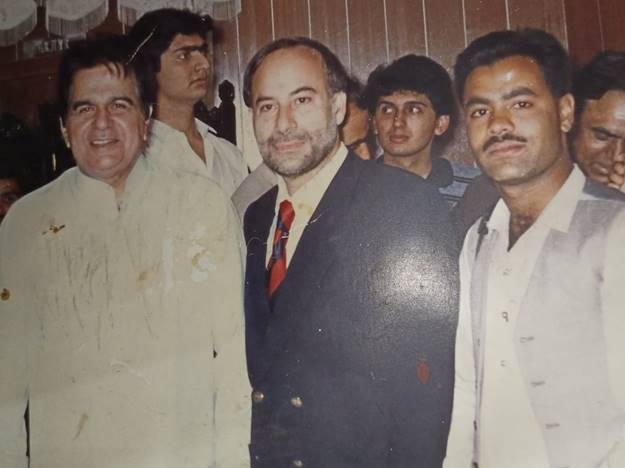
Dilip Kumar with Dr Akbar Ahmed, Quetta airport, 1988
Over a decade later after our meeting in Quetta we met again in London. I had just left the post of High Commissioner for Pakistan to the UK and he was visiting London. There was a grand farewell dinner for me at the farm of Mohsin Akhtar outside Cambridge. Dilip Kumar and Saira Bano turned up as guests of honor and he was requested to speak. He seemed to have aged since I last saw him. But he was eloquent and graceful. S.S. Pirzada who had been appointed advisor to the President of Pakistan also turned up and spoke, saying I am here to publicly testify to the integrity, character and wisdom of Akbar Ahmed. I would always be grateful to their memory. The evening was prominently reported in the Urdu press.
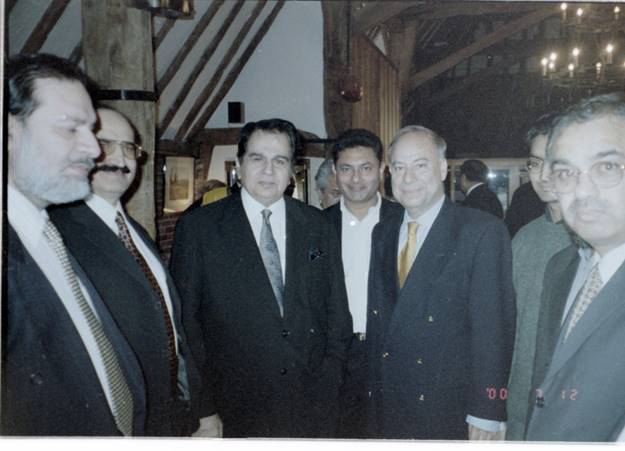
Dilip Kumar, Dr Akbar Ahmed, and P. J. Mir: Over a decade later after our meeting in Quetta, we met again in London. I had just left the post of High Commissioner for Pakistan to the UK and he was visiting London. There was a grand farewell dinner for me at the farm of Mohsin Akhtar outside Cambridge. Dilip Kumar and Saira Bano turned up as guests of honor
The Life
Let us look at the basic facts of Dilip Kumar’s life. His personal life had the quality of the script of one of his films. In the public imagination he was destined to be married to Madhubala who was the female counterpart to Dilip in her beauty and brilliant acting. But they fell out during the shooting of Naya Daur and the matter ended in a bitter court case. In the end, in 1966 he married Saira Bano who was 22 years younger than him and was an ardent fan. He later married his second wife Asma Rahman, a Hyderabad socialite, in 1981, but the marriage did not last long. He did not have any children with Saira Bano. She spent the last decades, caring for him and being his constant companion, nurse, wife and guardian angel. Her devotion and love were there for the world to see and it has elevated her to a legendary status.
Born in Peshawar, Dilip Kumar’s birth name was Muhammad Yusuf Khan, but early in his career in 1944, in his debut film Jawar Bhata, he appeared under the stage name Dilip Kumar. The 1950s is considered the golden era of Indian cinema and Dilip Kumar dominated it. He died in 2021 aged 98. Over a career spanning five decades he worked in 57 films. The only film he produced was Ganga Jamna. Prime Minister Narendra Modi along with thousands expressed condolences and acknowledged that he was a “cinematic legend” of “unparalleled brilliance.” The Prime Minister of Pakistan, Imran Khan, and the President of Afghanistan Hamid Karzai also expressed their condolences.
The facts alone are breathtaking: he won the highest number of Filmfare annual awards for best actor . In 2013 on the centenary of Indian cinema Dilip Kumar was declared “the biggest superstar of all time” by Filmfare after conducting a poll. His very name had become a byword for a heroic even tragic figure. His name in common parlance was bandied about and I recall from my school days students teasing each other with phrases such as, “so you think you’re Dilip Kumar!”
Early in his film career Dilip Kumar established himself as a serious actor who could best play the doomed and tragic lover. It gave him an opportunity to sing the sad and soulful songs with themes of pain, loss and defeat. In the 1950s his classic tragic films like Uran Khatola, Babul, Daag, Devdas, Dedaar and Andaz established him as the “king of tragedy.” There were other big stars dominating the Indian cinema then, of these Raj Kapoor and Dev Anand were the most popular, but no one could really match Dilip. He won the best actor of the year award given by Filmfare annually for several years consecutively—indeed for so many years that the award became meaningless. In all he received eight Filmfare awards for best actor and 19 nominations.
He was voted “The Greatest Indian actor of all time” in a Rediff readers poll in 2011, and he holds the Guinness world record for receiving the most awards by an Indian actor.
His Mughal-e-Azam is considered the greatest film of all time in poll after poll by cinema directors and critics.
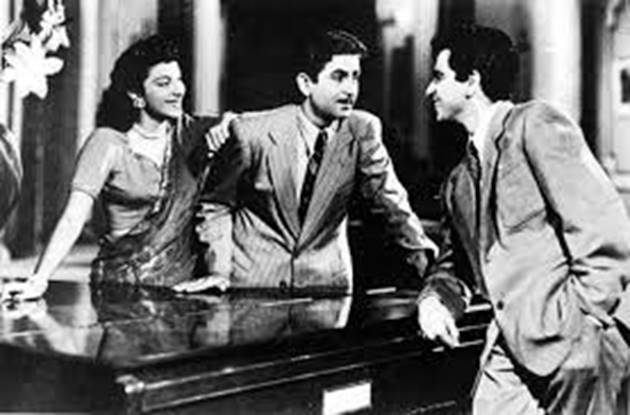
He had a commanding and dignified presence on the screen which became characteristic of his brand and contrasted with the flamboyant style of the other actors also popular at the time like the Kapoors and even Dev Anand. The contrast is clear in Andaz the only film Dilip starred in alongside Raj Kapoor, Although Raj gets the girl, Dilip emerges as the real tragic hero
Later in life he played mature roles in successful films. He was appointed Sheriff of Mumbai and given civil awards by the government of India and remarkably also by the government of Pakistan when he was given the Nishan-i-Imtiaz in 1988. His old house in Peshawar has been declared a national monument in 2014 by the then Prime Minister Nawaz Sharif. By the 1970s Indian cinema was changing and a new type of hero was in demand. Younger stars were becoming popular like Amitab Bachan and Shashi Kapoor.
Most of Dilip’s early films were black and white and are now considered classic cinema. Aan was an exception; it was India’s first color movie with Dilip Kumar starring in it. Decades later some of his major films like Naya Daur and Mughal-e-Azam were converted into color and re-released. With his towering reputation he was made a member of the upper house of Parliament and offered many other honorifics.
Analysis
But it was clear to me that the name of Dilip Kumar was greater than the sum of its parts. The irony being that Dilip Kumar wasn’t even his birth name. But think of an individual who is personally acknowledged in public by presidents and prime ministers of several countries, not his own. Think of entire generations of actors who would copy his style, including his hairstyle and way of speaking. This imitation included the next generations of superstars, first that of Amitabh Bachchan and then Shah Rukh Khan. In Pakistan the leading actor Santosh Kumar took his name to reflect Dilip Kumar and Nadeem’s popularity rested on his imitation of Dilip.
Dilip’s very name was redolent of romance and tragedy while confronting the essential beauty of humanity in each one of us. Seeing him on the silver screen males wanted to be Dilip Kumar and females yearned to be the object of devotion that he conveyed in his language of love with its purity, consistency and selfless nature. He had a commanding and dignified presence on the screen which became characteristic of his brand and contrasted with the flamboyant style of the other actors also popular at the time like the Kapoors and even Dev Anand. The contrast is clear in Andaz the only film Dilip starred in alongside Raj Kapoor, Although Raj gets the girl, Dilip emerges as the real tragic hero.
Dilip Kumar’s stature as possibly the greatest movie star produced in India is virtually unchallenged and so is his reputation as a legendary figure that helped shape modern
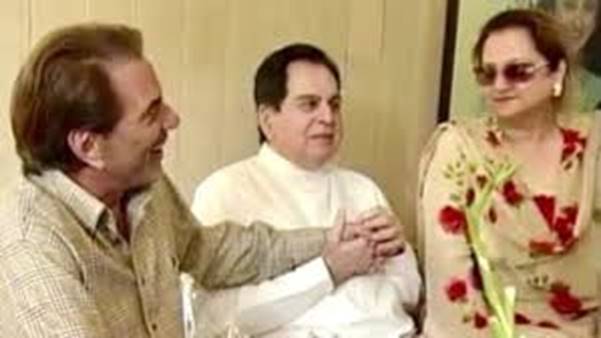
Even today there are viral videos on social media testifying to his stature and iconic position. There is one in which he is standing alongside the popular Indian actor, himself a superstar, Dharmendra, who always adored Dilip Kumar as his personal hero. In the video Dilip Kumar says, I asked God why did you not make me as handsome as Dharmendra? The look of pure joy on Dharmendra’s face is priceless as he bows to touch Dilip’s feet in respect. Saira Bano would recount how she and Dharmendra would argue as to who loves Dilip Kumar more
India and its idea of itself as a pluralist and tolerant society. Like Nehru the first Prime Minister of India, Dilip Kumar had come to symbolize pluralist identity in the new nation. Even today there are viral videos on social media testifying to his stature and iconic position. There is one in which he is standing alongside the popular Indian actor, himself a superstar, Dharmendra, who always adored Dilip Kumar as his personal hero. In the video Dilip Kumar says, I asked God why did you not make me as handsome as Dharmendra? The look of pure joy on Dharmendra’s face is priceless as he bows to touch Dilip’s feet in respect. Saira Bano would recount how she and Dharmendra would argue as to who loves Dilip Kumar more.
Dilip’s relationship with Nehru was also widely known and Nehru often turned up at the launch of a new movie. There is another viral video in which Dilip recounts the problem he was having with the censor board when he made the masterpiece Ganga Jamna, the only movie he produced. He starred in Ganga Jamna and the entire shooting and characters are set in rural Bihar, so they all spoke the local dialect of Poorbi. This was method acting at its finest. The censor board was not having any of it and demanded an impossible number of cuts. Dilip went to Delhi and met Nehru, and they saw the film together and Nehru passed the film without a single cut.
David Lean offered the role of Sharif Ali in Lawrence of Arabia to Dilip but he declined. The role famously went to Omar Sharif. Dilip commented “ that he thought Omar Sharif had played the role far better than he himself could have” (Anvar Alikhan, “Dilip of Arabia?,” The Times of India, July 19, 2015). It is one of the “what if” questions
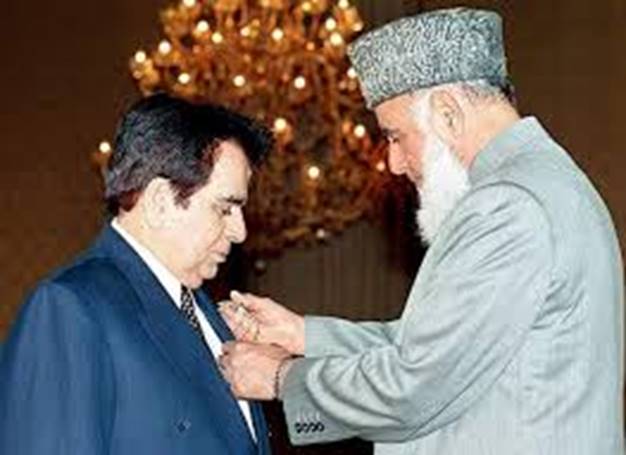
Dilip Kumar receives Nishan i Imtiaz, the highest civil award, from the President of Pakistan
of history: had Dilip accepted Lean’s invitation would he have gone on to play the roles Sharif later played like Dr Zhivago?
In the 1950s several prominent British stage actors went on to dominate the screen. These included Laurence Olivier, Richard Burton and Alec Guiness. But the transition from stage to screen was never smooth. Recall Olivier warning Burton that he could either be a household name or a great actor. Dilip remained choosy about his roles and the total number of films he made,57, is small compared to other popular actors. His friend Dharmendra made over 300 films.
Remarkably, Dilip Kumar was never a stage actor and although he was almost an overnight screen sensation he brought a certain style of acting which hinted at the stage. He spoke slowly and in measured tones, he did not move too much in front of the camera, and you only have to see his contemporaries to note how much they jumped about in front of the camera as heroes. Above all he brought a sense of gravitas and dignity to his roles.
South Asian society is complex, changing, and dynamic. It also has deep structures which are easily recognizable to the searching eye. One of them is the reality of religious identity. To most Muslims from Kabul to Calcutta, Dilip Kumar is the ultimate screen hero. The fact that he is also Muslim simply adds glitter to his halo. To many in the non-Muslim population questions of his loyalty to India as against his obvious affection for the
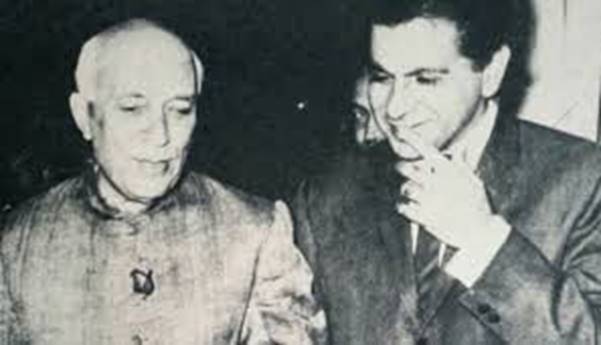
With Prime Minister Nehru
land of his birth Pakistan cannot be ignored. For them there is his religion, which he does not flaunt, but has never abandoned. There have been ridiculous attempts to paint him with the brush of treason. At one stage during the 1965 war with Pakistan the Indian authorities to their shame invaded his home in Bombay and confiscated an ordinary radio claiming that it allowed him to speak directly to the Pakistan Army. At another point Indians vociferously condemned him for agreeing to accept Pakistan’s highest civil award.
Yet I have seen Hindu comments describe Muslim artists with unrestrained affection —freely citing the blessings on them from Bhagwan or God—for example Bhagwan living in the throat of Rafi and Madhubala’s beauty as graced by Bhagwan. The Hindus have a generous and hospitable spirit, and here it is in ample evidence.
Aware of this historical background Dilip Kumar was not deterred from the persona he represented off and on stage: he had become an immutable cultural bridge between nations and communities. The saying Blessed are the peacemakers is widely known, and Dilip has become an icon of peace to those who believe in and promote peace.
(Ambassador Akbar Ahmed is Distinguished Professor of International Relations and holds the Ibn Khaldun Chair of Islamic Studies at the American University, School of International Service. He is also a global fellow at the Wilson Center Washington DC. His academic career included appointments such as Nonresident Senior Fellow at the Brookings Institution; the First Distinguished Chair of Middle East and Islamic Studies at the U.S. Naval Academy in Annapolis, MD; the Iqbal Fellow (Pakistan Chair)and Fellow of Selwyn College at the University of Cambridge; and teaching positions at Harvard and Princeton universities. Ahmed dedicated more than three decades to the Civil Service of Pakistan, where his posts included Commissioner in Balochistan, Political Agent in the Tribal Areas, and Pakistan High Commissioner to the UK and Ireland.)
