Facebook
Sher-e-Mysore and America at 250: The Enduring Legacy of Tipu Sultan
By Junaid Ahmed
CA
As the United States commemorates 250 years of independence, Americans of South Asian heritage have a unique opportunity to reflect upon a remarkable contemporary of the Founding Era whose life embodied many of the same ideals that inspired peoples across the world to defend their freedom and dignity. That figure was Tipu Sultan (1750–1799), the legendary Sher-e-Mysore—the Tiger of Mysore.
More than two centuries after his death, Tipu Sultan remains one of the most compelling figures in South Asian history. He is remembered not only as a ruler and military leader, but as a man of deep faith, a champion of innovation, and a steadfast defender of his nation's sovereignty. His story transcends geography and speaks to universal values: faith in action, courage in adversity, and the determination to preserve freedom in the face of overwhelming odds.
The spirit that guided his life is captured in a famous saying attributed to him:
“It is far better to live like a tiger for a day than to live like a jackal for a hundred years.”
These words continue to resonate because they express a timeless principle: that honor, conviction, and purpose are worth more than a life lived in submission.
Faith as a Foundation for Leadership
Tipu Sultan's public life was deeply shaped by his Islamic faith. Yet his faith was not confined to personal devotion. It influenced his understanding of leadership, justice, public welfare, and moral responsibility.
Historical records and correspondence reveal a ruler who viewed authority as a sacred trust. He believed that rulers were accountable not only to their people but ultimately to God. This conviction inspired a disciplined approach to governance and a commitment to the well-being of his subjects.
The distinguished historian B. Sheikh Ali describes Tipu Sultan as a leader driven by a profound sense of duty and purpose. Similarly, historian Kate Brittlebank notes that his religious convictions influenced both his personal conduct and his vision for the state. For Tipu Sultan, faith was inseparable from service.
Under his administration, efforts were made to improve agriculture, encourage commerce, strengthen institutions, and modernize the economy. His understanding of leadership reflected a belief that prosperity, security, and justice were responsibilities entrusted to those in power.
For contemporary readers, this aspect of Tipu Sultan's legacy offers an important lesson: faith is at its most meaningful when it inspires service, integrity, and concern for the common good.
The Innovator Who Changed Military History
While Tipu Sultan is often remembered for his courage, his contributions to science and technology are equally significant.
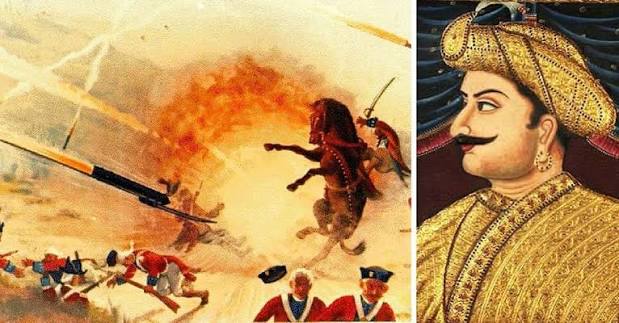
Together with his father, Hyder Ali, he oversaw the development of what many historians regard as the world's first effective iron-cased military rockets. These rockets represented a major technological advancement over earlier designs. The use of iron casings allowed greater propulsion and range, making them far more powerful than many contemporary European rockets.
Unlike experimental weapons that existed only in theory, Mysorean rockets were organized into specialized military units and deployed effectively on the battlefield. Their performance surprised British forces and demonstrated an impressive level of engineering and innovation.
The impact of these rockets extended far beyond the borders of Mysore.
Following the fall of Seringapatam in 1799, British military engineers carefully studied captured Mysorean rockets and adapted their design. The result was the development of the Congreve rocket, which became one of the most important military technologies of the nineteenth century.
This transfer of knowledge stands as one of history's most fascinating examples of technological innovation flowing from South Asia to the West. It reminds us that scientific creativity and ingenuity have always been global achievements rather than the exclusive property of any one civilization.
From Mysore to America's National Anthem
One of the most remarkable connections between Tipu Sultan and the American story emerges through the history of rocketry.
The British Congreve rockets, inspired by the Mysorean designs pioneered under Hyder Ali and Tipu Sultan, were later used during the War of 1812 between Britain and the United States. During the bombardment of Fort McHenry in Baltimore Harbor in September 1814, American lawyer Francis Scott Key witnessed British rockets streaking across the night sky.
His experience inspired the words that would eventually become the national anthem of the United States:
“And the rockets' red glare, the bombs bursting in air…”
Few Americans realize that the technological ancestry of those rockets can be traced back to the workshops of Mysore.
This extraordinary historical connection links Tipu Sultan's legacy to one of the most recognizable symbols of American national identity. It is a reminder that history is often more interconnected than we imagine, and that innovations developed in one part of the world can influence events thousands of miles away.
The legacy of Mysorean rocketry continues to be recognized in discussions of aerospace history. Scholars of military technology routinely identify the rockets of Mysore as an important milestone in the evolution of modern rocket systems. Their influence forms part of the broader story that ultimately led from early battlefield rockets to the advanced aerospace technologies of the modern era.
For South Asian Americans, this connection is a source of pride. It demonstrates that contributions from the Indian subcontinent played a meaningful role in the global development of science and technology.
Tipu Sultan and the Age of Freedom
Tipu Sultan lived during one of the most transformative periods in world history.
The American Revolution had challenged imperial rule in North America. Revolutionary movements were reshaping Europe. Across Asia, new political struggles were emerging in response to expanding colonial ambitions.
Although Tipu Sultan was not directly connected to the American Revolution, he belonged to the same global age in which peoples around the world grappled with fundamental questions of sovereignty, self-government, and national independence.
His determination to preserve the autonomy of Mysore reflected a principle that resonates strongly with Americans celebrating 250 years of nationhood: that a people should have the right to determine their own destiny.
This belief continues to inspire communities far beyond South Asia. Whether one studies the history of America, India, Pakistan, or countless other nations, the desire for self-determination remains a powerful force in human history.
Lessons for Our Time
As we reflect on the life of Sher-e-Mysore, several enduring lessons emerge.
First, faith should inspire service. Tipu Sultan's example reminds us that religious conviction finds its highest expression in justice, compassion, and dedication to the public good.
Second, innovation is a source of strength. His investment in science, technology, and modernization demonstrates the importance of embracing knowledge and creativity in a rapidly changing world.
Third, dignity matters. The famous words attributed to him continue to resonate because they affirm the value of living according to principle rather than convenience.
Fourth, freedom requires vigilance. The preservation of liberty demands courage, sacrifice, and a willingness to defend what is right.
Finally, history reminds us that great achievements often emerge when moral conviction and intellectual curiosity work together. Tipu Sultan combined both. He sought to strengthen his society not only through courage but through learning, innovation, and a commitment to progress.
As America marks its 250th anniversary, the life of Tipu Sultan offers a meaningful reflection for all who value freedom, faith, and human dignity. More than two centuries after his time, the Tiger of Mysore continues to inspire those who believe that leadership should be guided by principle, that innovation should serve humanity, and that no people should surrender their right to shape their own future.
His story belongs not only to the history of South Asia, but to the larger human story of courage, resilience, and the enduring pursuit of liberty.