
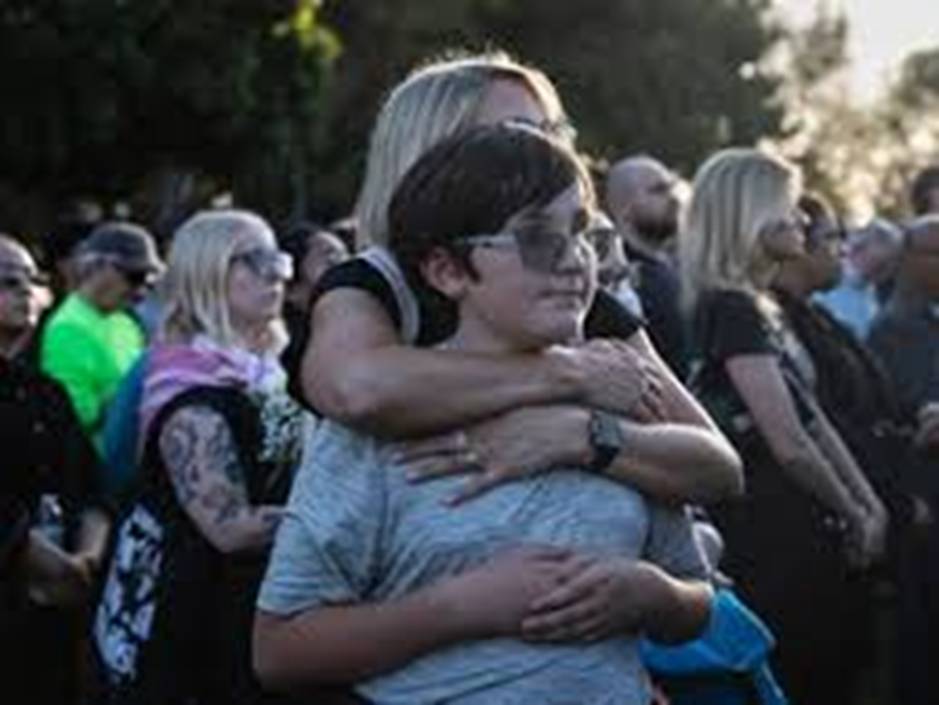
The response to the attack reflected another side of America. Law enforcement moved quickly. Faith leaders across religious lines condemned the attack. Neighbors mourned alongside Muslim families. At its best, America has never been defined by those who spread hatred, but by those willing to stand together against it. – Photo National Post
When Hate Comes to the Mosque Door
By Arif Zaffar Mansuri
President
PL Publications
CA
One hundred and forty children were inside that mosque. Kids no different from yours. No different from mine. They had come to learn, to pray, to belong, as American as any child in any church or synagogue across this country. On May 18th, two radicalized teenagers came to kill them. One man stood in the way. He did not go home to his family that night. The children did.
His name was Amin Abdullah, 51 years old, a loving husband and father, and a man his daughter described as "the number one advocate for safety and keeping our community safe." He had served as the security guard at the Islamic Center of San Diego for years, greeting worshippers with a warm smile and quiet wisdom. He took his post so seriously that he sometimes skipped meals out of fear, as his daughter recalled, that "something bad would happen." On May 18th, something did. And he was ready.
When the shooters arrived on the first day of Dhul Hijjah, one of Islam's holiest periods, he engaged them, exchanged fire, and triggered a lockdown. San Diego's Police Chief said his actions "without a doubt, delayed, distracted, and ultimately deterred" the attackers from reaching the children inside.
Two other men also lost their lives that morning: Mansour Kaziha, a devoted mosque staff member, and Nadir Awad, a neighbor who simply lived across the street. In the span of minutes, three families were torn apart forever. One community lost its sense of safety, perhaps forever.
This is not a single tragedy. It is a trend.
The Council on American-Islamic Relations documented 8,683 complaints of anti-Muslim and anti-Arab incidents in 2025, the highest number in the organization's history. Employment discrimination. Immigration targeting. Hate crimes. Government watchlists. The hostility is not random. It is systemic, and it is growing.
The Center for the Study of Organized Hate, a Washington DC-based think tank, documented a 1,450% surge in anti-Muslim rhetoric from political figures between February 2025 and March 2026, dehumanizing language directed at millions of American citizens who pay taxes, raise families, serve in the military, and have built their lives in this country.
This is the reality Muslim Americans are navigating every single day. And too many in positions of power are choosing to look the other way.
Yet the response in San Diego also reflected another side of America. Law enforcement moved quickly. Faith leaders across religious lines condemned the attack. Neighbors mourned alongside Muslim families. At its best, America has never been defined by those who spread hatred, but by those willing to stand together against it.
But while the world struggles to respond, one country has spent years fighting back on the world stage.
San Diego is the latest chapter in a story that has been written in blood across the world — from Christchurch to Quebec City to Oak Creek. The question is no longer whether Islamophobia kills. We know it does. The question is whether the world's institutions will finally treat it as the crisis it is.
One nation decided to force that question onto the global stage. On March 15, 2019, a terrorist walked into two mosques in Christchurch, New Zealand, and murdered 51 worshippers at prayer. The world grieved and moved on. Pakistan refused to.
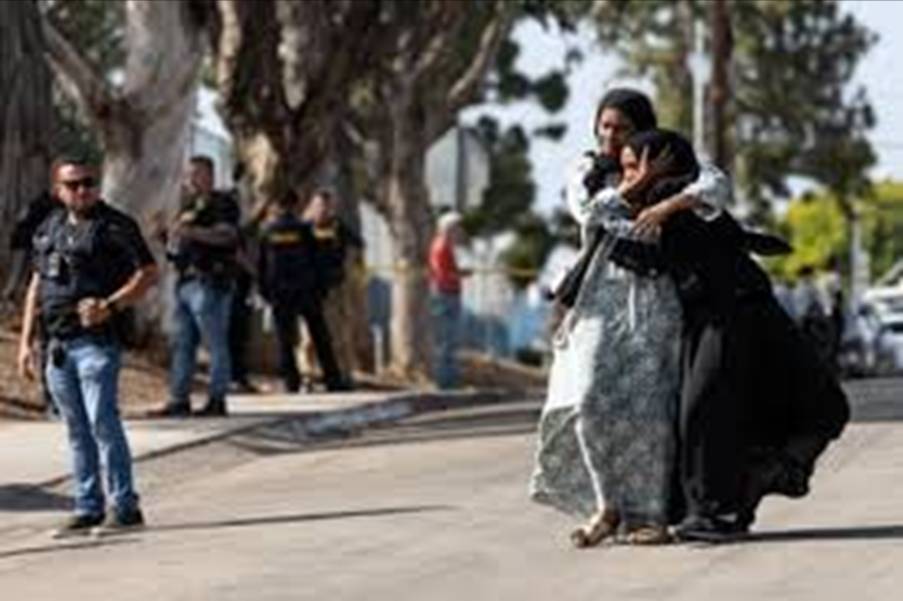
The Center for the Study of Organized Hate, a Washington DC-based think tank, documented a 1,450% surge in anti-Muslim rhetoric from political figures between February 2025 and March 2026, dehumanizing language directed at millions of American citizens who pay taxes, raise families, serve in the military, and have built their lives in this country . – PhotoThe Guardian
Pakistan took the cause directly to the Organization of Islamic Cooperation, the 57-nation bloc representing the Muslim world. At the OIC's Council of Foreign Ministers in November 2020, Pakistan tabled a landmark resolution proposing something that had never existed: an official United Nations International Day to Combat Islamophobia, to be held every March 15th in permanent memory of Christchurch.
The OIC adopted it unanimously. But that was only the beginning.
Getting 193 nations to agree on anything is hard. Getting them to agree on this took a diplomatic masterclass.
Skeptics pushed back, and hard. India raised concerns about other forms of religious persecution going unacknowledged. France and the European Union raised questions about free expression. The objections were serious, and Pakistan's diplomats knew that bulldozing past them would doom the effort.
So instead, they engaged. They listened, negotiated, and refined the language, building the broadest possible coalition around a simple, universal principle: that targeting people because of their faith is a human rights violation, full stop.
On March 15, 2022, exactly three years after Christchurch, UN Resolution 76/254 was adopted by consensus. March 15th became the International Day to Combat Islamophobia, permanently inscribed on the global calendar. Pakistan's credibility as one of the world's most committed UN peacekeeping nations, with 46 missions across nearly 30 countries since 1960, gave its diplomacy the weight it needed to succeed.
The effort did not stop there. In 2024, a follow-up resolution called for a dedicated UN Special Envoy to Combat Islamophobia. In May 2025, that envoy was appointed for the first time in history.
So, what does a UN resolution mean to 140 children in San Diego?
On its own, not enough. Three men still died on sacred ground. The hatred that sent two teenagers to that mosque door did not emerge from a vacuum. It was fed, amplified, and normalized over years of unchecked rhetoric and political cowardice.
But Pakistan's multi-year diplomatic campaign proves something vital: that organized, principled advocacy can move even a fractured world. What was achieved in the halls of the United Nations must now find its echo on the streets of San Diego, Los Angeles, and every city in America.
The world finally named the hatred. Now comes the harder work: ending it.
Because in the end, silence is also a choice.
(Arif Zaffar Mansuri is President of PL Publications, publisher of Pakistan Link and Urdu Link, and host of The Mansuri Show on ARY Digital TV. A veteran real estate investor, entrepreneur, industrialist, journalist, and community leader, he is dedicated to amplifying the voices of the Pakistani American community. He is a member of the National Press Club of Washington DC and the Los Angeles Press Club, and has covered Pakistani-American civic life and US policy for many years. He writes from both a journalistic and community leadership perspective. Watch his show at YouTube.com/@MansuriShow or reach him at Salam@PakistanLink.com )
