
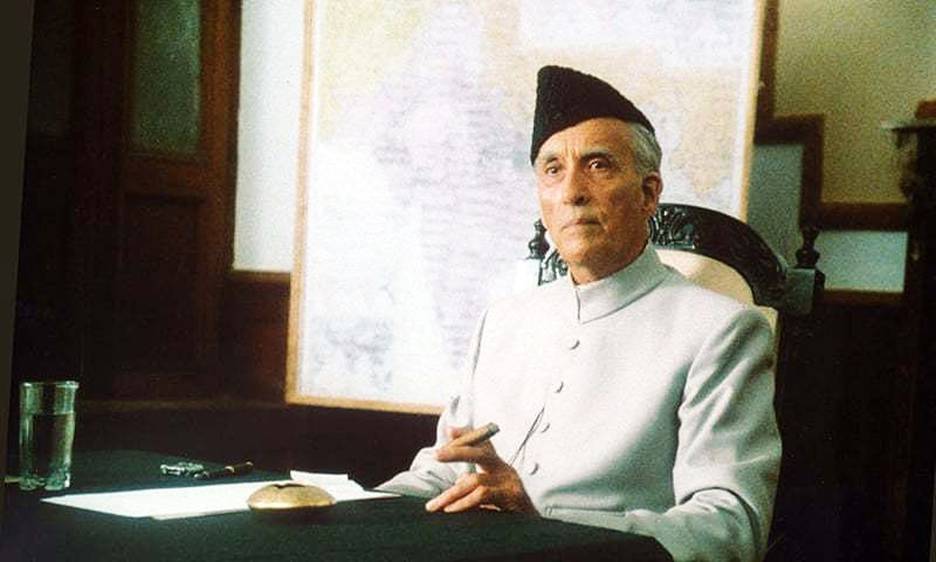
In his autobiography ‘Tall, Dark and Gruesome’ (1999) Christopher Lee declared that his role in the Jinnah film was his “own personal tribute to an extraordinary man and great statesman … this Great Leader, the Father of the Nation, who literally gave his life for his country … whose image has been so shamefully distorted by the ignorant and whose reputation and achievements have been so grossly maligned. May he truly rest in peace!” - Photo Dawn
Pakistani Heroes and the Making of Jinnah
By Dr Akbar Ahmed
American University
Washington, DC

“I have been sent”, said the man in the dark shalwar-kameez and long black beard in solemn tones as he stood framed in the door of my hotel room in Karachi. It was in the early days of the shooting of the Jinnah film in 1997 and there were widespread reports in the media attacking the film, its cast and crew.
“From now on I will be by your side and will escort you to your plane when the film is completed. You will succeed in spite of the opposition.”
I had not met him before but this was Jimmy Engineer, one of Pakistan’s most famous painters and social activists. He was known to be a passionate Pakistani and his Zoroastrian religion enhanced his patriotism.
He did not elaborate on who had sent him but he hinted it was a transcendental power. He insisted I see a video and pushed it into the video player. It was a strange darkly lit film sequence shot by a hand-held camera of Jimmy entering a cave and then a cage with two lions in it. There was palpable danger to his life as the lions were agitated but they eventually calmed down.
“Your position is just like this, and you also face ferocious lions in a cage. But I have been sent to be by your side and in the end, you will accomplish your mission.”
When the government reneged from its agreement to give part of the budget for the Jinnah film, Jimmy launched a one-man crusade to raise funds. He even walked from Karachi to Lahore for this purpose.
True to his word Jimmy was by my side throughout the long and difficult shoot in Karachi and Lahore and then finally saw me off at the airport at the end of it in Karachi.
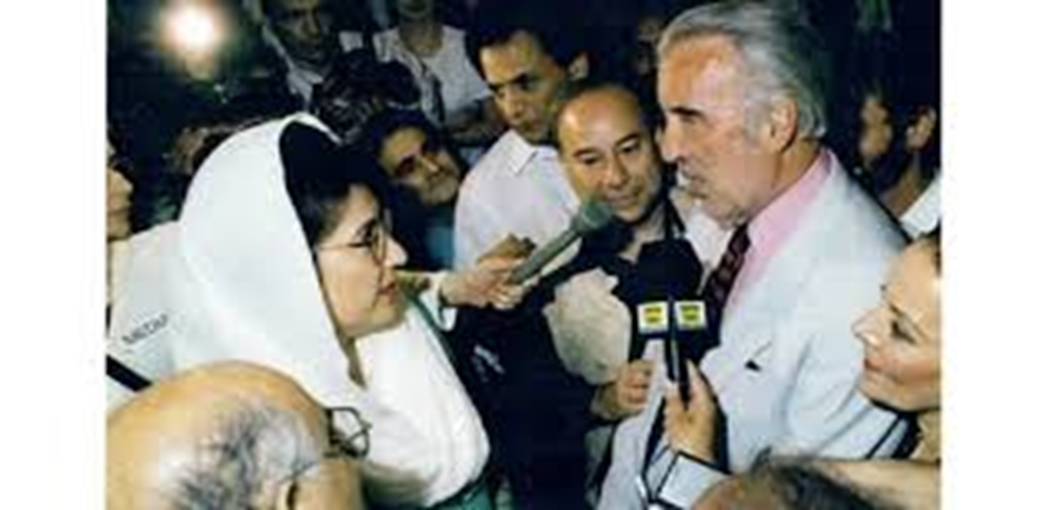
Mohtarma Benazir Bhutto, Dr Akbar Ahmed, and Christopher Lee at a function in London. Lee sent a copy of his autobiography ‘Tall, Dark and Gruesome’ to the author inscribed “To Akbar Ahmed who gave me the opportunity to portray a giant of history.”
Another Jimmy, this time my class fellow from Burn Hall, Abbotabad, Jamil Hamdani, who worked for a foreign firm, and his wife rallied in support of the Jinnah film and not only invested in it but gave a grand dinner in Karachi which played a big role in cheering up Shashi Kapoor.
Shashi had been down in the dumps ever since he arrived and became the target of some vicious newspaper attacks which accused him---and his family—of being enemies of Pakistan out to destroy it through this film. Isolated in his hotel room after the day’s shoot he confided in me that perhaps he had made a mistake in coming to Pakistan. His aim was to act as a goodwill ambassador between India and Pakistan. Ironically, Bal Thackeray, the Hindu nationalist, had warned him that if he went to “enemy” Pakistan there was no need for him to come back. “I wonder whether I have made a mistake in coming,” he would say to me as I tried to assure him that Pakistanis are big hearted people and appreciated him.
I requested Jimmy my class-fellow to host a dinner in which I could bring Shahsi. But Shashi was reluctant to appear in public and finally agreed to come for a few minutes only. On arrival he was surrounded by several dozen Pakistani begums whose imagination had taken them back several decades when Shashi and they were younger and much more carefree. They talked of his popular films and hummed favorite songs from them. The enthusiasm of his newfound fans began to cheer him up. Every time I came to take him away, as we had arranged, he would plead with me saying, “just a few more minutes Akbar Sahib and then we will go.”
In Karachi, Jamy Rahim and his wife Iran and Amir Chinoy and his wife Almas and the renowned Pakistani historian of Jinnah, Professor Sharif -ul-Mujahid, gave me unstinting support in every possible way—as they did before and after the shoot.
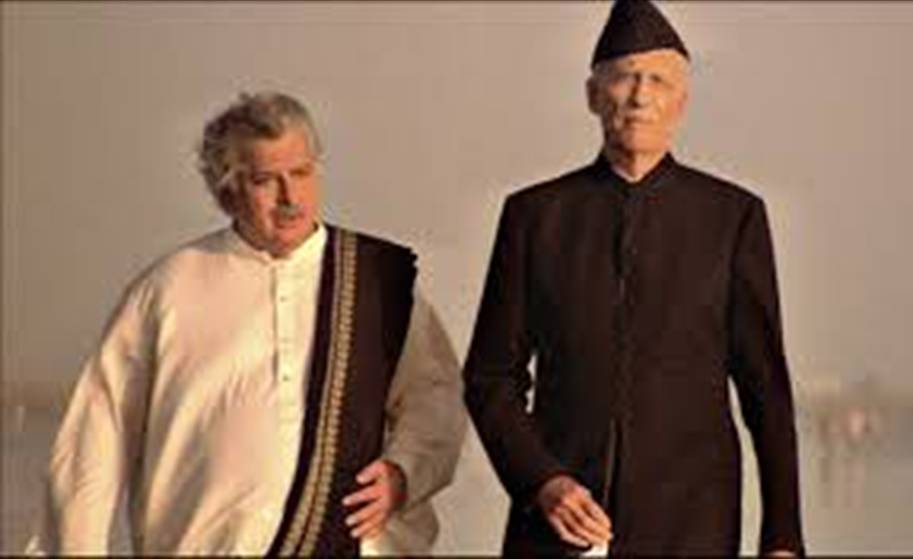
Shashi Kapoor and Christopher Lee – Photo itp Global Film
In Lahore, the people of the city opened their hearts in support. Shahid Hamid, the governor, allowed us to film in the Governor’s House for several days, giving us some memorable scenes in the film. Hamid Nawaz, his father, a distinguished Pakistani diplomat joined us for the shoot. He was a family friend from the time he was posted as Pakistan’s ambassador to Bangkok, Thailand, where my father worked for the United Nations and I visited from my boarding school in Abbottabad. His love and support during those difficult days meant a great deal to me. He would come early in the day to the hotel and ask me sweetly, as if I was his commanding officer, “What are my instructions for today?”
Other Lahore stalwarts like S.M. Zafar and Malik Miraj Khalid also showed their warm support. S.M. Zafar invited us to his home for a glittering dinner. On his request, I brought James Fox, who was playing Lord Mountbatten, fully dressed in his Viceroy’s costume to the dinner where he created a sensation. Malik Miraj who had been interim prime minister turned up at the shoot and thanked Christopher Lee for his great contribution to the Pakistani nation while expressing his disgust at the nasty attacks on us in the media.
There was my friend and wife’s relative Shamsher Ali Khan, the secretary to the president of Pakistan, and my batch mate Azmat Hassan, who worked with the prime minister of Pakistan, and there was Moeen Qureshi, the acting prime minister of Pakistan. They initiated the Jinnah film project long before it took its final shape. There were many other such Pakistani heroes who helped in one way or another and I wish I could name each and every one of them to thank them.
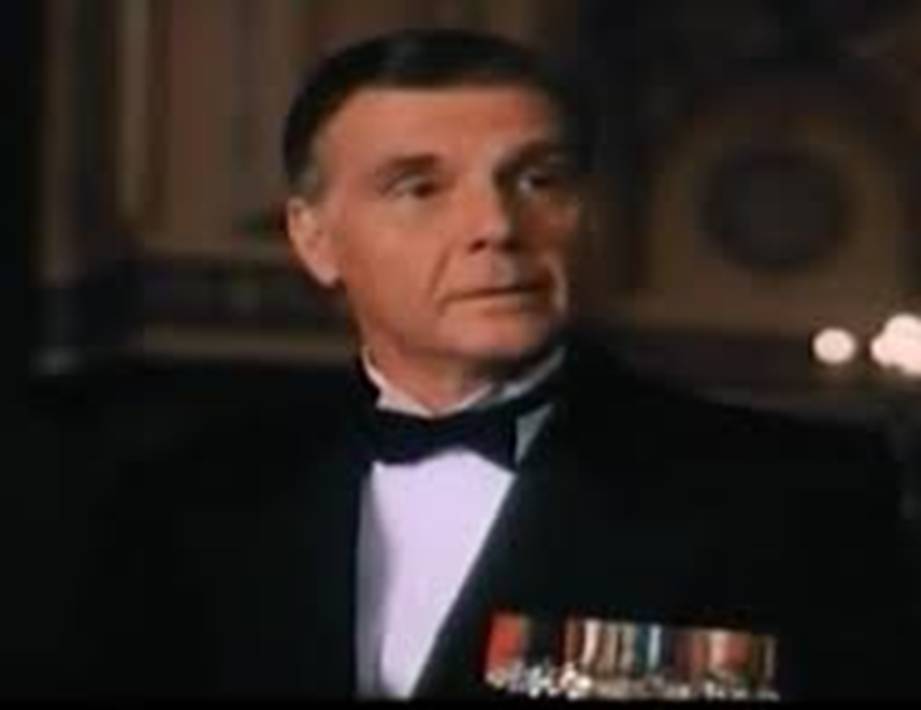
Lahore stalwarts like S.M. Zafar and Malik Miraj Khalid showed their warm support. S.M. Zafar invited us to his home for a glittering dinner. On his request, I brought James Fox, who was playing Lord Mountbatten, fully dressed in his Viceroy’s costume, to the dinner where he created a sensation
Let me end by naming several special Jinnah supporters in England who were with me over the decade I was working on the Jinnah Quartet. Their support for my Jinnah projects was unwavering. A larger-than-life figure with a big heart, Mohsin Akhtar, the owner of the Heydon Grange Golf Course and Farm, was a devoted friend and generous supporter from the time we met on my arrival in Cambridge in the late 1980s. Not only did he put his establishment at my disposal but accompanied me to Pakistan for the shoot. I always appreciated his humor as we did the rounds meeting Pakistanis to chase up the Jinnah project.
Nadir Rahim, the younger brother of Jamy Rahim, admired Jinnah and understood his importance in defining Pakistan identity. He had been insistent that I leave the civil service of Pakistan and focus my efforts in scholarship to contribute to the global debate that was forming around Islam. As a matter of record the Quaid Project Limited which was formed to make the Jinnah film was created in his flat near Marble Arch in London. He would receive us with impeccable hospitality and insist on dropping us afterwards at Kings Cross station where I would catch the train back to Cambridge. Mumtaz Khan was another loyal and staunch supporter of the project.
And last but not least was James Shera, the former Mayor of Rugby. A Christian Pakistani, he was perhaps one of the most passionate Pakistanis I have met. His love for humanity --and especially Jinnah and Pakistan ---was exemplary. To me he was Saint James.
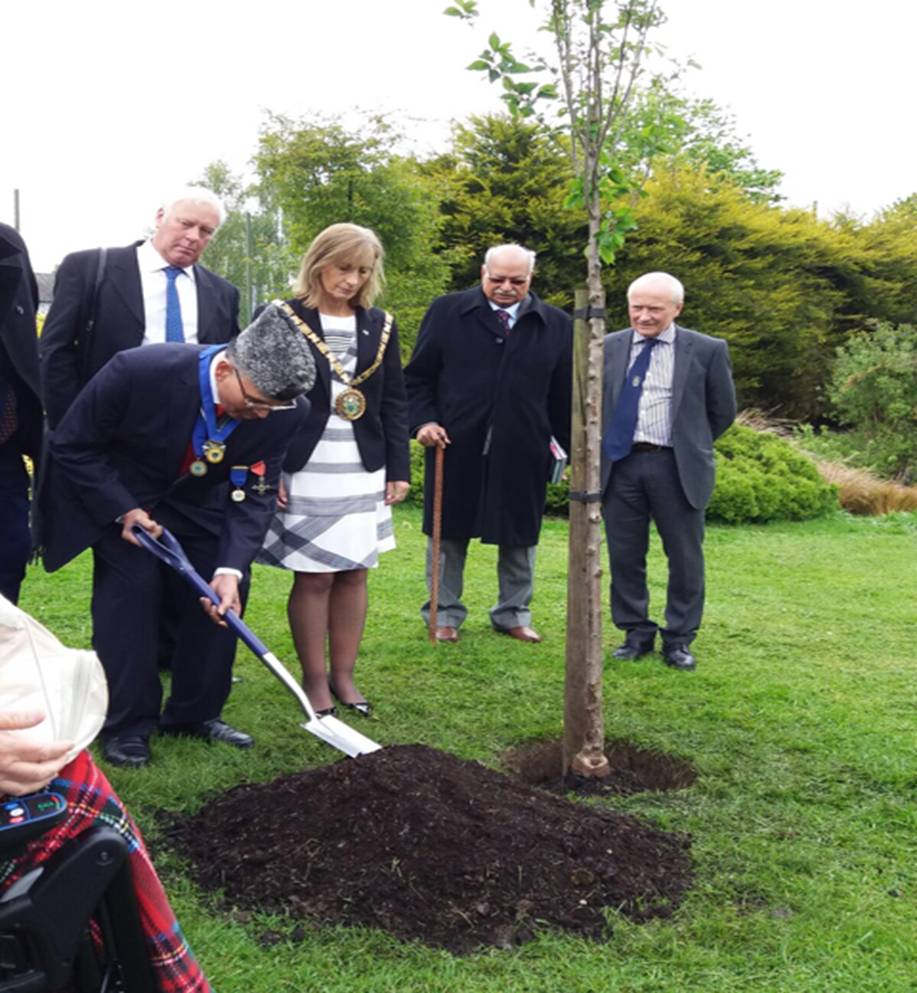
Last but not least was James Shera, the former Mayor of Rugby. A Christian Pakistani, he was perhaps one of the most passionate Pakistanis I have met. His love for humanity --and especially Jinnah and Pakistan ---was exemplary. To me he was Saint James. Picture above: W earing a Pakistani Jinnah cap Shera plants a friendship tree in the borough of Rugby at a 2017 ceremony conferring him with the honor "Freedom of the Borough of Rugby" for his dedication to the borough and to building bridges. A delegation, including former Pakistani High Commissioner Wajid Shamsul Hasan, looks on
James would accompany me from the early 1990s on my tours to raise consciousness of the Jinnah project long before we began to shoot the film and would become visibly agitated if anyone said anything negative about the great Quaid.
Although settled in England for many decades James retained his sense of sharp Punjabi humor. In private he was fond of joking with me. “The Quaid gave the white in the Pakistan flag for the Christian minorities,” he would say with a twinkle in his eye. “Today too the Pakistan flag has something for the minorities. Unfortunately, it is only the danda (pole).”
(Ambassador Akbar Ahmed is Distinguished Professor of International Relations and holds the Ibn Khaldun Chair of Islamic Studies at the American University, School of International Service. He is also a global fellow at the Wilson Center Washington DC. His academic career included appointments such as Nonresident Senior Fellow at the Brookings Institution; the First Distinguished Chair of Middle East and Islamic Studies at the US Naval Academy in Annapolis, MD; the Iqbal Fellow and Fellow of Selwyn College at the University of Cambridge; and teaching positions at Harvard and Princeton universities. Ahmed dedicated more than three decades to the Civil Service of Pakistan, where his posts included Commissioner in Balochistan, Political Agent in the Tribal Areas, and Pakistan High Commissioner to the UK and Ireland.)
