
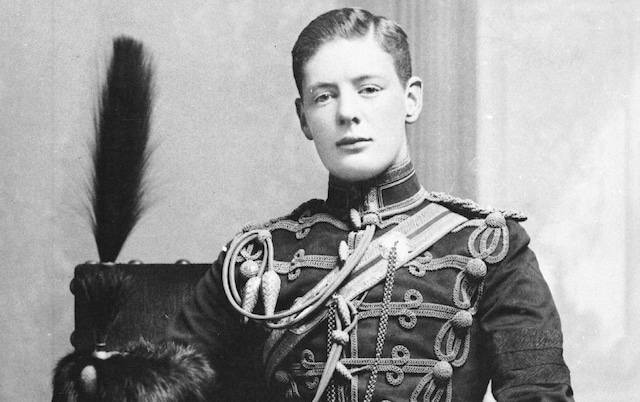
Pakistani locals restore a neglected corner of Empire where the future war leader first tasted combat.Winston Churchill first saw comrades dying in the field as a Queen’s Hussar and Telegraph correspondent at Malakand
Fight to Save Graves where Churchill Wept for Fallen Comrades
By Craig Simpson
UK
In war, Winston Churchill changed the world. But the war that changed him was in the mountains of Malakand.
As a correspondent for the Daily Telegraph embedded with British forces in a remote region of what is now Pakistan , the 22-year-old experienced his first taste of combat, observing that “nothing in life is so exhilarating as to be shot at without result”.
But it was in Malakand that a young Churchill first saw comrades dying in the field, when Pathan tribesmen rose up and attacked British troops guarding the frontier of the Empire .
Thousands of men lost their lives in the fighting of 1897, and Churchill was horrified to lose close friends to the “waste of war”.
Some of the young British officers he knew and lamented were buried in a simple Christian cemetery, dug by their fellow soldiers in the mountain pass of Malakand, overlooking the remote valleys where they had fallen.
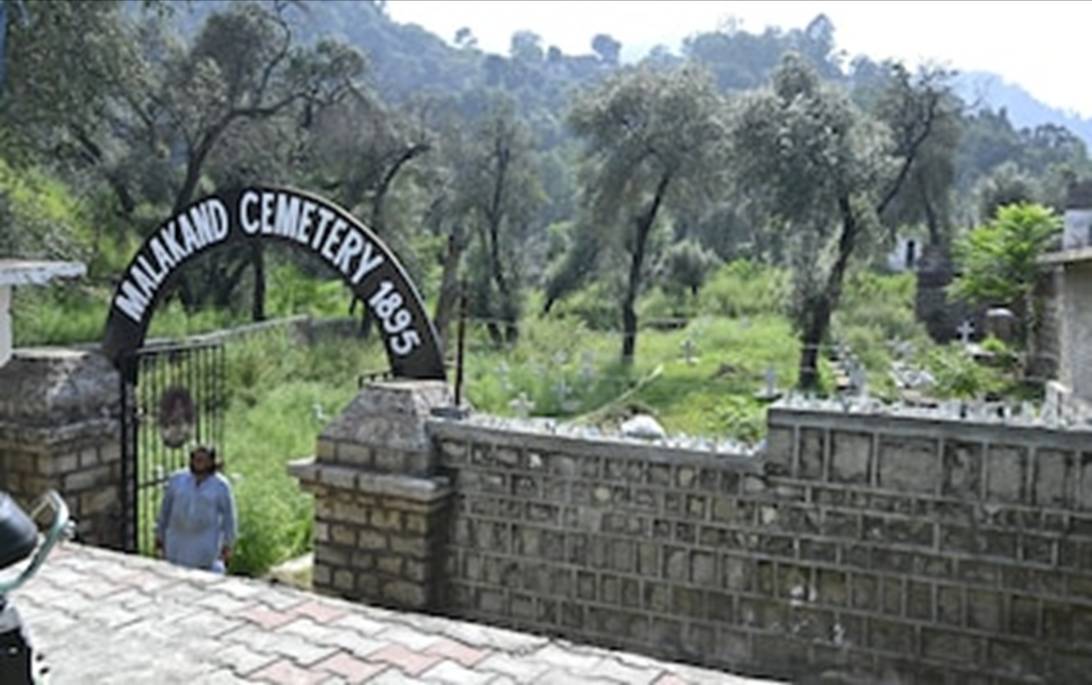
Malakand cemetery contains the remains of Churchill’s comrades, who were lost to the ‘waste of war’ - Credit Basharat Mehmood for The Telegraph
Almost 130 years later, a campaign is being mounted to save the crumbling graves of Churchill’s fallen comrades.
The Telegraph has visited the mountains where work was under way to rescue the graves from the “desecration of neglect, vandalism and encroachment”, as volunteers caring for the site have called it.
The majority of crosses were either knocked over or entirely missing, sewage ran through the site in open drains, and waste was tossed over the walls from a jail that looms over the cemetery
Sandwiched between this prison and a military facility, the overgrown space was becoming forgotten, particularly as the local Christian community dwindled.
Backed by £10,000 from the Commonwealth Heritage Forum (CHF), a British charity, local heritage workers have replaced the crosses, cleared the sewage and rubbish, and struck a deal with the prison to prevent dumping.
Barbed wire has been strung around the walls to stop vandals entering, and a new iron gate has been installed.
Further progress has been held up by other intruders: snakes have made nests among the graves, and their presence has prevented labourers tackling the burgeoning undergrowth and maintaining the space.
Conservation teams in Pakistan are looking for an organisation to provide a regular stipend for caretakers so they can tackle the snakes and continue to clear the site and keep it in good order.
The work so far has been overseen by Maj Gen Ali Hamid, a former armoured division commander whose retired life has been devoted to conserving military heritage in Pakistan, including the legacy of the British Empire.
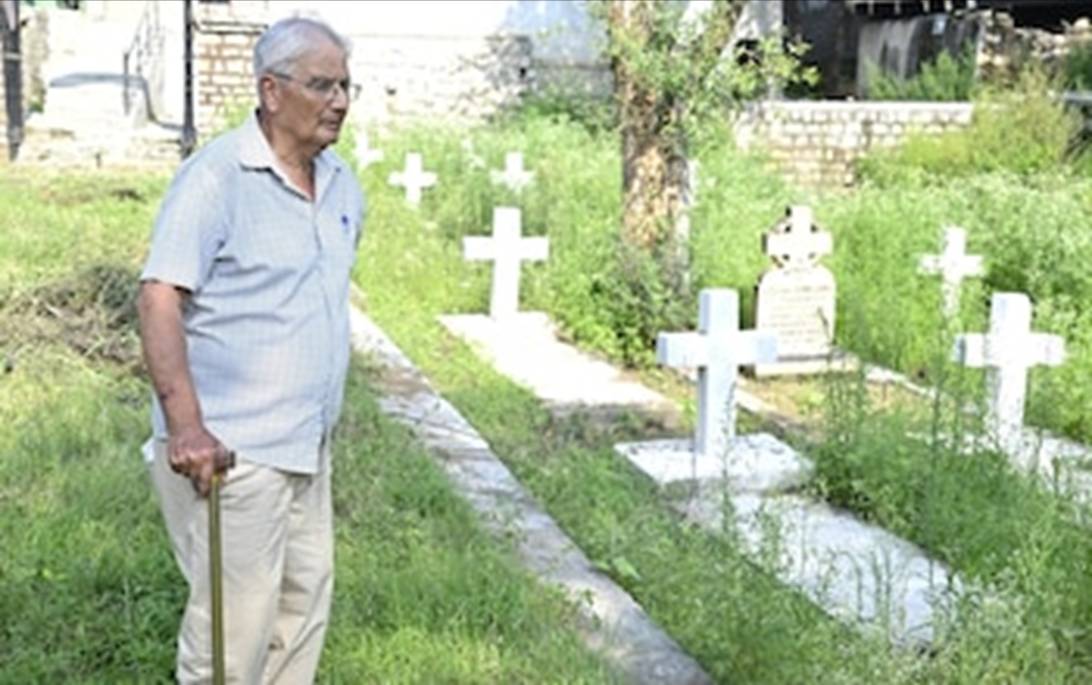
Maj Gen Ali Hamid looks on Malakand cemetery as ‘part of our heritage - Credit Basharat Mehmood for The Telegraph
Showing The Telegraph around the site in Malakand, he said: “There is now a cross on every grave.
“I’m very fond of history. I don’t look at things like the Malakand cemetery as a Christian cemetery, I look at it as part of our heritage.
“But my niece said something. She said: ‘You know, their souls must be so happy with you that you have restored their graves.’ That’s a different way of looking at it.
“It gives one a nice feeling, because you’ve been able to help a few people.”
Churchill’s comrades
The men were killed in a conflict that began when a “Mad Mullah” roused Pathan tribesmen, on what is now the Afghan-Pakistan border , to rise up against the British.
More than 10,000 tribesmen surrounded the British in a bowl-shaped valley near Malakand, but in the course of an eight-day battle, the defenders were able to crush the besieging army.
In the almost hidden cemetery in Malakand, The Telegraph saw the grave of Lieut William Browne-Clayton, which was shrouded by snake-filled grass with those of other fallen officers.
Churchill recalled in The Story of Malakand Field Force, a book summarising his war writings for The Telegraph, that Browne-Clayton “remained till the last” as his men withdrew, and was shot through the heart.
In a later letter to his mother, the young man confided: “I rarely detect genuine emotion in myself... I must rank it as a rare instance, the fact that I cried when I saw poor Browne-Clayton literally cut to pieces on a stretcher.”
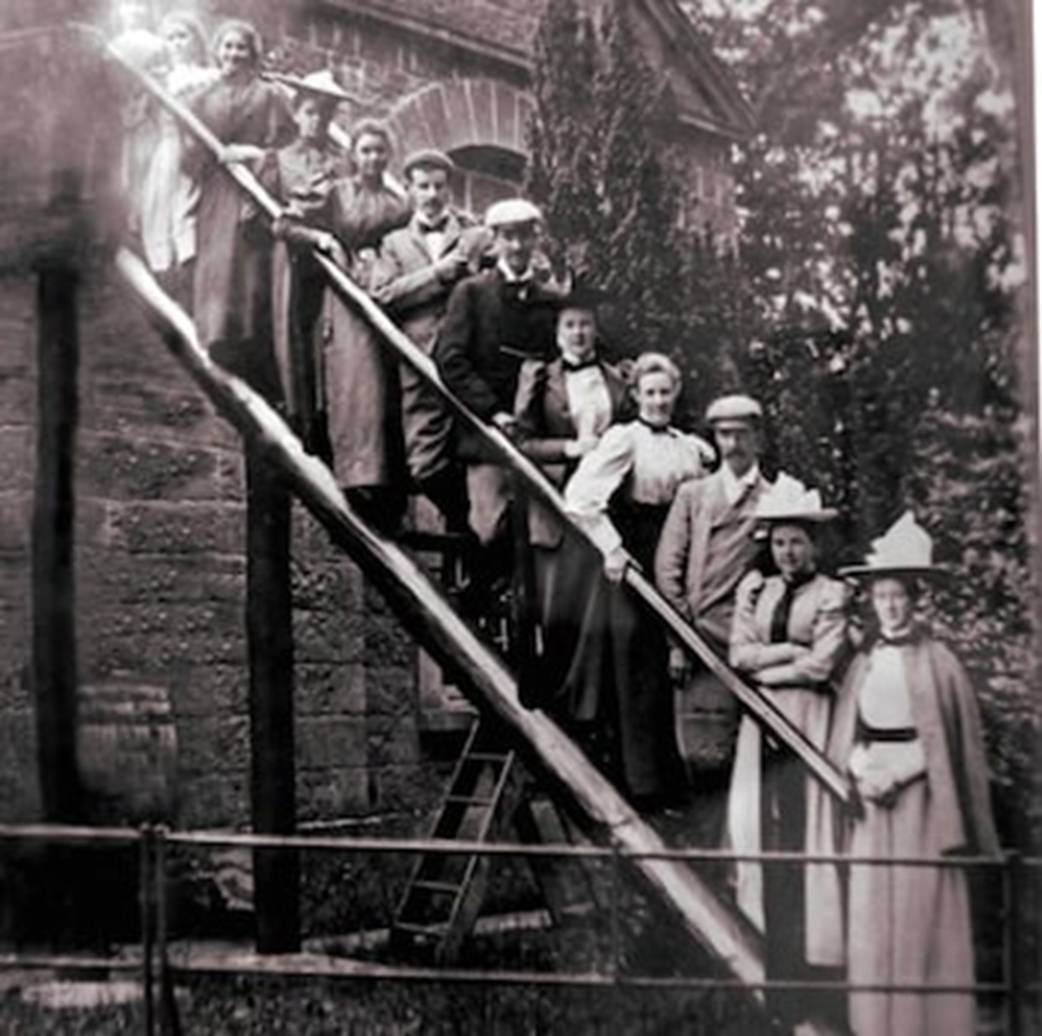
Churchill wept when he saw the body of Lieut William Browne-Clayton (centre, in flat cap) on a stretcher - Credit Michael Purcell
Churchill devoted some of his wartime meditations to another buried comrade, Lieut Robert Thurston Greaves, a fellow correspondent who had joined the British forces at his own expense on behalf of the Times of India.
When faced with the enemy, Greaves joined a cavalry charge with the “spirit that loses the Empire many lives, but has gained it many battles”, pursuing the enemy and then finding himself isolated.
He was shot from his horse, prompting Alexander Murray, The Times’s correspondent, to launch a rescue effort which earned him, and others, the Victoria Cross . Greaves was shot again, fatally, while being dragged to safety.
Churchill was shipped to India with his regiment, the Queen’s Hussars, in 1896, but soon grew bored of a life doing little but playing polo, and looked around for action.
When tribes rose up in 1897, Churchill begged the aptly named commanding officer of the British forces, Sir Bindon Blood, for a posting.
Blood responded by telegram: “Very difficult; no vacancies; come up as a correspondent; will try to fit you in.”
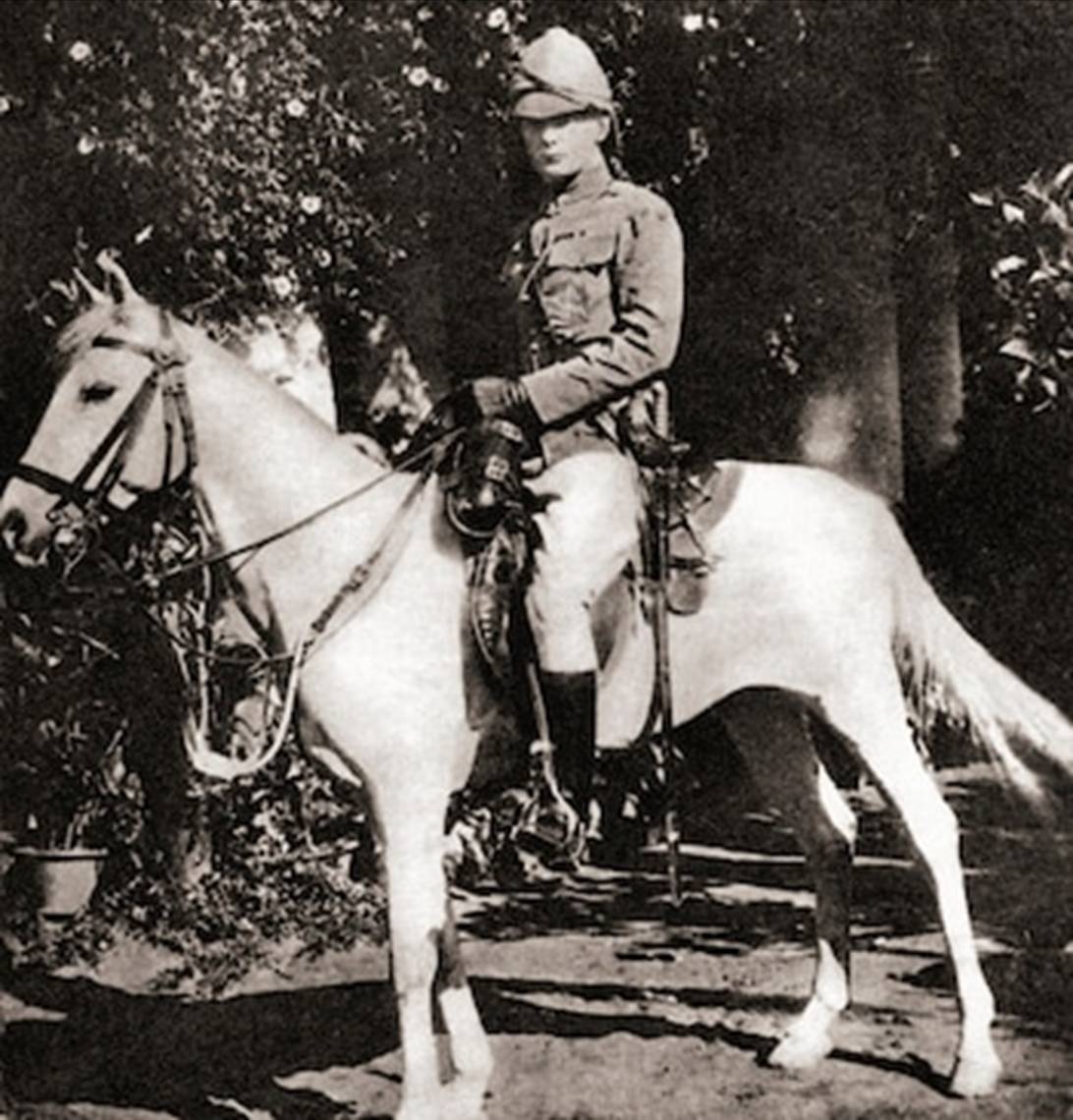
In India with the Queen’s Hussars, Churchill grew bored of a life doing little but playing polo, and started looking for action - Credit Universal Images Group/Getty
Churchill, asking his mother to pull some strings in London, secured a deal with The Telegraph for £5 per column, and was soon allowed to join the British forces, still a cavalry officer, but technically only there to observe the action.
Saving British heritage
The state of their resting place was first noticed by Imtiaz Sabir, a Bradford resident who was visiting family in Pakistan in 2024, and whose ancestors also took part in the Malakand campaign.
He brought it to the attention of the CHF, which works to conserve historical treasures left by the British Empire, and the organisation then directed funds to Maj Gen Hamid and local heritage workers.
Philip Davies, founder of the CHF, said: “There was an opportunity there to save an important part of the UK’s heritage.
“This was a site that Churchill was actively involved in, actually knew. He was part of the Malakand field force reporting for the Telegraph.
“And he lost his friends in that series of battles. It’s a living memory there in Pakistan, but people in the UK are blissfully unaware of some of this.”
One of those lost was Lt Col John Lamb, who Churchill recalls was shot in the leg while organising the defence during the initial attack on the British position, a wound that led to his death after amputation. He is buried at Malakand.
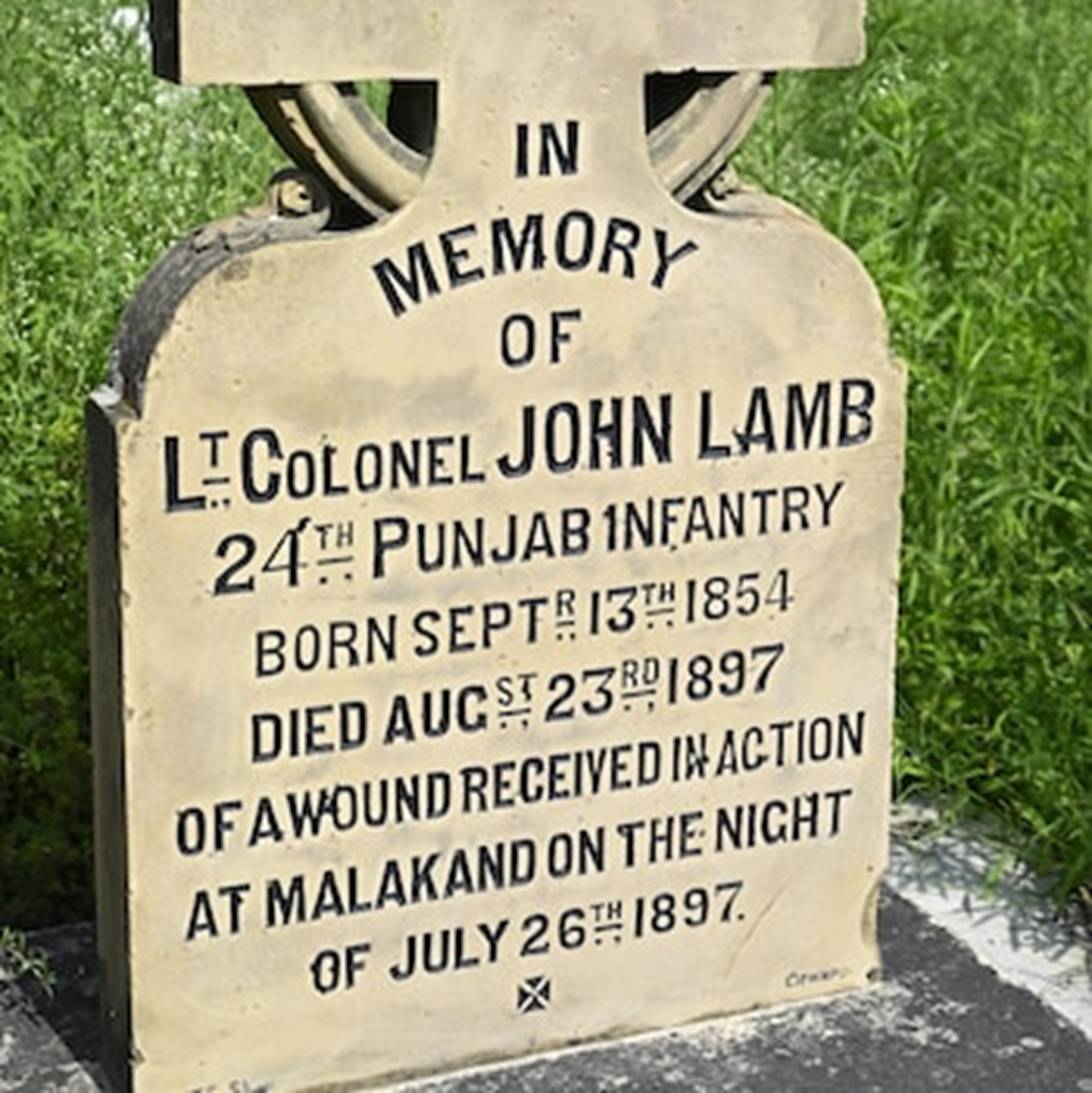
The Malakand grave of Lt Col John Lamb, who died of his wounds during the initial attack on the British position - Credit Basharat Mehmood for The Telegraph
The site is also the resting place of Lieut Louis Manley, who “stuck stubbornly to his post” and died firing his revolver into attackers inside a hut.
While some memorials are missing, it is believed that the site also contains the grave of Lieut Henry Andrew Harington, who was shot while evacuating the wounded, and Capt William Edward Tomkins, who was also shot through the heart in action.
Commemoration
The continued work to preserve the cemetery is part of a broader effort to protect heritage in Pakistan, particularly military heritage, as the army plays a major role in daily life and decision-making. Commemoration is extremely important for many.
Together with Maj Gen Hamid, The Telegraph journeyed into the hills above Islamabad, where First World War memorials were cared for among the craggy hamlets and buffalo pastures.
This was prime territory for British recruitment officers, who believed the locals belonged to “martial tribes”, a colonial designation that they still carry with pride.
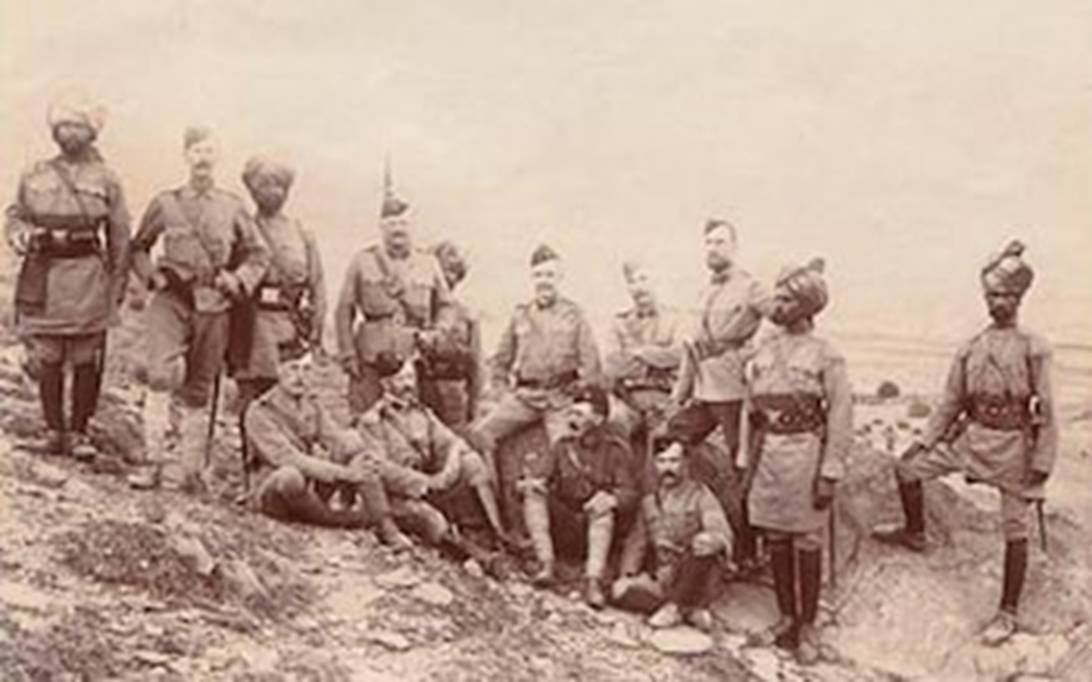
Malakand locals were proud to carry the British designation ‘martial tribes’ - Credit Alamy
Every man in the village was in the army, had a father in the army and a grandfather in the army, and spoke with pride of the service rendered to Britain in the First and Second World Wars.
Col Badar Khan, a village elder, wants to secure funding to enhance the local memorials.
There are also ongoing efforts, as reported by The Telegraph, to save a British memorial from destruction and neglect in a lowland village, and ship the whole monument to the Hindu Kush.
Churchill’s columns from the frontline were eventually collected in a book, the Story of the Malakand Field Force.
Its publication, he said at the time, would “certainly be the most noteworthy act of my life. Up to date (of course).”
Britain’s future prime minister did achieve more noteworthy things, but from Gallipoli to the finest hour, the cost of Malakand in men’s lives was a lesson he would never forget.
In a crumbling graveyard, thousands of miles from home, those men are not forgotten either. - The Telegraph
