From
the Editor: Akhtar
Mahmud Faruqui
June 15 , 2025
‘How Hard Can It Be?’
Qualifications can be a disqualification for a girl in Pakistan, came the terse remark from a Pakistani post-doc physicist as we settled to discuss life’s humdrum affairs at a simple Eid milan party in the idyllic surroundings of Trieste, Italy.
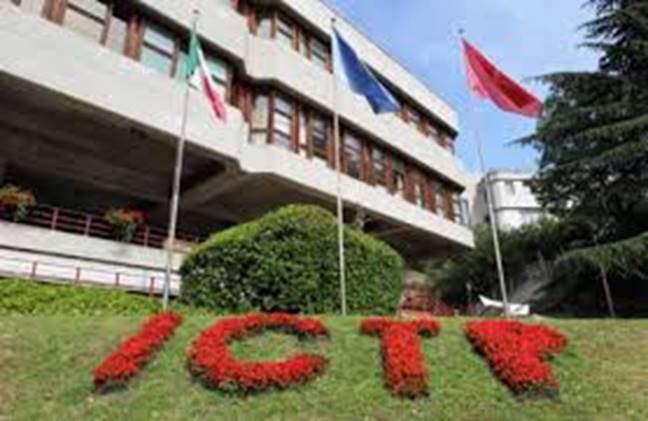
The view was advanced by Dr X, one of two female participants from Pakistan in the Summer School then in session at the UN International Center of Theoretical Physics which has come to serve as the hub of Third World science, thanks to the vision and strivings of the late Professor Abdus Salam. The other participant in the School, Miss Y, a PhD student, concurred readily. Her views were identical.
Qualified girls are generally not accepted in our complex-ridden society, are ‘accommodated’ with mental reservations even by the fair sex, and seldom admired by men. Their commonplace failing: apni niswaniat kho chuki haen!
Nothing could be farther from the truth. Experience testifies that an educated girl is often disposed to be more feminine and possessed of a better perspective of life. To the great surprise of the Italians and the multinational assemblage of researchers at the UN center, X and Y covered their head with dupatta time and again at functions where the compulsive habit could have evoked a mocking response.
The two girls were not only qualified but studiously religious. While X contended that physics “confirms religious belief, strengthens and supplements rather than negates it,” Y seemed to make the incisive point: “Understanding religion necessitates a study of the sciences. Our knowledge otherwise could be sketchy and misleading.” True.
Researchers in high-energy particle physics, their investigations were not laboratory-oriented but more of a philosophical strain: they related to the study of the cosmos, the universe, its origin, past, present, and future. “We can think more rationally of the world, have a wider perspective and look at our surroundings in their entirety. Our perception is fuller and not fleetingly superficial,” said Y. “In everyday life, our actions and analyses are more realistically oriented, as precision becomes the hallmark of our judgment,” she explained.
Since girls generally outnumber boys in most Pakistani universities, the presence of just two female scientists against a dozen male participants in the Summer College aroused our curiosity. The explanation was furnished readily and appeared convincing enough. Most qualified girls in Pakistan have a great many reservations while planning to leave the country alone because of inborn inhibitions and the unsavory social milieu abroad.
X had to forego a Stanford fellowship on this count. She got the permission only after her brother had made the pilgrimage to Trieste and approved of her participation. Y’s parents were more forward-looking and welcomed her sojourn to Trieste.
Once abroad, the two did face problems which proved to be rather of a trivial nature. “Our upbringing is different. We are too dependent. We cannot act independently, a prime requirement for a girl in this setting. The social values, the Western lifestyle, are surely unappealing, at times embarrassing. Life here hardly appeals to us,” X remarked.
“If one does adapt to this lifestyle, he/she is rendered a misfit in his/her own country. He/she cannot adjust in Pakistan,” she added.
Such a course could surely be calamitous. One could opt for the American or the European lifestyle, but the nationality-label, the cultural imprint, is hard to dispel. The American does not accept you as a fellow-American or the European as a European. One remains a foreigner, a fugitive, a forlorn stranger, and begins to despair when the children come of age.
The way out? “We should plan an enlightened, science-oriented society, where gender does not matter. A Pakistani woman often accepts a less educated man with little reservations, but the man’s complex, vanity, lingers on. Mard ka complex jagta rehta hae. He is not prepared to accept the woman as his equal or to concede her finer points. This idiosyncrasy must banish from our society so that man and woman could co-exist as the proverbial wheels of the carriage nursing mutual respect,” X observed.
A utopian longing? Could ideals transform into reality for a wholesome change? Seldom yes, often not.
This pessimism also stems from an article shedding fresh light on this issue in the United States. Entitled ‘How Hard Can It Be?’ the article appeared in The Minaret. The writer Munira Ezzeldine, who has authored a book on the subject, says: “Many Muslim women (in the United States) are successful lawyers, doctors, professors and journalists. They are outspoken and active in their Muslim and non-Muslim communities. They are intelligent and beautiful, and they are unmarried. The same women who are ambitious and focused on their academic and professional success are finding it difficult to find a suitable spouse…
“Are women to blame for being ambitious and educated? Apparently so. Women seem to be penalized for their ambition. Once a young woman passes the age of 25 and remains single, she is considered ‘old’ and often finds it difficult to find a suitable spouse. Suddenly others tell that she has become too picky and her expectations of a husband are unrealistic and she should hurry up and get married…
“Consciously or unconsciously, many men seek a wife who will fulfill the traditional role of a wife and mother and one who will maintain a traditional home life. She should be educated, but she should be also willing to put her education and career on a shelf while raising a family. These women in their late twenties and early thirties appear too established in their career and lifestyle and therefore more difficult to marry because they will not fall into this traditional role. Many American Muslim women want to be wives and mothers while at the same time be respected for their profession. ‘One big problem is that, rather than embrace her ambition and success, men simply tolerate it and expect something in return,’ says Nagwa Ibrahim, a 25-year-old activist seeking a career as a human and civil rights lawyer.”
Munira Ezzeldine makes an important observation, one which is instructive, inspirational, and perhaps, food for thought:
“Current expectations of marriage have changed for women and become more aligned with the examples of women during Prophet Muhammad’s lifetime. The Prophet’s first wife, Khadija, was an established career woman who was 15 years older than her husband. Khadija was a very confident and successful woman who actually proposed to the 24-year-old Muhammad. Yet, the Prophet was not intimated by her nor found her ‘unmarriageable.’ They maintained a strong marriage as she continued to be a businesswoman, as well as wife and mother. Prophet Muhammad and Khadija were married for 28 years, the longest of all his marriages. The year that Khadija died was also referred to as the Year of Mourning by Prophet Muhammad…
“The reality is that Muslim women have worked hard for their education and careers and they will not give it all up in order to get married.”
A laudable resolve. A woman’s qualification is an asset, not a liability.



