November 14 , 2025
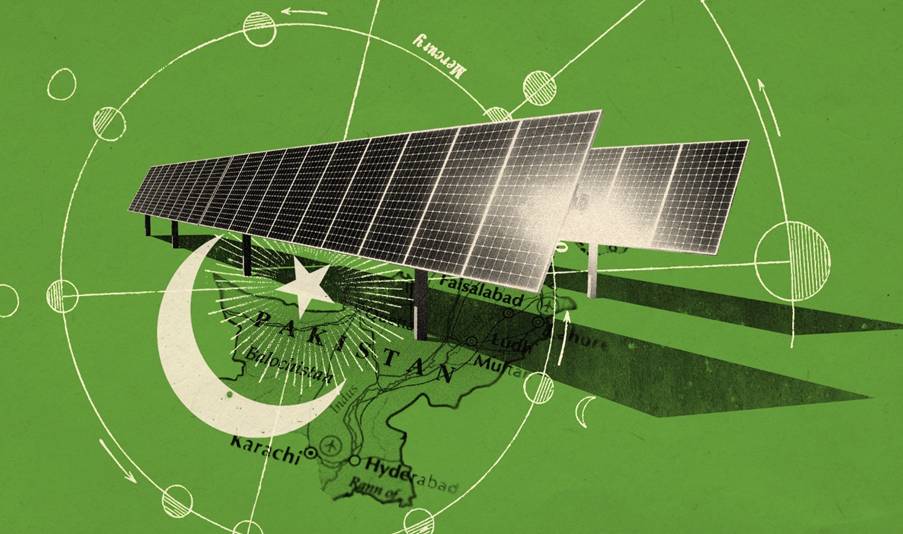
Solar panels now are incredibly cheap, mostly made in China, and are providing the bulk of new electric power around the world. In 2020 imports of solar panels was only 1.8 gigawatts, a tiny fraction of Pakistan’s electric grid. But in 2021 that rose to 2.5 gigawatts, then soared to 8 gigawatts in 2023, then 17 gigawatts in 2024, and we are at pace for 25 gigawatts in 2025. That is a cumulative total of 54 gigawatts, which greatly exceeds the current installed national grid capacity – Image credit: Illustration by Julia Wytrazek / Getty Images
Solar Boom in Pakistan
Pakistan is experiencing an energy revolution. After decades of slow growth in the national electric grid, which reached 43 gigawatts in capacity in 2023, a surge of imports of Chinese solar panels is transforming life in the country.
The story of solar is one that began with the earliest photovoltaic chips designed in the 1950s. Solar PV chips were incredibly expensive at first, and used only in niche highly expensive cases like powering satellites in orbit. But every decade the price of solar panels declined as production increased. This is known as the “learning curve” and is seen also in the cost of wind power and batteries for storage. But even in 2010 solar panels were far too costly to be used as a source of electricity for the average consumer. In the ten years following, the price of panels crashed by 90%, and continued to fall throughout this decade. Solar panels now are incredibly cheap, mostly made in China, and are providing the bulk of new electric power around the world.
This dynamic has not bypassed Pakistan. In fact, Pakistan has become a major importer of Chinese solar panels, and the scale has become immense. Pakistan’s traditional power grid, a mix of hydroelectric dams and coal and gas fired power plants, has been known for its costly and unreliable power. Agreements signed years ago with power producers require the nation to pay them whether they are being used or not, and to pay them in dollars. This has created a serious long drawn-out problem for Pakistan as it finds itself with excess power capacity but very high electricity prices for those who are plugged into the grid and using it. This problem is compounded by power theft from the grid with illegal power lines tapping into the system. To top it off, the grid remains unreliable, with frequent power outages, also known as “loadshedding”.
For the average Pakistani this creates a huge burden. Modern life requires electric power, and most importantly the extreme summer heat is only made tolerable with air conditioners, or for the poorest, simple fans. To get out of this bind, consumers have turned to Chinese solar panels. In 2020 imports of solar panels was only 1.8 gigawatts, a tiny fraction of Pakistan’s electric grid. But in 2021 that rose to 2.5 gigawatts, then soared to 8 gigawatts in 2023, then 17 gigawatts in 2024, and we are at pace for 25 gigawatts in 2025. That is a cumulative total of 54 gigawatts, which greatly exceeds the current installed national grid capacity. Pakistanis have basically doubled the amount of electricity they consume by going solar. At this rate the nation might install another 150 gigawatts or more by 2030.
What are people going to do with all this cheap power? The immediate uses are obvious, to power consumer goods like air conditioners, refrigerators, phones and computers, and lighting. For industrial and commercial users, this could provide cheap power for factories and businesses. But that still will leave a lot of power untapped.
The obvious next use is transportation. Electric cars are going to surge onto Pakistani streets over the next several years. At least one Chinese maker of EVs is setting up a factory in Pakistan. Home grown businesses selling electric motorcycles and three wheelers are also expanding. Cutting emissions from cars will do wonders for the horrible air quality in Pakistani cities.
To make full use of solar power, one must also be able to use that power at night. With the sun down, the way to make power last is batteries. Battery sales are also booming in Pakistan for this very reason.
While Pakistan is a poster child for Third World countries transitioning to renewable energy, there is a sharp downside to all this cheap solar power. The existing grid is becoming even more imbalanced from a financial standpoint. As more purchasers of electric power, particularly large industrial and commercial users, opt out of the grid, it puts more of the cost of maintaining that grid on the remaining users. This creates a death spiral as rising power costs push even more users off the grid and into self-contained solar plus battery solutions. The only way out of this is for the economy to grow so rapidly that all this power, both solar and traditional, has customers. If the existing grid can grow its customer base, then power costs would actually come down, making it more attractive to potential users.
Pakistan is undergoing a revolution in energy this decade. Electric power is coming to the vast majority of the population in a way that it has never been available before. Just like how the country skipped installing landlines in every home and just went straight to cell phones, Pakistan is going to skip creating a massive fossil fuel-based power grid and go straight to renewable energy. This massive surge of cheap solar power should translate to higher economic growth and rising prosperity in the next decade.